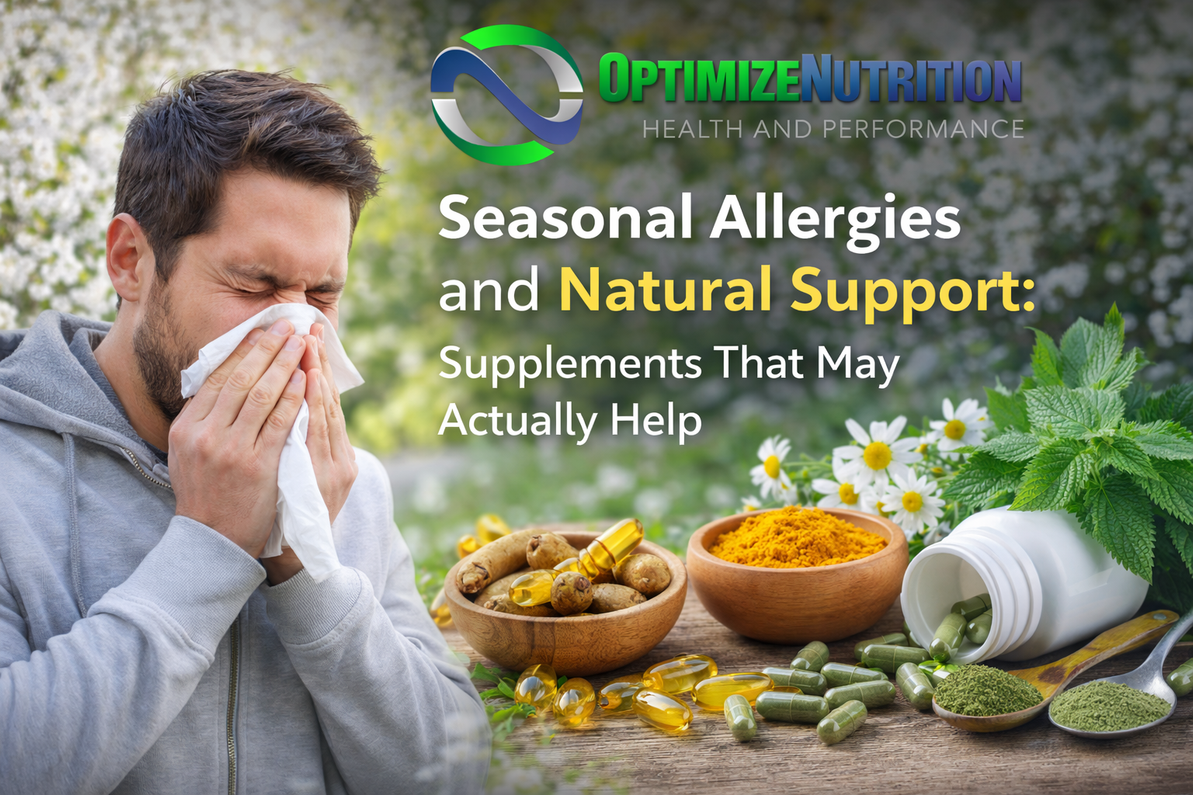
Seasonal Allergies and Natural Support: Supplements That May Actually Help
If spring and summer leave you dealing with sneezing, itchy eyes, sinus pressure, and a constantly runny nose, you are not alone. Seasonal allergies can make it hard to sleep well, train well, focus, or even enjoy being outside. While conventional options like antihistamines and nasal sprays can absolutely help, many people also want natural support that works with the body instead of just masking symptoms.
The good news is that a few supplements do show promise for seasonal allergy support. The not-so-good news is that not every popular remedy has equally strong evidence behind it. Quercetin stands out as one of the more promising natural options, probiotics may help some people, and herbs or nutrients like bromelain, nettle, and NAC can be useful additions depending on the person. Bee pollen is often talked about, but the evidence is still limited and it is not the right choice for everyone.
Why seasonal allergies happen
Seasonal allergies, also called allergic rhinitis or hay fever, happen when your immune system overreacts to things like tree pollen, grass pollen, or weeds. That reaction can trigger histamine release and other inflammatory compounds, leading to sneezing, congestion, itchy eyes, postnasal drip, and sinus discomfort. This is why natural compounds that help modulate histamine, calm inflammation, or support mucosal health tend to get the most attention.
1) Quercetin: one of the best-known natural options
Quercetin is a plant flavonoid found in foods like onions, apples, and berries. It is popular for seasonal allergies because it appears to have antihistamine-like and mast-cell-stabilizing effects, which means it may help reduce the release of histamine before symptoms ramp up. Mechanistically, it makes a lot of sense, and more recent reviews suggest polyphenols such as quercetin may improve nasal symptoms, especially in seasonal allergic rhinitis, although the clinical evidence is still not perfect.
Quercetin is often best used proactively rather than reactively. In other words, many people do better when they start it before allergy season is in full swing rather than waiting until symptoms are severe.
- Natural Factors Quercetin 500mg with Zinc & Copper - a straightforward quercetin option with added mineral support. The product page highlights antioxidant and immune-supportive benefits.
- Natural Factors Quercetin LipoMicel Matrix 60 Softgels - a more absorption-focused option, which may appeal to people who want a higher-bioavailability formula.
2) Bee pollen: popular, but more anecdotal than proven
Bee pollen has a strong natural-health reputation and many people swear by it for seasonal allergies. The theory is that regular exposure may help the body adapt, but the actual evidence for allergic rhinitis relief is still limited and not strong enough to call it a reliable evidence-based solution. Major allergy organizations also point out that bee-related products are not a proven treatment for hay fever.
There is another important issue here: bee pollen can trigger allergic reactions in sensitive individuals, including severe reactions in rare cases. That means bee pollen is not something to use casually if you have known pollen allergies, asthma, or reactions to bee products.
That said, for people who tolerate it well and want to explore it cautiously, we carry:
- Dutchman’s Gold Pure Bee Pollen 250g - your product page notes that some people find it supports a healthy response to seasonal allergies when used consistently.
3) Probiotics: promising because the immune system starts in the gut
Probiotics are not the first thing most people think of for allergy relief, but they deserve attention. The gut and immune system are closely connected, and some studies suggest probiotic supplementation may improve symptoms and quality of life in allergic rhinitis. The catch is that results vary a lot depending on the strain or blend used, so probiotics are better viewed as a supportive strategy rather than a guaranteed quick fix.
For people who deal with allergies alongside digestive issues, immune dysregulation, or repeated seasonal flare-ups, probiotics can be a smart longer-term foundational option rather than just a symptom tool. NCCIH also notes they might be helpful, though the evidence is still mixed.
4) Bromelain: helpful when congestion and sinus pressure are part of the picture
Bromelain is a proteolytic enzyme derived from pineapple. It is often used for inflammation, tissue swelling, and sinus-related discomfort. While it is not as directly studied for seasonal allergies as quercetin, it is commonly used in natural allergy formulas because it may help support sinus comfort and reduce inflammatory burden.
- New Roots Ultimate Bromelain 90 Capsules - a high-potency bromelain option that makes sense for people who get a lot of pressure, puffiness, or upper-respiratory irritation during allergy season.
5) NAC: useful support for mucus and respiratory resilience
N-acetyl-L-cysteine, or NAC, is not a classic “allergy supplement,” but it can be a very useful add-on for people whose allergies come with thick mucus, chest irritation, or lingering congestion. NAC helps support glutathione production and is often used for respiratory support because of its antioxidant and mucus-thinning properties.
This makes it less of a direct histamine-control supplement and more of a support tool for the downstream effects of allergies, especially when the respiratory tract feels irritated.
- CanPrev NAC+ N-Acetyl-L-Cysteine 120 Capsules - positioned for antioxidant defense and respiratory challenges.
6) Nettle: an old-school option that still gets attention
Stinging nettle has been used traditionally for seasonal allergy support and remains a common ingredient in natural allergy protocols. The human evidence is not especially strong, but it continues to show up in reviews and traditional-use discussions because of its anti-inflammatory profile and long history of use.
7) Herbal blends can be useful when symptoms are broader
Some people do better with a formula than with a single ingredient, especially when allergies come with congestion, irritability, sinus discomfort, and a general “reactive” feeling.
- Harmonic Arts Allergy Ease 100ml - positioned on your site for seasonal and environmental sensitivity support, both during reactions and as preventative support.
Formulas like this can make sense for people who want a broader herbal approach instead of piecing together several standalone products. The tradeoff is that they are less specific than a targeted nutrient like quercetin.
A few important cautions
Bee pollen should be used very carefully, if at all, in people with pollen allergies, asthma, or known sensitivities to bee products because allergic reactions can occur.
Natural does not automatically mean side-effect-free. Some supplements can interact with medications or may not be appropriate for pregnancy, nursing, autoimmune conditions, or certain chronic illnesses.
Also, not every “natural allergy remedy” is equally supported. For example, organizations such as AAAAI note that honey is not considered an effective treatment for allergic rhinitis based on current evidence, even though the idea is very popular online.
Final thoughts
If you want a natural place to start for seasonal allergies, quercetin is one of the most evidence-backed options in the supplement world right now. From there, probiotics, bromelain, NAC, nettle, and targeted herbal blends can all have a place depending on your symptoms and your overall approach. Bee pollen remains popular, but it is better viewed as an optional and cautious experiment rather than a front-line recommendation.
At Optimize Nutrition, a smart seasonal allergy strategy might include a targeted quercetin product, supportive respiratory or sinus-focused tools, and a more foundational gut-immune approach if symptoms return year after year.
Recent Posts
-

Why You're Always Tired: Common Nutrient Deficiencies and What to Test
Feeling exhausted even after a full night's sleep? Struggling with brain fog, low motivation, or tha …Oct 16, 2026 -

How to Lower Cholesterol Naturally: What Holistic Health Practitioners Have Known for Years
For decades, cholesterol advice focused heavily on avoiding eggs, limiting dietary cholesterol, and …Oct 15, 2026 -

How to Beat the Winter Blues: Supplements, Lifestyle Tips & the Science Behind Seasonal Mood Changes
As the days grow shorter and temperatures drop, many Canadians notice a familiar shift: lower energy …Oct 09, 2026