
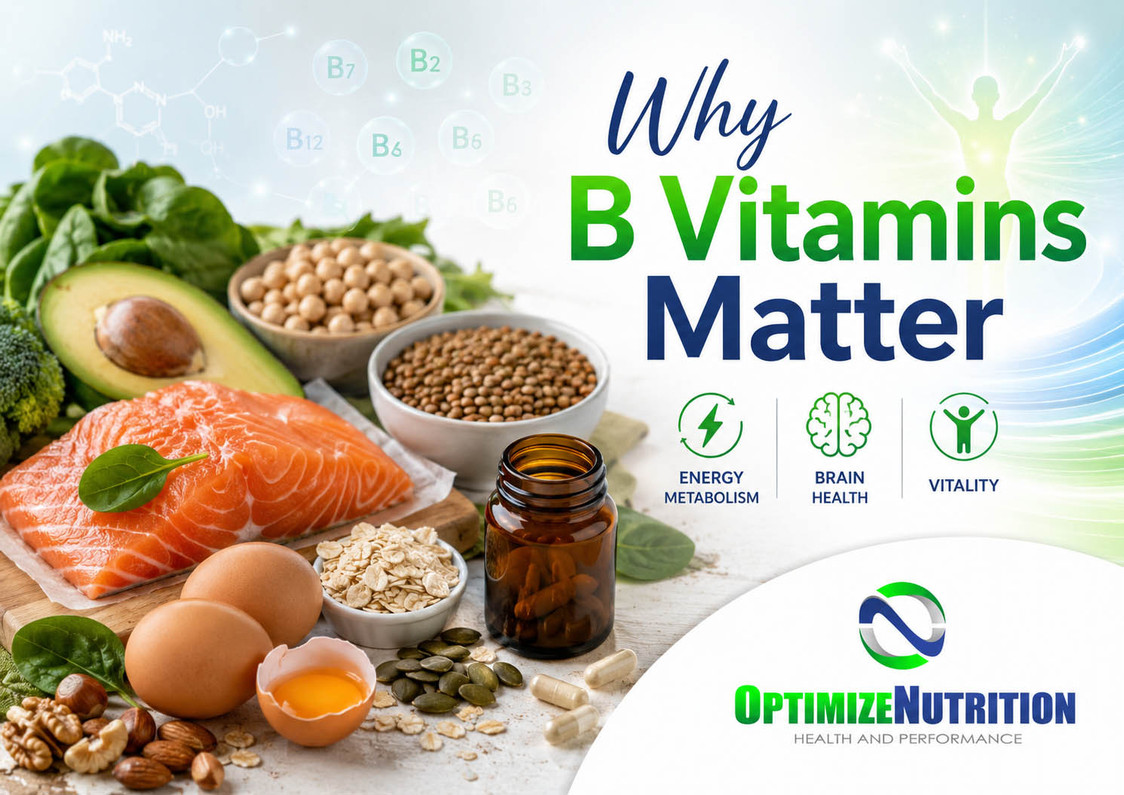
Why B Vitamins Matter: Energy, Metabolism, Brain Health & When to Supplement
B vitamins are some of the most important nutrients for daily energy, metabolism, nervous system health, brain function, mood support, red blood cell production, and overall wellness. While they are often talked about as “energy vitamins,” their role in the body goes much deeper than simply helping you feel more awake.
The B vitamin family includes eight main nutrients:
- B1: Thiamine
- B2: Riboflavin
- B3: Niacin
- B5: Pantothenic acid
- B6: Pyridoxine / pyridoxal-5-phosphate
- B7: Biotin
- B9: Folate
- B12: Cobalamin
Because B vitamins are water-soluble, the body generally does not store large amounts of them for long periods. This means regular intake through food, and in some cases supplementation, is important.
Why B Vitamins Are So Important
B vitamins act as coenzymes, meaning they help enzymes carry out important chemical reactions in the body. Many of these reactions are involved in converting food into usable energy, supporting the nervous system, building red blood cells, and helping the body manage stress.
B vitamins are involved in:
- Energy production from carbohydrates, fats, and proteins
- Brain and nervous system function
- Red blood cell formation
- Methylation and detoxification pathways
- Hormone and neurotransmitter production
- Healthy skin, hair, and nails
- DNA synthesis and repair
- Homocysteine metabolism, which is important for cardiovascular health
This is one reason low B vitamin status can sometimes show up as fatigue, poor concentration, low mood, weakness, numbness or tingling, poor stress tolerance, or changes in skin, hair, or mouth health. These symptoms can have many causes, so testing and professional guidance are important when symptoms are ongoing.
Why a B Complex Is Often Better Than Isolated B Vitamins
In many cases, it is best to take a well-formulated B complex rather than taking one isolated B vitamin on its own. This is because B vitamins work together in many of the same metabolic pathways.
For example, folate, B12, and B6 all play connected roles in methylation and homocysteine metabolism. B1, B2, B3, B5, and B6 are all involved in energy production. Taking high amounts of one isolated B vitamin for a long period may create an imbalance or increase the body’s demand for other B vitamins.
A B complex can be helpful because it:
- Provides a more balanced range of B vitamins
- Supports multiple energy and metabolism pathways at once
- Reduces the chance of overemphasizing one B vitamin while neglecting others
- May be more appropriate for general stress, energy, and nervous system support
- Often includes active or bioavailable forms, depending on the product
That said, isolated B vitamins can still be useful in specific cases. For example, someone with a confirmed B12 deficiency may require a higher-dose B12 supplement. Someone preparing for pregnancy may require additional folate. A targeted approach can be helpful when based on blood work, symptoms, medications, diet, or practitioner guidance.
The Role of Each B Vitamin
Vitamin B1: Thiamine
Thiamine helps the body turn carbohydrates into energy and supports nerve function. It is especially important for people with high carbohydrate intake, high physical stress, or increased metabolic demands.
Vitamin B2: Riboflavin
Riboflavin supports energy production, antioxidant systems, and the metabolism of fats, drugs, and other nutrients. It also helps the body use other B vitamins properly.
Vitamin B3: Niacin
Niacin is involved in energy metabolism, cellular repair, and the production of NAD, a compound involved in mitochondrial function and healthy aging pathways. High-dose niacin should only be used with professional guidance because it can cause side effects.
Vitamin B5: Pantothenic Acid
Pantothenic acid is needed to make coenzyme A, which plays a major role in energy production, fat metabolism, and hormone synthesis. It is often included in formulas designed for stress and adrenal support.
Vitamin B6: Pyridoxine / P5P
Vitamin B6 supports neurotransmitter production, protein metabolism, immune function, hormone balance, and homocysteine regulation. Active B6, often listed as P5P, may be preferred in certain formulas.
Vitamin B7: Biotin
Biotin supports the metabolism of fats, carbohydrates, and proteins. It is also commonly associated with hair, skin, and nail health, although it is most useful when biotin status is low. High-dose biotin can interfere with certain lab tests, so it is important to tell your healthcare provider if you take it.
Vitamin B9: Folate
Folate is essential for DNA synthesis, red blood cell formation, methylation, and healthy fetal development. Women and adolescents capable of becoming pregnant are commonly advised to get 400 mcg per day of folic acid from supplements and/or fortified foods in addition to food folate.
Vitamin B12: Cobalamin
Vitamin B12 is essential for nerve health, red blood cell formation, DNA synthesis, and methylation. B12 deficiency can happen even when intake seems adequate, especially if absorption is poor. The NIH notes that B12 deficiency may be linked to issues such as fatigue, neurological changes, and megaloblastic anemia, and risk can increase with factors such as malabsorption, certain gastrointestinal surgeries, metformin use, proton pump inhibitor use, and low intake of animal foods.
Who May Require B Vitamin Supplementation?
Some people have higher needs or a greater risk of low B vitamin status. Supplementation may be worth considering for:
- People under high stress
- Athletes or very active individuals
- Vegans and vegetarians, especially for B12
- Older adults
- People with low appetite or restricted diets
- People who consume a lot of processed foods
- Those with digestive concerns or poor absorption
- People taking certain medications, such as metformin or acid-blocking medications
- Pregnant individuals or those planning pregnancy
- People with low energy, brain fog, or poor stress tolerance
- People with elevated homocysteine
- Those recovering from illness, long-term dieting, or high physical demand
Food should still be the foundation. B vitamins are found in foods such as eggs, meat, fish, poultry, dairy, legumes, whole grains, leafy greens, nutritional yeast, seeds, and fortified foods. However, supplementation can be helpful when diet, lifestyle, absorption, or health demands make it difficult to meet optimal needs.
Choosing a Quality B Complex
When choosing a B complex, look for a formula that matches your needs. Some products provide basic daily support, while others include higher potencies or active forms such as methylfolate, methylcobalamin, adenosylcobalamin, riboflavin-5-phosphate, and P5P.
A good B complex may be useful for:
- Daily energy support
- Stress and nervous system support
- Nutrient repletion
- Active lifestyles
- Plant-based diets
- General wellness routines
More is not always better. High doses of certain B vitamins, especially niacin and B6, may not be appropriate for everyone. It is best to choose a formula that fits your goals and to work with a qualified practitioner if you have health conditions, take medications, are pregnant, or suspect a deficiency.
Final Thoughts
B vitamins are essential nutrients that help power the body’s energy systems, support the nervous system, assist with red blood cell production, and contribute to overall health. Because they work together, a complete B complex is often the best starting point for general support, while isolated B vitamins are best reserved for specific needs.
At Optimize Nutrition, we carry a variety of B complex and individual B vitamin supplements to support different needs, including energy, stress, active lifestyles, plant-based diets, and targeted nutrient support. Our team can help you choose a product that fits your goals, lifestyle, and current health needs.
Disclaimer
This article is for educational purposes only and is not intended to diagnose, treat, cure, or prevent any disease. Always speak with a qualified healthcare professional before starting a new supplement, especially if you are pregnant, breastfeeding, taking medication, managing a health condition, or suspect a nutrient deficiency.
Recent Posts
-

Astaxanthin Benefits: The Antioxidant for Skin, Eyes, Recovery & Healthy Aging **Draft
Astaxanthin has quietly become one of the most talked-about antioxidants in the supplement world. Un …Oct 02, 2026 -

Best Natural Supplements for Better Sleep (Beyond Melatonin)
Melatonin gets most of the attention when people look for sleep support, but it is not the only opti …Oct 01, 2026 -

Best Greens Powders in Canada: 4 Staff Picks for Different Goals
Greens powders can be a convenient way to increase the variety of plant-based nutrients in a daily r …Sep 25, 2026