
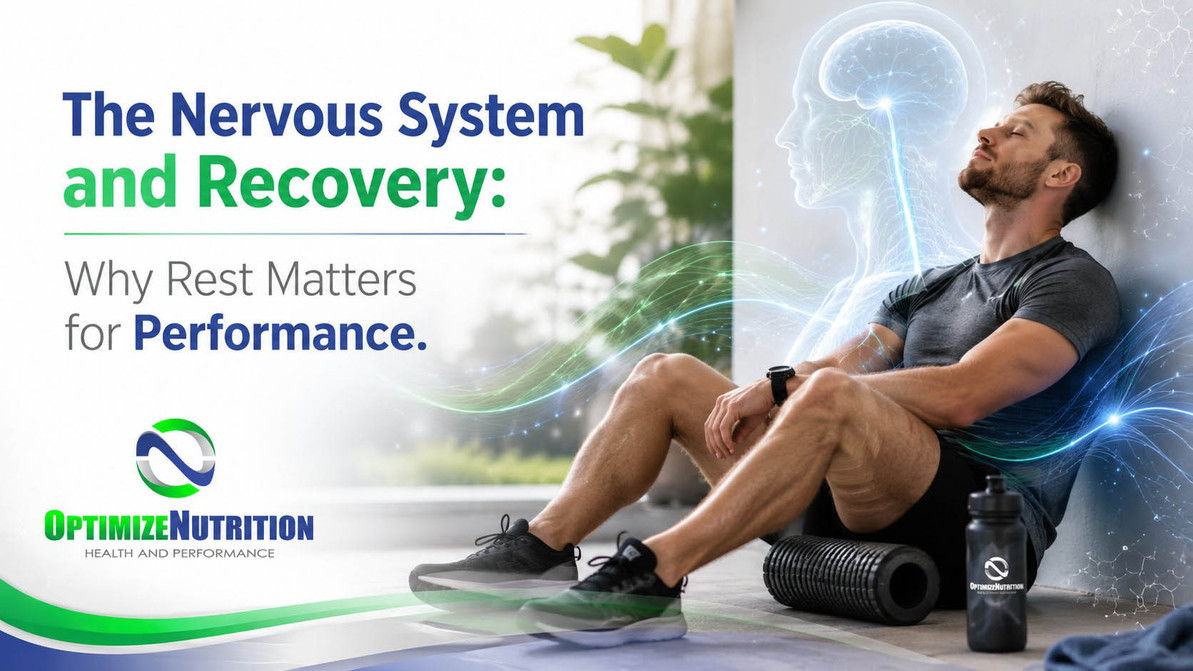

The Nervous System and Recovery: Why Rest Matters for Performance

The Nervous System and Recovery: Why Rest Matters for Performance

When most people think about performance, they think about training harder, lifting heavier, doing more cardio, eating more protein, or adding another supplement to their routine.

But one of the most overlooked parts of performance is recovery — specifically, nervous system recovery.

Your muscles do not grow stronger while you are training. Training creates stress. Recovery is where adaptation happens. This includes muscle repair, hormone regulation, immune balance, mental focus, motivation, and the ability to perform well again the next day.

If your nervous system is constantly stuck in “go mode,” your body may have a harder time repairing, rebuilding, sleeping deeply, digesting properly, and adapting to training.

That is why rest is not laziness. It is part of the performance plan.

What Does the Nervous System Have to Do with Recovery?

Your autonomic nervous system helps regulate many automatic functions in the body, including heart rate, breathing, digestion, blood pressure, temperature, and stress response.

It is commonly discussed in two main branches:

  • Sympathetic nervous system: Often called the “fight or flight” system. It helps you respond to stress, exercise, competition, deadlines, and high-demand situations.
  • Parasympathetic nervous system: Often called the “rest and digest” system. It supports recovery, digestion, sleep, repair, and relaxation.

Both systems are important. The issue is not that the sympathetic system is “bad.” You need it to train, focus, compete, and perform. The problem happens when the body does not shift back into a more parasympathetic state often enough.

Over time, this can lead to poor recovery, low motivation, poor sleep, digestive issues, irritability, stalled progress, and feeling like you are training hard but not getting the results you should.

Training Is Stress — Even When It Is Healthy

Exercise is one of the best things you can do for your health, but it is still a controlled stressor.

A good training program creates enough stress to stimulate adaptation, then gives the body enough time and resources to recover.

Performance can suffer when stress is too high from too many directions, such as:

  • Heavy training
  • Poor sleep
  • Low calorie intake
  • Work or school stress
  • Emotional stress
  • Too much caffeine
  • Poor hydration
  • Inadequate carbohydrates
  • Low mineral intake
  • Digestive issues
  • Not enough rest days

The body does not separate stress into neat categories. A hard workout, poor sleep, and a stressful week all contribute to your total stress load.

Signs You May Not Be Recovering Well

Poor recovery does not always feel dramatic at first. It can show up gradually.

Common signs may include:

  • Feeling tired even after sleeping
  • Lower strength or endurance
  • Slower workout recovery
  • More muscle soreness than usual
  • Poor sleep or waking during the night
  • Higher resting heart rate
  • Lower motivation to train
  • Irritability or feeling wired but tired
  • Increased cravings
  • More frequent headaches or tension
  • Digestive changes
  • Getting sick more often
  • Stalled progress despite consistent effort

These signs do not always mean you need to stop training completely. But they may mean your body needs a better balance between stress and recovery.

Sleep: The Foundation of Nervous System Recovery

Sleep is one of the most powerful recovery tools available. It supports tissue repair, hormone regulation, immune function, mood, cognition, blood sugar regulation, and athletic performance.

A 2021 expert consensus statement published in the British Journal of Sports Medicine highlighted sleep as a major factor in athlete recovery, performance, and overall health, noting that athletes are especially vulnerable to sleep disruption due to training schedules, travel, stress, and competition demands.

Poor sleep can affect:

  • Reaction time
  • Strength and power output
  • Coordination
  • Motivation
  • Mood
  • Appetite regulation
  • Injury risk
  • Immune resilience
  • Recovery between sessions

For active people, sleep should be treated with the same importance as training and nutrition.

Simple ways to improve sleep quality:

  • Keep a consistent sleep and wake time
  • Get morning light exposure
  • Reduce bright screens close to bedtime
  • Avoid intense late-night workouts when possible
  • Limit caffeine later in the day
  • Keep the bedroom cool and dark
  • Create a wind-down routine
  • Avoid going to bed overly hungry or overly full

Even small improvements in sleep consistency can have a noticeable effect on energy, cravings, mood, and workout performance.

Heart Rate Variability: A Window into Recovery

Heart rate variability, or HRV, is a measurement of the variation in time between heartbeats. It is often used as a general marker of nervous system balance and recovery status.

Higher HRV is often associated with better recovery and parasympathetic activity, while lower HRV may suggest higher stress, poor sleep, illness, under-recovery, or a heavier training load.

A 2024 review on HRV in strength and conditioning noted that HRV can be a helpful tool for assessing training status, adaptability, and recovery after training programs.

That said, HRV should not be treated as a perfect score. It is most useful when viewed as a trend over time, not as a single daily number.

HRV can be affected by:

  • Sleep quality
  • Alcohol intake
  • Hydration
  • Stress
  • Illness
  • Training load
  • Menstrual cycle
  • Travel
  • Under-eating
  • Caffeine timing

The goal is not to obsess over wearable data. The goal is to learn how your body responds to stress and recovery.

Recovery Is Not Just Doing Nothing

Rest does not always mean lying on the couch all day. Recovery can be active, intentional, and productive.

Helpful recovery practices include:

  • Light walking
  • Mobility work
  • Stretching
  • Breathwork
  • Sauna or contrast therapy, if tolerated
  • Gentle cycling
  • Yoga
  • Massage
  • Proper hydration
  • Nutrient-dense meals
  • Quiet downtime
  • Time outdoors

Active recovery can improve blood flow, reduce stiffness, support mood, and help shift the body into a calmer state without adding more intense stress.

Nutrition and Nervous System Recovery

Your nervous system needs fuel and nutrients to function properly. If you are under-eating, over-restricting carbs, or missing key minerals, recovery may suffer.

Important nutrition factors include:

Protein

Protein supports muscle repair, immune function, enzymes, neurotransmitters, and tissue recovery.

Good sources include:

  • Eggs
  • Fish
  • Chicken
  • Beef
  • Greek yogurt
  • Cottage cheese
  • Tofu or tempeh
  • Protein powder

Carbohydrates

Carbs are often unfairly blamed, but they are important for active people. Carbohydrates help replenish glycogen, support thyroid function, reduce excessive stress load from training, and may help improve sleep when timed properly.

Good sources include:

  • Potatoes
  • Rice
  • Oats
  • Fruit
  • Squash
  • Quinoa
  • Whole grains
  • Beans and lentils

Healthy Fats

Fats support hormone production, brain health, cell membranes, and inflammatory balance.

Good sources include:

  • Olive oil
  • Avocado
  • Eggs
  • Fatty fish
  • Nuts and seeds
  • Coconut
  • Grass-fed butter or ghee, if tolerated

Minerals and Electrolytes

Minerals help regulate muscle contraction, hydration, nerve signalling, and energy production.

Key minerals include:

  • Magnesium
  • Sodium
  • Potassium
  • Calcium
  • Zinc

People who sweat heavily, train often, use sauna, follow low-carb diets, or drink a lot of water without electrolytes may need extra mineral support.

Supplements That May Support Recovery

Supplements can be helpful, but they work best when sleep, food, hydration, and training load are already being addressed.

Magnesium

Magnesium supports muscle relaxation, nerve function, sleep quality, and energy metabolism. It is commonly used in the evening to support relaxation and recovery.

Common forms include:

  • Magnesium glycinate
  • Magnesium bisglycinate
  • Magnesium citrate
  • Magnesium malate

Electrolytes

Electrolytes can support hydration, muscle function, and performance, especially for people who train hard, sweat a lot, use sauna, or follow lower-carbohydrate diets.

Look for formulas that include minerals such as:

  • Sodium
  • Potassium
  • Magnesium
  • Calcium

Omega-3 Fatty Acids

Omega-3s, especially EPA and DHA, support brain health, cardiovascular function, and healthy inflammatory balance. They may be especially useful for people who do not eat fatty fish regularly.

Adaptogens

Adaptogens are herbs traditionally used to support the body’s response to stress. They do not replace rest, but they may help support stress resilience when used appropriately.

Common options include:

  • Ashwagandha
  • Rhodiola
  • Schisandra
  • Holy basil
  • Reishi mushroom

Some adaptogens are more calming, while others can be more energizing, so choosing the right one depends on the person.

Protein Powder

Protein powder can help people meet daily protein needs more easily, especially after training or during busy days.

Options include:

  • Whey protein
  • Whey isolate
  • Plant-based protein
  • Collagen, although it is not a complete protein

Creatine

Creatine is best known for strength and power, but it also supports cellular energy production. It may be useful for athletes, active adults, and people looking to support training performance and recovery.

The Problem with “More Is Better”

One of the biggest mistakes in fitness and performance is assuming that more training always equals better results.

More is only better if you can recover from it.

Signs you may need to pull back include:

  • Your performance is dropping
  • You dread workouts you normally enjoy
  • Your sleep is getting worse
  • You are sore all the time
  • Your resting heart rate is elevated
  • You feel wired at night and tired during the day
  • You are getting sick more often
  • Your mood is noticeably worse

In these cases, the answer may not be another pre-workout, stimulant, or harder training block. The answer may be better recovery.

Building a Better Weekly Recovery Plan

A simple recovery-focused week may include:

  • 2–4 strength training sessions
  • 1–3 lower-intensity cardio sessions
  • 1–2 true rest or active recovery days
  • Daily walking
  • Consistent sleep schedule
  • Protein at each meal
  • Electrolytes around training when needed
  • Evening wind-down routine
  • Mobility or stretching several times per week

The exact plan depends on your goals, age, stress level, training history, sleep quality, and nutrition.

Recovery Is a Skill

Many people are good at pushing harder, but not as good at recovering properly.

Learning to recover means paying attention to:

  • Sleep quality
  • Mood
  • Motivation
  • Digestion
  • Resting heart rate
  • HRV trends
  • Appetite
  • Workout performance
  • Muscle soreness
  • Life stress

When you understand these signals, you can train smarter instead of simply training harder.

The Bottom Line

Performance is not just about effort. It is about the balance between stress and recovery.

Your nervous system plays a major role in how well you sleep, digest, repair, adapt, and perform. If you are constantly in a stressed state, your body may struggle to make progress even if your training and nutrition look good on paper.

The best results come from combining smart training with quality sleep, enough food, proper hydration, mineral support, stress management, and strategic supplementation.

At Optimize Nutrition, we carry a wide range of products that may support recovery, including magnesium, electrolytes, omega-3s, protein powders, creatine, adaptogens, and sleep-support formulas. Visit us in-store in Nanaimo or shop online to find options that fit your goals and lifestyle.

Disclaimer: This article is for educational purposes only and is not intended to diagnose, treat, cure, or prevent any disease. Always speak with a qualified healthcare practitioner before starting new supplements, especially if you are pregnant, taking medication, managing a health condition, or using sleep, stress, or hormone-related products.

May 25, 2026 Hayley Dickenson, RHN

Recent Posts