
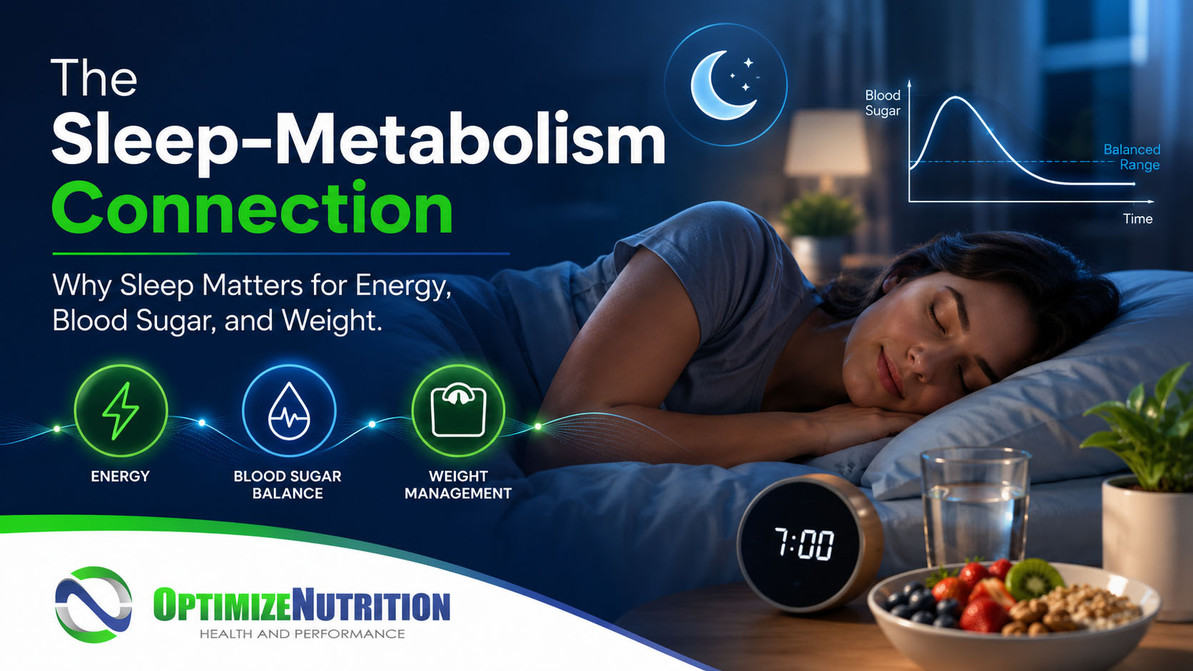
The Sleep–Metabolism Connection: Why Sleep Matters for Energy, Blood Sugar, and Weight
When people think about metabolism, they usually think about food, exercise, calories, protein, carbohydrates, or supplements.
But one of the most overlooked parts of metabolic health is sleep.
Sleep affects how your body regulates blood sugar, hunger hormones, stress hormones, cravings, energy, recovery, and fat loss. Even if your diet and workouts are solid, poor sleep can make it much harder to feel energized, manage appetite, build muscle, recover properly, and maintain a healthy body composition.
This does not mean one bad night of sleep ruins your progress. But when sleep is consistently short, broken, or poor quality, the body may become less efficient at handling stress, blood sugar, appetite, and energy regulation.
The CDC notes that good sleep is essential for health and emotional well-being, and that both sleep quantity and sleep quality matter.
Why Sleep Is a Metabolic Tool
Sleep is not just “rest.” It is an active recovery state where the body performs important repair and regulation.
During healthy sleep, the body supports:
- Blood sugar regulation
- Insulin sensitivity
- Muscle repair
- Hormone production
- Brain recovery and memory processing
- Immune function
- Appetite regulation
- Nervous system recovery
- Inflammatory balance
- Energy production
When sleep is consistently poor, these systems can become more strained.
Adults are generally recommended to get at least 7 hours of sleep per night for optimal health. A joint consensus statement from the American Academy of Sleep Medicine and Sleep Research Society concluded that adults should sleep 7 or more hours per night on a regular basis to support overall health.
Sleep and Blood Sugar Balance
One of the most important connections between sleep and metabolism is blood sugar regulation.
When sleep is too short or poor quality, the body may become less sensitive to insulin. Insulin is the hormone that helps move glucose from the bloodstream into the cells, where it can be used for energy.
When insulin sensitivity is lower, the body may have a harder time managing blood sugar. Over time, this can contribute to cravings, low energy, abdominal weight gain, and increased metabolic stress.
A clinical review on sleep restriction and metabolism found that sleep restriction was linked with increased hunger, increased calorie intake, weight gain, and reduced insulin sensitivity.
This is one reason sleep can be especially important for people working on:
- Weight management
- Insulin resistance
- Prediabetes
- Type 2 diabetes risk
- Energy crashes
- Cravings
- Metabolic syndrome
- Fitness and body composition
Food quality matters, but sleep can influence how well your body uses that food.
Sleep, Cravings, and Appetite Hormones
Poor sleep can make it harder to regulate appetite.
After a short or restless night, many people notice stronger cravings for sugar, salty snacks, caffeine, or high-calorie foods. This is not just a lack of willpower. It can be connected to changes in hunger hormones, reward pathways in the brain, blood sugar control, and stress hormones.
Two hormones often discussed in this area are:
- Ghrelin: A hunger-signalling hormone
- Leptin: A fullness and energy-status hormone
Some research has found that sleep restriction may increase ghrelin and influence calorie intake, although not every study finds the exact same hormone changes. One controlled study found that sleep restriction increased ghrelin levels and that this increase was associated with higher calorie intake.
In practical terms, poor sleep can make healthy eating feel harder because the body is looking for quick energy.
This may show up as:
- More evening snacking
- Stronger cravings for carbs or sweets
- Less satisfaction after meals
- More reliance on caffeine
- Bigger appetite the next day
- Lower motivation to meal prep
- Less impulse control around food
For many people, improving sleep quality makes nutrition easier to follow.
Sleep and Cortisol
Cortisol is often called the body’s main stress hormone. It is not bad. In fact, you need cortisol to wake up, focus, train, respond to stress, and regulate energy.
The issue is when stress is high and sleep is poor for too long.
Poor sleep can disrupt the normal rhythm of cortisol. Ideally, cortisol rises in the morning to help you wake up and gradually lowers toward the evening so your body can shift into rest mode.
When this rhythm is disrupted, people may feel:
- Tired in the morning
- Wired at night
- Hungry or snacky in the evening
- More anxious or irritable
- More dependent on caffeine
- Less recovered from workouts
- More likely to store weight around the midsection
Supporting sleep is one of the most important ways to support a healthier stress response.
Sleep and Weight Management
Weight management is often oversimplified as “eat less and move more.” While calories still matter, metabolism is influenced by many factors, including sleep.
Poor sleep may affect weight management by:
- Increasing hunger
- Increasing cravings
- Reducing insulin sensitivity
- Raising stress load
- Lowering motivation to exercise
- Reducing workout performance
- Increasing evening snacking
- Making recovery harder
- Affecting hormones involved in appetite and energy balance
This is why someone can eat fairly well and train regularly but still struggle if sleep is consistently poor.
Better sleep does not magically cause fat loss on its own, but it can make the entire process easier.
Sleep and Muscle Recovery
Sleep also plays a major role in recovery from training.
During sleep, the body supports tissue repair, nervous system recovery, immune balance, and hormone regulation. If sleep is poor, workouts may feel harder, soreness may last longer, and motivation may drop.
For active people, poor sleep can affect:
- Strength
- Endurance
- Reaction time
- Coordination
- Recovery between workouts
- Muscle repair
- Injury risk
- Mood and focus
This is especially important for people who train hard, work physical jobs, play sports, or are trying to build muscle while managing stress.
Signs Poor Sleep May Be Affecting Your Metabolism
Poor sleep does not always look like obvious insomnia. Some people sleep for 7–8 hours but still wake up tired because their sleep quality is poor.
Signs sleep may be affecting your metabolism include:
- Waking up tired
- Strong cravings, especially later in the day
- Needing caffeine to function
- Energy crashes after meals
- Poor workout recovery
- Increased belly fat despite consistent habits
- Feeling wired at night
- Waking between 2–4 a.m.
- Mood swings or irritability
- Brain fog
- Increased hunger the day after poor sleep
- Trouble losing weight
- Poor blood sugar control
- More frequent snacking
These symptoms do not prove that sleep is the only issue, but they are worth paying attention to.
The Blood Sugar–Sleep Loop
Blood sugar and sleep influence each other.
Poor sleep can make blood sugar harder to regulate. But unstable blood sugar can also make sleep worse.
For example, some people wake up in the night because their body is responding to a blood sugar dip, stress response, or poor evening nutrition pattern.
Common contributors may include:
- Skipping meals during the day
- Under-eating protein
- Overdoing caffeine
- Eating a high-sugar snack before bed
- Eating too little overall
- Drinking alcohol in the evening
- Training hard without enough fuel
- Going too low-carb for your activity level
A balanced evening meal can sometimes help support better sleep.
A good dinner may include:
- Protein
- Fibre-rich carbohydrates
- Healthy fats
- Minerals
- Enough total calories
Examples include:
- Salmon with roasted potatoes and vegetables
- Chicken with rice, avocado, and salad
- Greek yogurt with berries, chia, and nuts
- Eggs with sautéed greens and sweet potato
- Tofu or tempeh with quinoa and vegetables
Caffeine and Metabolism: Helpful but Easy to Overdo
Caffeine can improve focus, energy, and performance, but too much or too late in the day can interfere with sleep.
The problem is that poor sleep often leads to more caffeine, and more caffeine can lead to worse sleep. This creates a cycle.
A healthier caffeine strategy may include:
- Having caffeine earlier in the day
- Avoiding caffeine late afternoon or evening
- Not using caffeine to cover up chronic exhaustion
- Pairing caffeine with food if it makes you jittery
- Taking occasional lower-caffeine days
- Using electrolytes, protein, and daylight exposure for energy support
Caffeine is a tool, but it should not be the foundation of your energy.
Natural Ways to Support Better Sleep and Metabolism
Improving sleep does not have to be complicated. The goal is to help the body feel safe, nourished, and ready to downshift at night.
Helpful habits include:
- Get morning light exposure within the first hour of waking
- Keep a consistent sleep and wake schedule
- Eat enough protein during the day
- Avoid going to bed overly hungry
- Reduce bright screens close to bedtime
- Keep your room cool, dark, and quiet
- Limit late caffeine
- Avoid intense late-night workouts when possible
- Do relaxing breathing or stretching before bed
- Get outside during the day
- Keep alcohol intake low or avoid it
- Build a calming evening routine
Consistency matters more than perfection.
Supplements That May Support Sleep Quality
Supplements can be helpful, but they work best when paired with strong sleep habits, balanced meals, and proper stress management.
Magnesium
Magnesium supports muscle relaxation, nerve function, and normal energy metabolism. It is commonly used in the evening to support relaxation.
Common forms include:
- Magnesium glycinate
- Magnesium bisglycinate
- Magnesium citrate
- Magnesium malate
Magnesium glycinate or bisglycinate is often preferred for evening relaxation.
Glycine
Glycine is an amino acid that may support relaxation and sleep quality. It is naturally found in collagen-rich foods and is also available as a supplement.
It may be especially useful for people who feel physically tense or have trouble winding down at night.
L-Theanine
L-theanine is an amino acid found in green tea. It is commonly used to support calm focus and relaxation without being overly sedating.
It may be helpful for people who feel mentally busy at night.
Melatonin
Melatonin is a hormone involved in sleep timing. It may be useful in certain situations, such as travel, jet lag, shift work, or circadian rhythm disruption.
However, it is not always the best first choice for general sleep support. Many people do better by first improving light exposure, bedtime routine, caffeine timing, stress management, and mineral intake.
Adaptogens
Adaptogens are herbs traditionally used to support the body’s response to stress.
Common examples include:
- Ashwagandha
- Reishi mushroom
- Holy basil
- Schisandra
- Rhodiola
Some are more calming, while others are more energizing, so it is important to choose the right one for your needs.
Electrolytes
Electrolytes may support hydration, muscle function, and nervous system balance, especially for people who sweat heavily, train often, use sauna, or follow lower-carb diets.
Key electrolytes include:
- Sodium
- Potassium
- Magnesium
- Calcium
For some people, better hydration and mineral intake during the day can improve evening relaxation and reduce nighttime muscle tension.
When to Look Deeper
If sleep problems are ongoing, it may be worth looking beyond basic sleep hygiene.
Possible underlying factors include:
- Sleep apnea
- Blood sugar instability
- Chronic stress
- Low iron or ferritin
- Thyroid imbalance
- Hormonal changes
- Digestive discomfort
- Restless legs
- Medication side effects
- Excess caffeine or stimulant use
- Overtraining
- Anxiety or mood concerns
People who snore loudly, wake up gasping, have morning headaches, or feel exhausted despite enough time in bed should speak with a healthcare provider about possible sleep apnea.
A Simple Sleep–Metabolism Reset
Here is a practical 7-day reset to support sleep and metabolism:
- Set a consistent bedtime and wake time
- Get outside for morning light
- Eat protein at breakfast
- Avoid caffeine after lunch
- Include minerals and electrolytes during the day
- Eat a balanced dinner with protein, fibre, and healthy carbs
- Turn screens down or off 60 minutes before bed
- Keep the bedroom cool and dark
- Do 5 minutes of slow breathing before sleep
- Avoid intense late-night training
- Track energy, cravings, sleep quality, and mood
The goal is not to be perfect. The goal is to create a rhythm that helps your body recover.
The Bottom Line
Sleep is one of the most underrated tools for metabolic health.
Poor sleep can affect blood sugar, cravings, appetite hormones, cortisol, recovery, energy, and weight management. On the other hand, improving sleep can make healthy eating, exercise, and supplement routines work better.
A strong metabolic plan should include:
- Nutrient-dense food
- Strength training
- Daily movement
- Blood sugar balance
- Stress management
- Consistent sleep
- Smart supplementation when needed
At Optimize Nutrition, we carry a wide range of products that may support sleep, recovery, and metabolic health, including magnesium, glycine, electrolytes, omega-3s, protein powders, adaptogens, and foundational health supplements. Visit us in-store in Nanaimo or shop online to find options that fit your goals and lifestyle.
Disclaimer: This article is for educational purposes only and is not intended to diagnose, treat, cure, or prevent any disease. Always speak with a qualified healthcare practitioner before starting new supplements, especially if you are pregnant, taking medication, managing a health condition, or using sleep, stress, blood sugar, or hormone-related products.
Recent Posts
-

Product Highlight: Organika Tart Cherry
When it comes to recovery, most people immediately think about protein, hydration and stretching. Wh …Jul 21, 2026 Hayley Dickenson, RHN -

Clean Water, Better Wellness: Why Home Water Filtration Matters
Water is one of the most basic parts of health, yet it is often one of the most overlooked. Most peo …Jul 16, 2026 Hayley Dickenson, RHN -

Nervous System Regulation: How Stress Affects Your Health—and What You Can Do About It
Feeling tired but unable to relax? Struggling with restless sleep, digestive problems, irritability, …Jul 14, 2026 Hayley Dickenson, RHN