Why Muscle Mass Matters for Health, Metabolism, and Healthy Body Composition
A lot of people still think muscle is mainly about looking fit, athletic, or “toned.” But muscle really matters for a lot more than appearance. It plays a huge role in how your body feels, functions, and ages. It affects your strength, mobility, metabolism, blood sugar control, recovery, and even how easy or hard it is to maintain a healthy body composition.
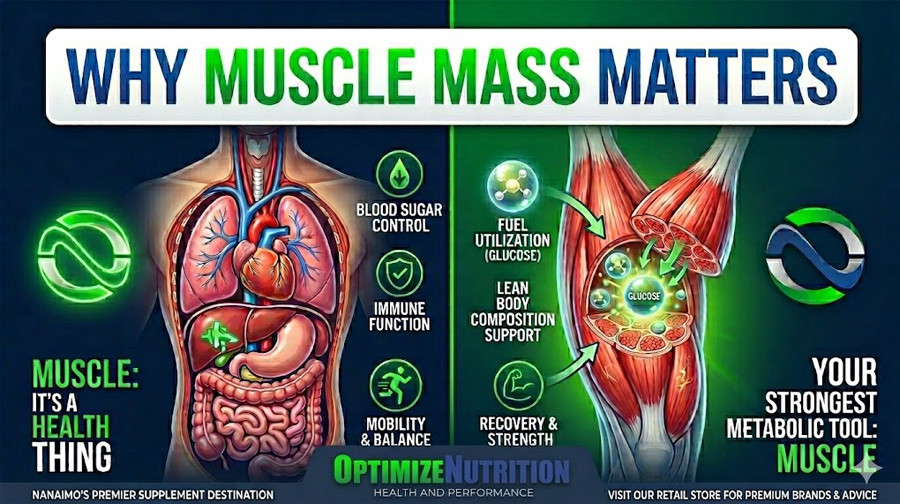
In other words, muscle is not just a gym thing. It is a health thing.
Muscle Does More Than Most People Realize
Muscle is one of the most important tissues in the body when it comes to staying healthy. It helps you move well, stay strong, support your joints, and handle everyday physical tasks more easily. But beyond that, it also has a major impact on your metabolism.
Your muscles help absorb and use glucose from the food you eat, which supports better blood sugar balance and insulin sensitivity. They also contribute to how many calories your body uses overall. That does not mean building a bit of muscle suddenly turns your metabolism into a furnace, but it does mean that having more lean mass can make it easier to support a healthier metabolism over time.
This is one of the reasons muscle becomes such a big deal for overall wellness. It is not just about how your body looks. It is also about how your body works.
Muscle Can Help You Stay Leaner Over Time
One of the most overlooked benefits of building and maintaining muscle is how much it can help with body composition.
Muscle does not make someone immune to gaining body fat, of course. But it can absolutely help create a better environment for staying leaner and healthier. People with more muscle mass often handle carbohydrates better, have better insulin sensitivity, and generally do better with nutrient use and energy balance. When you strength train regularly, your body is often better at using nutrients for repair, recovery, and performance instead of just storing excess energy.
This is also why losing weight without paying attention to muscle can backfire. If someone diets hard, loses weight fast, and also loses muscle along the way, they may end up with a slower metabolism, less strength, and a harder time maintaining results. That is why the goal should not just be to lose weight. The better goal is to improve body composition by holding onto muscle while reducing excess body fat.
Why Muscle Loss Happens So Easily
A lot of people are slowly losing muscle without even realizing it.
It can happen from:
- sitting too much
- doing lots of cardio but no resistance training
- not eating enough protein
- chronic dieting
- poor recovery
- high stress
- getting older and becoming less active
Sometimes body weight does not change much, but muscle slowly drops while body fat slowly increases. On paper, it may not look dramatic, but over time it can have a real impact on metabolism, strength, energy, and overall health.
The Best Ways to Build and Keep Muscle
The good news is that the basics really do work.
Strength training
This is the biggest one. If you want your body to keep muscle, you need to give it a reason to. Strength training sends that signal. That can mean dumbbells, barbells, machines, resistance bands, bodyweight exercises, or even simple functional work if done consistently.
You do not need to train like a bodybuilder. For most people, 2 to 4 strength sessions per week is a great place to start.
Protein intake
Protein gives your body the building blocks it needs to repair and maintain muscle. A lot of people simply do not eat enough, especially if they are busy, dieting, or just not planning meals well.
Trying to get a good source of protein at each meal usually makes a big difference.
Daily movement
Going to the gym a few times a week is great, but it helps even more when it is paired with regular movement throughout the day. Walking, stairs, staying active, and generally not being sedentary all support better long-term muscle and metabolic health.
Recovery
Sleep and recovery matter more than a lot of people think. You do not build muscle just from working out. You build it from recovering from that work. Poor sleep, constant stress, and never properly refueling can all make progress harder.
Supplements That Can Help
Supplements are not the foundation, but they can absolutely help support the basics.
Protein powder
Protein powder is one of the easiest and most useful options for a lot of people. It is not magic, but it is convenient, and sometimes convenience is what makes the difference between hitting your protein needs and falling short.
Creatine monohydrate
Creatine is one of the most well-supported supplements for strength, performance, and lean mass. It is simple, affordable, and backed by a lot of research. For many people, it is one of the best additions to a muscle-supportive routine.
Vitamin D
Vitamin D is not a direct muscle-building supplement, but if someone is low, it can affect overall musculoskeletal health, energy, and function. This can be especially relevant in Canada, where low vitamin D is pretty common for much of the year.
Omega-3s
Omega-3s are more of an overall health support supplement than a direct muscle builder, but they may still help with recovery and general wellness.
What This Looks Like in Real Life
For most people, supporting muscle mass does not need to be extreme or complicated.
It can look like:
- strength training a few times per week
- eating enough protein each day
- staying active outside the gym
- not crash dieting
- recovering properly
- using a few basic supplements where helpful
That is it. It does not need to be perfect. It just needs to be consistent.
Final Thoughts
Muscle mass matters for almost everyone, not just athletes or gym-focused people. It helps support a healthier metabolism, better blood sugar balance, more strength, better mobility, and a better chance of maintaining a healthier body composition over time. It can also make it easier to prevent the slow slide toward less muscle, more body fat, and a body that feels less capable year after year.
You do not need to chase extreme muscle gain to benefit from this. Even modest improvements in muscle mass and strength can have a meaningful effect on how you feel and how well your body functions.
A good goal is not just to weigh less. A better goal is to build a body that is stronger, healthier, and more resilient.
Personalized Nutrition for Real Results Understanding the "why" is the first step; the "how" is where most people get stuck. Our Registered Holistic Nutritionists offer comprehensive coaching, data-driven testing, and custom meal plans designed to fit your lifestyle in Nanaimo and beyond.
Ready to take the next step?
Recent Posts
-

Astaxanthin Benefits: The Antioxidant for Skin, Eyes, Recovery & Healthy Aging **Draft
Astaxanthin has quietly become one of the most talked-about antioxidants in the supplement world. Un …Oct 02, 2026 -

Best Natural Supplements for Better Sleep (Beyond Melatonin)
Melatonin gets most of the attention when people look for sleep support, but it is not the only opti …Oct 01, 2026 -

Best Greens Powders in Canada: 4 Staff Picks for Different Goals
Greens powders can be a convenient way to increase the variety of plant-based nutrients in a daily r …Sep 25, 2026