
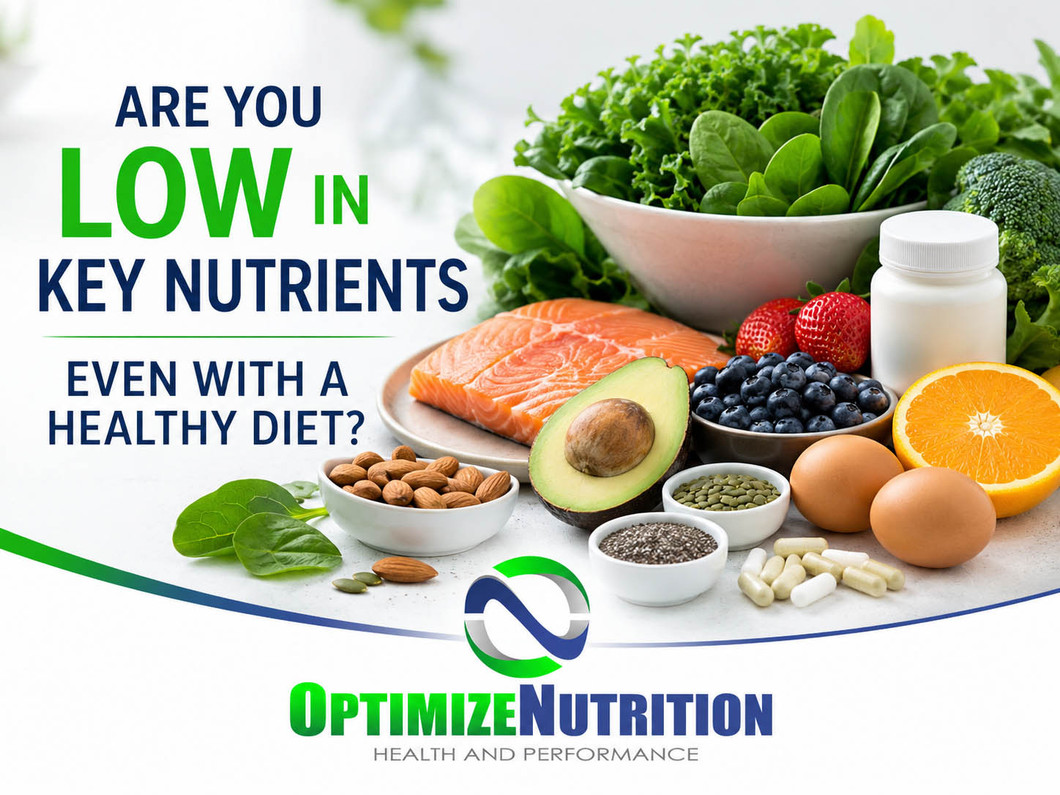
Are You Low in Key Nutrients Even with a “Healthy” Diet?
Many people assume that if they eat fairly well, they are automatically getting everything their body needs. But the reality is more nuanced.
Even with a healthy diet, it is still possible to fall short on key vitamins, minerals, essential fats, and other nutrients that support energy, mood, immune health, metabolism, hormones, digestion, and recovery.
This does not mean everyone needs a massive supplement routine. Food should always be the foundation. But modern diets, lifestyle stress, digestive issues, low sunlight exposure, restrictive eating patterns, intense training, medications, and soil or food-quality concerns can all contribute to nutrient gaps over time.
Research from Canadian nutrition data has shown that many adults may not meet recommended intakes for nutrients such as vitamin D, magnesium, calcium, vitamin A, vitamin C, fibre, and potassium from food alone.
Why Nutrient Gaps Can Happen
A person can eat a “healthy” diet and still be low in certain nutrients for several reasons.
Common contributors include:
- Eating the same foods too often with limited variety
- Low intake of seafood, organ meats, legumes, seeds, or colourful plants
- Low-fat dieting, which may reduce intake or absorption of fat-soluble vitamins
- Avoiding animal foods without replacing B12, iron, zinc, or omega-3s properly
- Low sunlight exposure, especially in Canada during fall and winter
- High stress, poor sleep, or heavy exercise increasing nutrient demand
- Digestive issues that reduce absorption
- Certain medications that may affect nutrient status
- Higher needs during pregnancy, aging, intense training, or recovery periods
This is why nutrient status is not just about “eating clean.” It is about intake, absorption, demand, lifestyle, and individual biology.
Common Nutrients People May Be Low In
1. Vitamin D
Vitamin D is one of the most common nutrients people may struggle to maintain, especially in northern climates like Canada.
Vitamin D supports:
- Immune function
- Bone and muscle health
- Calcium absorption
- Mood and nervous system function
- Healthy inflammatory balance
Because vitamin D is produced in the skin through sun exposure, levels can drop when people spend most of their time indoors, use sunscreen consistently, live in northern regions, or get limited sun during winter months.
Canadian and North American data consistently suggest vitamin D intake is commonly below recommended levels.
Supplement note: Vitamin D3 is commonly used, and many people pair it with vitamin K2, especially when supporting bone and calcium metabolism. Blood testing is ideal to determine personal needs.
2. Magnesium
Magnesium is involved in hundreds of processes in the body. It plays a role in muscle function, nerve signalling, energy production, blood sugar metabolism, stress response, and sleep quality.
Low magnesium intake may be more common than many people realize. Canadian adult intake data found a high prevalence of inadequate magnesium intake, and U.S. nutrient surveys have also shown magnesium as a commonly under-consumed mineral.
Food sources include:
- Pumpkin seeds
- Almonds and cashews
- Spinach and leafy greens
- Black beans and lentils
- Dark chocolate
- Whole grains
Supplement note: Magnesium glycinate is often chosen for relaxation and sleep support, while magnesium citrate may be used when bowel regularity is also a goal.
3. Vitamin B12
Vitamin B12 is essential for red blood cell formation, nervous system health, methylation, and energy metabolism.
People at higher risk of low B12 may include:
- Vegans and vegetarians
- Older adults
- People with low stomach acid
- Those using certain acid-reducing medications
- People with digestive or absorption challenges
Because B12 is mostly found in animal foods, plant-based diets require careful planning and usually supplementation.
Supplement note: Methylcobalamin and adenosylcobalamin are common active forms of B12. A B-complex may be more appropriate than isolated B12 for some people, depending on their overall nutrient needs.
4. Iron
Iron is important for oxygen transport, energy production, thyroid function, and overall vitality.
People more likely to struggle with low iron include:
- Menstruating women
- Athletes
- People eating little or no red meat
- Those with heavy menstrual cycles
- People with digestive conditions
- Pregnant individuals
Low iron can sometimes show up as fatigue, poor exercise tolerance, feeling cold, hair shedding, or low motivation. However, iron should not be supplemented blindly because too much can be harmful.
Supplement note: Ferritin testing is often more useful than looking at iron alone, because ferritin reflects stored iron.
5. Omega-3 Fatty Acids
Omega-3 fats, especially EPA and DHA, are important for brain health, cardiovascular function, inflammatory balance, eye health, and cell membrane structure.
Many people do not eat fatty fish often enough to maintain optimal omega-3 intake. The main food sources include:
- Salmon
- Sardines
- Mackerel
- Anchovies
- Herring
- Trout
Plant foods like flax, chia, and walnuts contain ALA, a plant-based omega-3, but conversion into EPA and DHA is often limited.
Supplement note: Fish oil, algae oil, and high-quality omega-3 formulas can help fill this gap. Look for third-party testing, freshness, and clear EPA/DHA amounts on the label.
6. Zinc
Zinc supports immune function, skin health, wound healing, testosterone production, taste and smell, and normal growth and repair.
Zinc intake can be lower in people who eat little animal protein or rely heavily on grains and legumes without proper preparation. Phytates in some plant foods can reduce zinc absorption.
Food sources include:
- Oysters
- Beef
- Pumpkin seeds
- Chicken
- Eggs
- Lentils
- Chickpeas
Supplement note: Zinc picolinate, citrate, and bisglycinate are common supplemental forms. Long-term high-dose zinc should be avoided unless guided by a practitioner, as it may interfere with copper balance.
7. Calcium and Potassium
Calcium and potassium are not always thought of as “supplement nutrients,” but they are commonly under-consumed.
Calcium supports bones, teeth, muscle contraction, and nerve function. Potassium supports blood pressure regulation, muscle function, hydration, and electrolyte balance.
Canadian data has suggested many adults may not meet recommended intakes for calcium, potassium, and fibre through food alone.
Food sources include:
- Yogurt
- Kefir
- Sardines with bones
- Fortified dairy alternatives
- Tofu set with calcium
- Leafy greens
- Potatoes
- Bananas
- Avocado
- Beans
- Lentils
- Squash
- Coconut water
Signs You May Not Be Getting Enough Key Nutrients
Nutrient gaps do not always cause obvious symptoms at first. When they do, they can overlap with many other health issues.
Possible signs may include:
- Low energy
- Poor sleep quality
- Muscle cramps or tension
- Frequent cravings
- Brittle nails or hair changes
- Poor recovery after workouts
- Low mood or motivation
- Brain fog
- Feeling cold often
- Low immune resilience
- Dry skin
- Restless legs
- Poor stress tolerance
These symptoms do not automatically mean you have a deficiency, but they can be a sign that your nutrition, digestion, lifestyle, and lab work are worth reviewing.
Food First: How to Build a More Nutrient-Dense Diet
Before jumping straight to supplements, focus on increasing nutrient density.
A strong foundation includes:
- Protein at each meal
- Colourful vegetables and fruits daily
- Fatty fish or omega-3-rich foods
- Nuts and seeds
- Mineral-rich foods like leafy greens, legumes, and cacao
- Fermented foods for digestion support
- Quality fats like olive oil, avocado, eggs, and fish
- Enough calories, especially for active people
- Hydration and electrolytes
One of the biggest mistakes people make is eating “clean” but too narrowly. Chicken, rice, salad, and protein powder may look healthy, but it may not provide the broad micronutrient profile your body needs long term.
When Supplements Can Be Helpful
Supplements are not a replacement for a healthy diet, but they can be useful when:
- Your diet is limited or repetitive
- You live in a low-sunlight climate
- You have increased nutrient needs
- You are vegan or vegetarian
- You train hard or sweat heavily
- You have digestive challenges
- Blood work shows low or suboptimal levels
- You struggle to consistently eat enough nutrient-dense foods
Common foundational supplements may include:
- Vitamin D3/K2
- Magnesium
- Omega-3
- B-complex
- Multivitamin/mineral
- Iron, only when needed
- Zinc, when appropriate
- Electrolytes
- Greens or whole-food nutrient powders
A multivitamin can be helpful as “nutritional insurance,” but quality matters. Look for well-absorbed mineral forms, active B vitamins, reasonable dosages, and formulas that do not rely on unnecessary mega-dosing.
Testing Is Better Than Guessing
Some nutrients are safer and easier to supplement generally, such as vitamin D, magnesium, omega-3, or a modest multivitamin. Others, like iron, high-dose zinc, iodine, selenium, and fat-soluble vitamins, require more care.
Useful lab markers to discuss with a practitioner may include:
- Vitamin D
- Ferritin and iron panel
- B12
- Folate
- Magnesium, ideally RBC magnesium if available
- Thyroid markers
- CBC
- Inflammatory markers
- Fasting glucose and insulin
Testing helps avoid both under-supplementing and over-supplementing.
The Bottom Line
Even a healthy diet can leave gaps if food variety, absorption, sunlight exposure, stress, activity level, and individual needs are not considered.
The goal is not to take everything. The goal is to identify what your body actually needs, build a more nutrient-dense foundation, and use supplements strategically where they make sense.
At Optimize Nutrition, we carry a wide range of vitamins, minerals, omega-3s, greens powders, electrolytes, and targeted health supplements to help support your nutrition plan. Visit us in-store in Nanaimo or shop online to find options that fit your goals, lifestyle, and budget.
Disclaimer: This article is for educational purposes only and is not intended to diagnose, treat, cure, or prevent any disease. Always speak with a qualified healthcare practitioner before starting new supplements, especially if you are pregnant, taking medication, managing a health condition, or considering iron, iodine, selenium, or high-dose vitamin supplementation.
Recent Posts
-

Astaxanthin Benefits: The Antioxidant for Skin, Eyes, Recovery & Healthy Aging **Draft
Astaxanthin has quietly become one of the most talked-about antioxidants in the supplement world. Un …Oct 02, 2026 -

Best Natural Supplements for Better Sleep (Beyond Melatonin)
Melatonin gets most of the attention when people look for sleep support, but it is not the only opti …Oct 01, 2026 -

Best Greens Powders in Canada: 4 Staff Picks for Different Goals
Greens powders can be a convenient way to increase the variety of plant-based nutrients in a daily r …Sep 25, 2026