
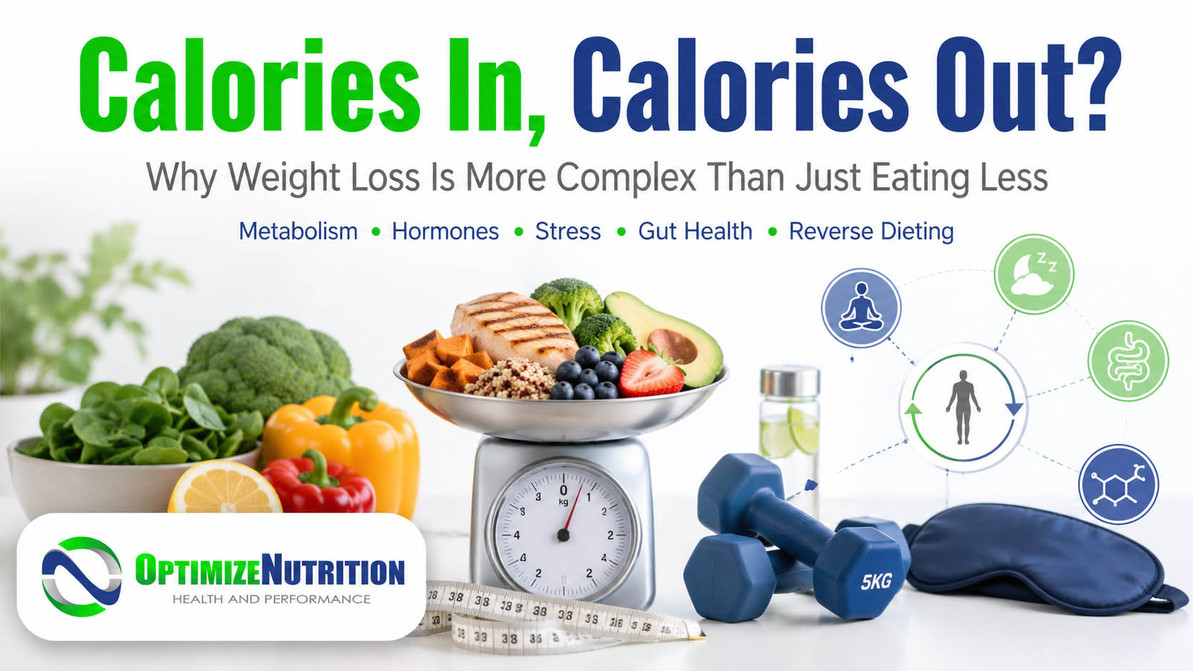
Why Calories In, Calories Out Is Too Simple for Real Weight Loss
“Calories in, calories out” is one of the most common phrases in the fitness and nutrition world.
On the surface, it makes sense. If you eat more energy than your body uses, weight gain can happen. If you eat less energy than your body uses, weight loss can happen.
But in real life, the body is not a simple calculator.
This is where the concept starts to fall apart.
While calories do matter, the idea that weight loss is only about eating less and moving more ignores many important factors that affect metabolism, hormones, digestion, stress, blood sugar, muscle mass, sleep, and nutrient status.
For some people, especially women who have spent years dieting, lowering calories again and again can actually make things worse. Instead of seeing better results, they may experience weight loss resistance, low energy, cravings, hormonal symptoms, poor digestion, nutrient deficiencies, and a metabolism that feels like it has slowed down.
The truth is simple: calories matter, but they are not the whole story.
What “Calories In, Calories Out” Gets Right
The basic idea behind calories in, calories out is that body weight is influenced by energy balance.
This means:
- Calories in = food and drinks you consume
- Calories out = energy your body uses through metabolism, movement, exercise, digestion, and daily activity
This part is not completely wrong. Energy balance does matter.
But the problem is that many people treat this idea like it is fixed and predictable. They assume that if someone is not losing weight, they must simply be eating too much or not trying hard enough.
That is where the idea becomes overly simplistic and even harmful.
Your body is constantly adjusting. When you eat less, your body may burn less. When you are stressed, sleep deprived, under-muscled, nutrient deficient, inflamed, or insulin resistant, your body may not respond the way you expect.
This is why two people can eat the same calories and exercise the same amount but get very different results.
Why Calories Out Is Not Fixed
One of the biggest problems with the calories in, calories out model is that people often treat “calories out” like a stable number.
It is not.
Your body changes how much energy it burns based on many factors, including:
- How much muscle you have
- How much you move throughout the day
- How much you eat
- How long you have been dieting
- Sleep quality
- Stress levels
- Hormone function
- Thyroid health
- Blood sugar regulation
- Gut health
- Inflammation
- Nutrient status
For example, when someone starts dieting aggressively, they may lose weight at first. But over time, the body can adapt.
They may unconsciously move less. Their workouts may become weaker. Hunger may increase. Cravings may go up. Digestion may slow down. Body temperature may drop. Sleep may worsen. Their menstrual cycle may become irregular. Mood and energy may decline.
This is not a lack of discipline. It is the body trying to conserve energy.
The Chronic Dieting Problem
A common issue we see, especially with women, is years of chronic dieting.
Many women have spent a long time eating low calories, cutting carbs, skipping meals, doing intense workouts, and trying to force weight loss through restriction. At first, this may work. But eventually, the body can push back.
This can create a frustrating cycle:
- They lower calories.
- Weight drops temporarily.
- Progress stalls.
- They lower calories again.
- Energy drops, cravings increase, and stress rises.
- Weight loss becomes harder.
- They feel like they need to restrict even more.
Over time, this can lead to what many people call weight loss resistance.
The body may become less responsive because it no longer feels safe or well-fueled. This does not mean the body is “broken,” but it does mean that simply eating less may no longer be the best answer.
Signs That Eating Less May Not Be Working Anymore
Some signs that chronic dieting may be working against you include:
- Low energy
- Constant hunger or cravings
- Poor sleep
- Feeling cold often
- Low mood or irritability
- Irregular or missing menstrual cycles
- Hair shedding
- Digestive issues
- Bloating or constipation
- Poor workout recovery
- Loss of strength
- Weight gain despite low calories
- Difficulty losing weight even with strict dieting
- Increased belly fat during stressful periods
These signs can suggest that the body needs more support, not more restriction.
Weight Loss Is Affected by More Than Calories
Weight gain and weight loss are influenced by many systems in the body. This is why a more complete approach is often needed.
1. Insulin and Blood Sugar
Insulin is a hormone that helps move glucose from the bloodstream into cells. When insulin sensitivity is poor, the body may have a harder time managing blood sugar and using energy efficiently.
Chronic dieting, stress, poor sleep, low muscle mass, highly processed foods, and inconsistent eating patterns can all affect blood sugar regulation.
Some people assume insulin resistance only happens from overeating, but that is not always the full picture. Long-term stress, under-eating, poor recovery, nutrient deficiencies, and muscle loss can also contribute to poor metabolic health.
Supporting insulin sensitivity often requires more than cutting calories. It may involve:
- Eating enough protein
- Building muscle
- Walking after meals
- Improving sleep
- Reducing ultra-processed foods
- Eating enough fiber
- Managing stress
- Eating consistently enough to avoid blood sugar crashes
2. Muscle Mass
Muscle is one of the most important factors in long-term metabolism.
The more lean muscle you have, the more metabolically active tissue your body carries. Muscle also helps support insulin sensitivity, strength, mobility, and healthy aging.
When people diet too aggressively, they may lose muscle along with body fat. This can lower daily energy output and make it easier to regain weight later.
This is why strength training, adequate protein, and proper recovery are so important.
The goal should not just be to weigh less. The goal should be to build a healthier, stronger body.
3. Stress and Cortisol
Stress plays a major role in weight regulation.
When stress is high, cortisol can rise. Cortisol is not bad — it is a necessary hormone — but chronically elevated stress can affect blood sugar, sleep, digestion, cravings, inflammation, and fat storage patterns.
Someone may be eating low calories and exercising hard, but if their body is under constant stress, weight loss may still be difficult.
Common stressors include:
- Emotional stress
- Poor sleep
- Overtraining
- Under-eating
- Skipping meals
- Too much caffeine
- Blood sugar crashes
- Work or family stress
- Digestive inflammation
For many people, the answer is not harder workouts and fewer calories. The answer may be better recovery, better meals, more sleep, and a calmer nervous system.
4. Sleep
Poor sleep can affect hunger hormones, cravings, insulin sensitivity, cortisol, motivation, and exercise recovery.
When sleep is poor, people often crave more quick energy foods, feel less motivated to move, and have a harder time regulating appetite.
Even with good nutrition, poor sleep can make weight loss harder.
5. Nutrient Deficiencies
Low-calorie dieting can sometimes lead to low intake of important nutrients.
This may include:
- Iron
- B vitamins
- Magnesium
- Zinc
- Vitamin D
- Omega-3 fats
- Protein
- Electrolytes
- Essential fatty acids
Nutrients are required for energy production, thyroid function, hormone production, blood sugar balance, digestion, mood, and recovery.
If someone is under-eating for a long time, the body may not have enough raw materials to function properly. In that case, cutting calories further can make the problem worse.
6. Gut Health
Gut health can also affect weight regulation.
Poor digestion, bloating, constipation, food sensitivities, low stomach acid, inflammation, or an imbalanced microbiome may interfere with nutrient absorption and overall metabolic health.
If someone is not digesting food well, they may be eating “healthy” but still not getting the full benefit from their food.
Gut problems can also increase stress on the body, affect energy, and make it harder to stay consistent with nutrition and exercise.
7. Hormones and Female Physiology
Women are often more sensitive to chronic under-eating, overtraining, stress, and poor recovery.
The female body is designed to respond to energy availability. If the body senses that food intake is too low for too long, it may start down-regulating non-essential functions.
This can show up as:
- PMS changes
- Irregular cycles
- Missing periods
- Low libido
- Poor sleep
- Mood swings
- Thyroid changes
- Water retention
- Increased cravings
- Difficulty losing weight
This is why many women do not do well with constant dieting, excessive cardio, and very low-calorie plans.
For women especially, weight loss needs to be approached with respect for hormones, stress, cycle health, nutrient needs, and long-term sustainability.
Why Eating Less Is Not Always the Answer
When weight loss stalls, most people assume they need to lower calories again.
Sometimes a small calorie adjustment may be appropriate. But many times, especially after long periods of dieting, the better answer is to rebuild the body first.
That may mean:
- Eating more protein
- Increasing calories slowly
- Strength training
- Improving sleep
- Supporting digestion
- Reducing stress
- Taking a break from dieting
- Correcting nutrient deficiencies
- Improving blood sugar balance
- Building muscle
- Walking more instead of overtraining
- Creating consistency instead of extremes
This can feel scary for someone who believes eating less is the only way to lose weight. But if the metabolism, hormones, digestion, and nervous system are under-supported, pushing harder may only create more resistance.
What Is Reverse Dieting?
Reverse dieting is a strategy where calories are slowly increased after a long period of dieting or restriction.
The goal is not to rapidly overeat. The goal is to gradually bring food intake up while supporting metabolism, training performance, hormone health, energy, and digestion.
A reverse diet may help someone:
- Improve energy
- Reduce cravings
- Support better workouts
- Restore more normal hunger cues
- Improve sleep
- Support hormone function
- Build muscle
- Get out of the restrict-binge cycle
- Prepare for future fat loss in a healthier way
Reverse dieting is not magic, and it should be personalized. But for someone who has been chronically under-eating, it can be a useful tool to help rebuild their foundation.
A Better Approach to Weight Loss
A better approach asks more questions than just “how many calories are you eating?”
For example:
- Are you eating enough protein?
- Are you sleeping well?
- Are you digesting food properly?
- Are your workouts helping or stressing your body more?
- Are you building muscle?
- Are you getting enough micronutrients?
- Are your blood sugar and energy stable?
- Are you constantly hungry or craving sugar?
- Are you under high stress?
- Have you been dieting for months or years?
- Is your menstrual cycle healthy?
- Are you eating enough to support your activity level?
These questions give a much clearer picture than calories alone.
How Optimize Coaching Can Help
If you feel stuck in the cycle of dieting harder, eating less, and still not seeing results, this is exactly where personalized coaching can help.
At Optimize Coaching, our team of Registered Holistic Nutritionists helps clients build a stronger foundation through personalized nutrition, lifestyle guidance, support, and education. The goal is not to hand you another crash diet. The goal is to understand your body, your habits, your stress, your digestion, your health history, and your goals so we can create a realistic plan that actually fits your life.
Optimize Coaching offers personalized dietary and lifestyle plans, nutrition and life coaching, support and motivation, and options such as laboratory testing when needed. Their Kickstart Your Health program is a 3-month customized nutrition program designed around your specific health condition or goal. Their approach focuses on helping people build long-term skills, improve health, and create a plan they can actually sustain.
If you have been chronically dieting, struggling with weight loss resistance, dealing with low energy, digestive issues, cravings, or feeling like your body is no longer responding, you may not need to push harder. You may need a better strategy.
You can learn more or book a discovery call at OptimizeCoaching.ca.
Final Thoughts
Calories do matter, but the idea that weight loss is only about calories in versus calories out is too simple.
The body is dynamic. It adapts to stress, dieting, sleep, movement, hormones, digestion, nutrient intake, blood sugar, and muscle mass.
For many people, especially those who have been dieting for years, lowering calories more is not always the answer. Sometimes the next step is to eat better, recover better, build muscle, support digestion, improve nutrients, and restore a healthier metabolism.
Weight loss should not be about fighting your body into submission. It should be about understanding what your body needs, building a strong foundation, and creating a plan that supports long-term health.
Recent Posts
-

Meet Rise Nutrition: Real-Food Nutrition, Kept Simple
Meet Rise Nutrition: Real-Food Nutrition, Kept Simple We’re excited to welcome Rise Nutrition to Opt …Sep 15, 2026 -

Study Smarter This Semester: Back-to-School Tips for Focus, Memory & Mental Energy
University can be demanding on the brain. Long lectures, heavy reading loads, assignments, exams, pa …Sep 04, 2026 -
When Your Gut Isn’t the Root Problem: How Stress and the Nervous System Can Drive Digestive Symptoms
Bloating. Cramping. Constipation. Diarrhea. Nausea. Reflux. Urgency. Feeling like foods you used to …Sep 03, 2026