
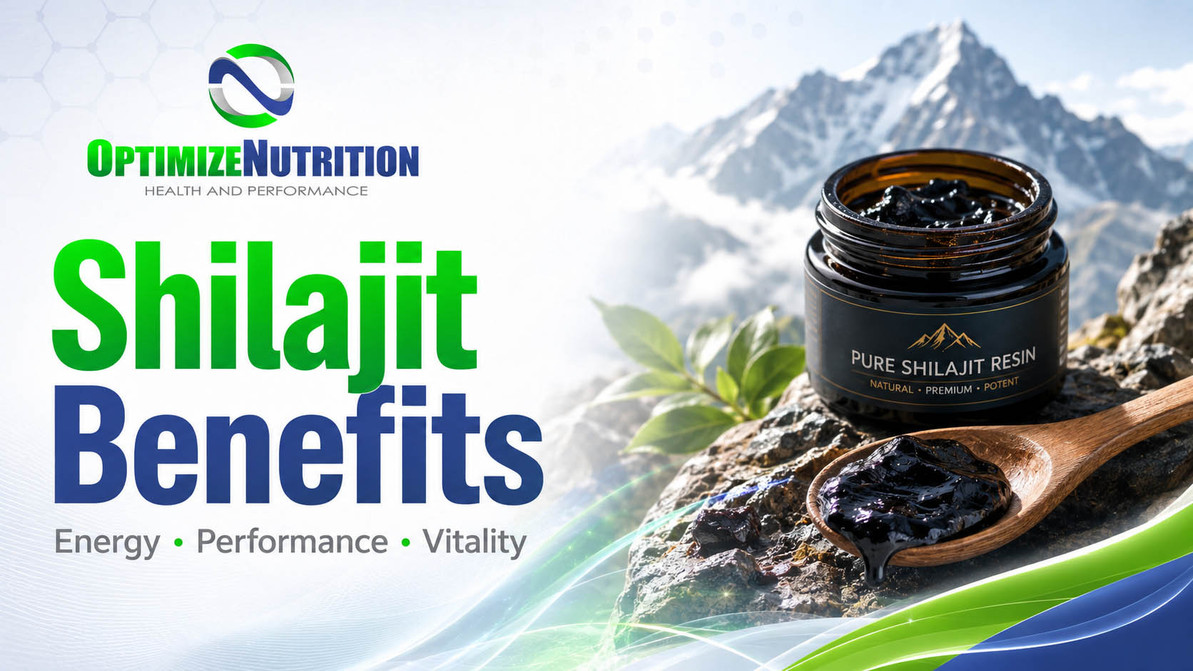
Shilajit Benefits: What the Research Says About Energy, Performance, Testosterone & Healthy Aging *unfinished
Shilajit has quickly become one of the more talked-about natural supplements in the wellness and performance world. Traditionally used in Ayurvedic medicine, this dark, resin-like substance is collected from mountainous regions and contains a complex mixture of fulvic acids, humic substances, minerals and other naturally occurring compounds.
It is often promoted for everything from testosterone and energy to brain health and longevity. Some of those claims are much further ahead of the science than others.
What makes shilajit interesting, however, is that there is legitimate human research behind several of its potential benefits — particularly in the areas of physical performance, testosterone, collagen production and bone health.
The key is separating what has actually been demonstrated from what is still mostly theory.
What Is Shilajit?
Shilajit is a naturally occurring organic-mineral material that develops in high-altitude rock formations. Its exact chemical composition varies depending on where it is sourced and how it is processed.
One of its most recognizable components is fulvic acid, but shilajit is not simply a fulvic-acid supplement. It contains a much broader mixture of organic compounds and minerals.
Traditional Ayurvedic medicine has used shilajit for centuries as a rasayana, or rejuvenating tonic. Modern research is now examining whether some of those traditional uses have measurable physiological effects.
Shilajit May Support Energy and Physical Resilience
One of the biggest reasons people take shilajit is for energy.
It is important to understand that shilajit is not a stimulant. It does not work like caffeine and generally is not associated with the immediate “kick” people expect from a pre-workout.
Instead, researchers have been interested in its possible influence on cellular energy metabolism, oxidative stress and the body's ability to maintain performance during physical fatigue.
A randomized controlled trial from the University of Nebraska studied 63 recreationally active men taking either 250 mg of purified shilajit, 500 mg or a placebo for eight weeks.
Among participants with higher baseline strength, those receiving 500 mg per day experienced a smaller decline in maximal muscular strength after a fatiguing exercise protocol than the placebo group.
That does not mean shilajit will suddenly turn into a dramatic strength enhancer.
It suggests something subtler and potentially more useful: shilajit may help support the body's ability to maintain muscular performance during fatigue.
Athletic Performance and Recovery
The sports-performance research around shilajit is still relatively small, but it continues to grow.
The same randomized trial found that 500 mg of purified shilajit daily was associated with both better retention of strength after fatigue and changes in hydroxyproline, a marker connected with collagen turnover.
More recently, a 2026 pilot study evaluated daily shilajit resin supplementation in healthy, moderately active adults over 28 days.
Researchers reported improvements from baseline in several measures of physical performance and fatigue. However, this study was open-label and did not include a placebo group, so it cannot prove that shilajit itself caused all of the improvements.
That distinction matters.
The newest research adds to the case that shilajit may have a role in exercise performance and recovery, but we still need larger randomized trials before considering it a proven sports supplement on the same level as something like creatine.
For now, shilajit appears most interesting as a potential supportive supplement for energy, fatigue resistance and recovery, rather than a direct muscle-building agent.
Testosterone: One of Shilajit's Better-Studied Uses
Shilajit's reputation as a men's health supplement is largely connected to testosterone.
Unlike many ingredients marketed as “testosterone boosters,” shilajit actually has some placebo-controlled human evidence.
In a randomized, double-blind clinical trial, healthy men between 45 and 55 years old took 250 mg of purified shilajit twice daily for 90 days.
Compared with placebo, the shilajit group experienced significant increases in:
- Total testosterone
- Free testosterone
- DHEA-S
This is one of the more compelling shilajit studies, but it still needs to be interpreted correctly.
The research does not prove that shilajit raises testosterone in every man, nor does it mean that it should be used to treat clinically low testosterone.
The participants were middle-aged men using a specific purified extract.
A better way to describe the evidence is that purified shilajit may help support healthy testosterone levels in some men, particularly as they age.
For anyone concerned about clinically low testosterone, proper blood testing and medical assessment remain far more important than taking a supplement blindly.
4. Collagen, Tendons and Connective Tissue
This may be one of shilajit's most underrated potential benefits.
A randomized controlled trial involving recreationally trained young men looked at 500 mg and 1,000 mg of shilajit per day for eight weeks.
Both doses increased a blood biomarker associated with type I collagen synthesis compared with placebo.
Type I collagen is an important structural protein found throughout the body, including in:
- Tendons
- Ligaments
- Bone
- Skin
- Skeletal muscle
- Other connective tissues
This doesn't mean shilajit has been proven to heal injuries or repair damaged joints.
What it does suggest is that shilajit could potentially influence connective-tissue remodeling and collagen metabolism, which may have implications for athletes, active adults and healthy aging.
This area deserves much more research.
5. Bone Health and Healthy Aging
Shilajit has also been studied in postmenopausal women with reduced bone density.
A randomized, double-blind, placebo-controlled clinical trial found that a standardized shilajit extract helped preserve bone mineral density over the study period in postmenopausal women with osteopenia.
Researchers also observed changes in biomarkers related to oxidative stress and inflammation.
This does not make shilajit a treatment for osteoporosis.
However, it is an interesting finding because it fits with the emerging research around collagen and connective tissue.
Together, these studies suggest shilajit may have broader implications for musculoskeletal health and healthy aging than many people realize.
For maintaining bone health, fundamentals such as resistance training, adequate protein, calcium, magnesium, vitamin D and vitamin K remain much better established.
Shilajit should be viewed as a possible addition to those basics, not a replacement.
6. Antioxidant Support and Cellular Stress
Shilajit contains numerous naturally occurring compounds that have demonstrated antioxidant activity in experimental research.
This has led to interest in whether shilajit might help the body manage oxidative stress, which naturally increases during exercise, aging and other forms of physiological stress.
The bone-health trial mentioned above observed improvements in certain oxidative-stress markers alongside the changes in bone density.
The 2026 performance study also reported changes in several blood biomarkers, although its lack of a control group means these findings should still be considered preliminary.
Rather than describing shilajit as a powerful “detoxifier” or anti-inflammatory treatment, the more defensible conclusion is that it may contribute to normal antioxidant defenses and physiological resilience.
7. Male Reproductive Health
Shilajit has traditionally been used for male vitality and reproductive health.
Small human studies have reported improvements in measures such as sperm count and sperm quality after supplementation with processed shilajit.
Combined with the testosterone research, this makes male reproductive health one of the more interesting areas for future study.
At the same time, fertility is complex.
Anyone dealing with infertility should have appropriate medical testing rather than relying on supplements alone.
8. Brain Health: Interesting, but Still Early
Shilajit is frequently promoted online as a nootropic or “brain supplement,” largely because of research involving fulvic acid.
Researchers have investigated whether fulvic compounds may interact with cellular processes related to oxidative stress and abnormal protein aggregation in the brain.
Most of the exciting claims in this area, however, still come from laboratory or preclinical research rather than high-quality human trials.
So while shilajit may eventually prove useful for cognitive or neurological health, there is currently not enough evidence to claim that it improves memory, prevents cognitive decline or protects against diseases such as Alzheimer's.
This is one area where the marketing has moved much faster than the human evidence.
9. Can Shilajit Improve Body Composition?
There is also growing interest in shilajit for muscle gain and fat loss.
The 2026 pilot study reported some favorable changes in body-composition measurements alongside improvements in physical performance.
But because the trial lacked a placebo group, those findings should be viewed cautiously.
At this point, shilajit should not be considered a fat burner.
Any potential body-composition benefit would more likely be indirect — perhaps through improved training capacity, recovery or hormonal support.
The major drivers of body composition remain:
- Calorie intake
- Protein intake
- Resistance training
- Daily activity
- Sleep
- Long-term consistency
Shilajit may complement those fundamentals, but it does not replace them.
One of the Most Important Considerations: Purity
Shilajit is unusual compared with many supplements because it originates naturally from rock and soil environments.
That means contamination is a legitimate concern.
Recent analytical research has continued to raise concerns about heavy metals in some shilajit materials and supplements, including metals such as lead, arsenic, mercury and thallium.
For that reason, this is not a supplement where buying the cheapest product available online is a particularly good strategy.
A quality shilajit product should ideally be:
- Purified
- Produced by a reputable manufacturer
- Tested for heavy metals
- Tested for microbial contamination
- Standardized when appropriate
- Supported by a Certificate of Analysis or equivalent quality testing
With shilajit, quality testing is part of the product itself.
How Much Shilajit Is Typically Used?
Many human studies have used doses in the range of approximately 250 to 500 mg per day, although some collagen research has used up to 1,000 mg daily.
Different products can vary substantially in concentration and processing, so research doses should not automatically be applied to every resin, powder or capsule.
Following the directions of a properly manufactured product is generally the best starting point.
Who Should Use Extra Caution?
Because the research base is still developing, shilajit may not be appropriate for everyone.
People who are pregnant or breastfeeding, have significant medical conditions, take prescription medications or have disorders affecting iron metabolism should speak with a qualified healthcare professional before using it.
The quality and purity of the product are also particularly important.
The Bottom Line
Shilajit is not a miracle supplement, but it is also more scientifically interesting than many internet trends would suggest.
The strongest human research currently points toward potential benefits for:
- Energy and fatigue resistance
- Exercise performance and recovery
- Healthy testosterone levels in men
- Collagen and connective-tissue metabolism
- Bone health
- Antioxidant support
- Male reproductive health
Some of these areas have randomized placebo-controlled human trials behind them, while others are still preliminary.
The newest research continues to make shilajit worth watching, particularly in the areas of physical performance, musculoskeletal health and healthy aging.
For someone who already has their nutrition, exercise, sleep and recovery fundamentals in place, a purified, independently tested shilajit supplement may be a worthwhile option to consider.
The most important takeaway is probably the simplest:
Choose quality over hype.
Recent Posts
-

Shilajit Benefits: What the Research Says About Energy, Performance, Testosterone & Healthy Aging *unfinished
Shilajit has quickly become one of the more talked-about natural supplements in the wellness and per …Aug 14, 2026 -

Glutamine Benefits: Gut Health, Recovery, Performance & More
Glutamine has been a staple in sports nutrition for decades, but its reputation has changed consider …Aug 13, 2026 -

CoQ10 Explained: Benefits, Uses, and Why Statin Users Should Pay Attention
Coenzyme Q10, better known as CoQ10, is a naturally occurring compound that helps the body produce c …Aug 06, 2026