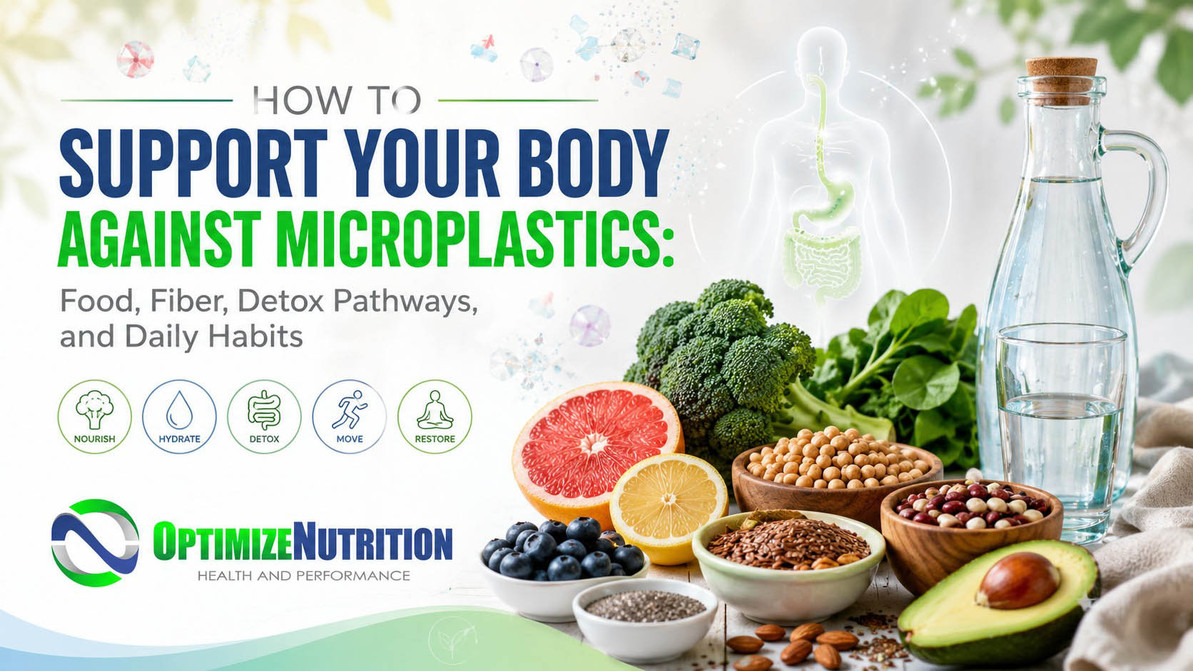
How to Support Your Body Against Microplastics: Food, Fiber, Detox Pathways, and Daily Habits
Microplastics have become one of the biggest environmental health topics in recent years. They are tiny plastic particles that can come from packaging, bottled water, synthetic clothing, food containers, household dust, personal care products, and environmental pollution. While research is still developing, studies have now detected microplastics in human tissues and organs, raising important questions about long-term exposure and health.
The goal is not to panic. The goal is to be practical.
You cannot completely avoid microplastics in the modern world, but you can reduce your exposure and support the body’s natural elimination systems through food, hydration, fiber, sweating, antioxidant support, and better daily habits.
This topic was recently discussed in a video featuring the work and recommendations of Dr. Rhonda Patrick, a well-known biomedical scientist and founder of FoundMyFitness. In the video, Dr. Patrick’s approach focuses on practical ways to reduce exposure to microplastics and plastic-related compounds while supporting the body’s natural detoxification pathways through nutrition, fiber, cruciferous vegetables, sweating, hydration, and lifestyle habits.
The main takeaway is simple: your body already has built-in detox systems, but those systems work better when you give them the right nutrients, enough fiber, proper hydration, and less daily toxic load.
Why Microplastics Matter
Microplastics are not just pieces of plastic floating through the environment. Many plastics can also carry or release chemical compounds such as BPA, BPS, phthalates, and other endocrine-disrupting chemicals.
These compounds are being studied for their potential effects on:
- Hormone signaling
- Oxidative stress
- Inflammation
- Gut barrier health
- Metabolic function
- Immune response
- Reproductive health
- Cardiovascular and neurological health
Current research does not prove that every exposure causes disease, and human evidence is still evolving. However, reviews suggest that microplastics and plastic-associated chemicals may influence the body through oxidative stress, inflammation, endocrine disruption, and gut microbiome changes.
That makes microplastic reduction a reasonable part of a modern wellness plan, especially for people already focused on hormones, digestion, metabolism, fertility, inflammation, or long-term health.
Step 1: Reduce the Plastic Coming In
Before talking about “detox,” the first step is always reducing exposure.
Your body has to process what you repeatedly bring in. If exposure stays high every day, supplements and nutrition can only do so much.
Simple ways to reduce plastic exposure include:
- Avoid microwaving food in plastic containers
- Use glass or stainless steel water bottles
- Choose glass food storage when possible
- Avoid leaving plastic water bottles in hot cars
- Reduce heavily packaged and ultra-processed foods
- Use a quality water filter when practical
- Vacuum and dust regularly, especially in bedrooms
- Choose natural fabrics when possible
- Avoid handling thermal receipts more than necessary
- Do not store hot, oily, or acidic foods in plastic
One public summary of the video also highlighted reducing processed foods, improving indoor air quality, and supporting hydration as practical daily steps.
This does not mean you need to throw everything away or live perfectly. Start with the biggest repeat exposures first: water, food storage, heating food, indoor dust, and packaged foods.
Step 2: Increase Fiber to Support Elimination
Fiber is one of the most underrated tools for detox support.
Many people think of detox only as the liver, but the gut is just as important. The liver processes compounds, bile carries many substances into the digestive tract, and fiber helps bind and move waste out through the stool.
Without enough fiber and regular bowel movements, compounds that should leave the body may have more opportunity to be reabsorbed.
Good fiber-rich foods include:
- Vegetables
- Berries
- Ground flaxseed
- Chia seeds
- Psyllium husk
- Oats
- Beans and lentils, if tolerated
- Apples and pears
- Avocado
- Cruciferous vegetables
For people who do not tolerate high-fiber foods well, start slowly. Jumping from low fiber to very high fiber too quickly can cause bloating, gas, or digestive discomfort.
A practical target for many adults is to gradually increase fiber while also increasing water intake.
Step 3: Eat More Cruciferous Vegetables
Cruciferous vegetables are a major focus in many detox-support conversations because they contain compounds that may support phase II detoxification pathways.
Examples include:
- Broccoli
- Broccoli sprouts
- Cauliflower
- Brussels sprouts
- Kale
- Cabbage
- Arugula
- Bok choy
- Radish
Broccoli sprouts are especially known for containing glucoraphanin, which can convert into sulforaphane. Sulforaphane is often discussed for its role in activating Nrf2, a pathway involved in antioxidant defense and cellular stress response.
This does not mean broccoli sprouts “erase” microplastics from the body. A more accurate way to say it is that sulforaphane may help support the body’s natural antioxidant and detoxification systems, especially when paired with a high-fiber, whole-food diet.
Dr. Rhonda Patrick and FoundMyFitness have discussed sulforaphane, BPA, phthalates, and detoxification pathways as part of the broader microplastic-exposure conversation.
Step 4: Support Glutathione and Antioxidant Defense
Microplastics and plastic-associated compounds are often discussed in relation to oxidative stress. Oxidative stress happens when the body’s antioxidant defenses are overwhelmed by reactive compounds.
This is where nutrients that support antioxidant systems may be helpful.
Key nutrients and compounds include:
- Vitamin C
- Vitamin E
- Selenium
- Zinc
- Magnesium
- NAC
- Glycine
- Milk thistle
- Alpha-lipoic acid
- Curcumin
- Green tea extract
- Sulforaphane
- Omega-3 fatty acids
Glutathione is one of the body’s major internal antioxidants. Nutrients like NAC, glycine, selenium, and vitamin C can help support the body’s own glutathione production and recycling.
Again, the goal is not to claim that a supplement removes microplastics directly. The goal is to support the systems your body already uses to handle oxidative stress, chemical exposure, and normal detoxification.
Step 5: Hydration Matters
Hydration supports circulation, digestion, kidney function, lymphatic flow, and regular bowel movements.
If you increase fiber without enough fluid, digestion may slow down. If digestion slows down, elimination becomes less efficient.
Simple hydration tips:
- Start the day with water
- Add electrolytes if you sweat heavily
- Use a glass or stainless steel bottle
- Drink more when increasing fiber
- Pay attention to urine colour and thirst
- Do not rely only on coffee or energy drinks
For active people, electrolytes can be helpful because sodium, potassium, and magnesium support fluid balance, muscle function, and performance.
Step 6: Sweat, But Do Not Overdo It
Sweating through exercise or sauna may support general detoxification and circulation. Some plastic-associated chemicals may be measurable in sweat, but the evidence is still developing, and sweating should not be viewed as a complete solution.
Helpful options include:
- Strength training
- Zone 2 cardio
- Brisk walking
- Sauna, if tolerated
- Hot yoga, if appropriate
- Outdoor activity
The key is consistency. A moderate routine done weekly is better than extreme sweating once in a while.
If you use a sauna, hydrate well and replace electrolytes. People with medical conditions, blood pressure concerns, pregnancy, or heat intolerance should check with a qualified healthcare provider before using sauna therapy.
Step 7: Protect the Gut Barrier
Microplastics are often discussed in relation to the gut because ingestion is one of the major exposure routes. The gut lining, microbiome, bile flow, fiber intake, and stool regularity all play a role in how the body handles unwanted compounds.
Gut-supportive nutrients and foods include:
- Probiotics
- Fermented foods
- Prebiotic fiber
- L-glutamine
- Zinc carnosine
- Collagen or bone broth
- Omega-3 fatty acids
- Polyphenol-rich foods
- Aloe vera, if tolerated
- Digestive bitters, when appropriate
A healthy gut does not make you immune to environmental exposure, but it may help support better resilience.
Step 8: Focus on Food First
The most practical “microplastic detox” foundation is not a complicated cleanse. It is a consistent whole-food diet.
Prioritize:
- Protein at each meal
- High-fiber vegetables
- Cruciferous vegetables several times per week
- Healthy fats
- Colourful berries and polyphenol-rich foods
- Clean hydration
- Fewer packaged and ultra-processed foods
- Regular bowel movements
This approach supports detoxification, blood sugar balance, gut health, hormone metabolism, and energy at the same time.
Supplements That May Support Detox Pathways
At Optimize Nutrition, we always recommend using supplements as support, not as a replacement for diet and lifestyle.
Options that may fit into a detox-support routine include:
- Fiber supplements such as psyllium or acacia fiber
- Greens powders with cruciferous vegetables
- Broccoli sprout or sulforaphane support
- NAC
- Glutathione support formulas
- Milk thistle
- Magnesium
- Electrolytes
- Probiotics
- Omega-3 fatty acids
- Vitamin C
- Liver support formulas
- Antioxidant blends
For anyone taking medication, pregnant or breastfeeding, dealing with a medical condition, or using hormone-related therapies, it is best to speak with a qualified healthcare provider before starting a detox-focused supplement protocol.
A Realistic Microplastic Support Plan
Here is a simple 7-day starting plan:
Daily
- Drink water from glass or stainless steel
- Eat 25–35g of fiber, increasing gradually
- Include at least one serving of cruciferous vegetables
- Avoid heating food in plastic
- Eat protein with each meal
- Include antioxidant-rich foods like berries, greens, herbs, and spices
- Move your body and sweat lightly
- Support regular bowel movements
A few times per week
- Add broccoli sprouts or cruciferous vegetables
- Use sauna or exercise-based sweating if appropriate
- Meal prep in glass containers
- Vacuum and dust your home
- Replace heavily packaged foods with whole-food options
Long-term
- Upgrade food storage
- Use a quality water filter
- Reduce synthetic fragrance and unnecessary chemical exposure
- Choose whole foods more often
- Build consistent sleep, training, hydration, and digestion habits
Final Thoughts
Microplastics are now part of the modern environment, but that does not mean we are powerless.
The most effective approach is not fear-based. It is practical and consistent:
Reduce exposure where you can.
Support your liver, gut, kidneys, lymphatic system, and antioxidant defenses.
Eat more fiber and cruciferous vegetables.
Hydrate well.
Sweat regularly.
Limit processed foods and plastic contact with food and water.
You do not need a harsh cleanse to support detoxification. Your body already knows how to detox. Your job is to lower the burden and give it the tools it needs to do its job better.
For supplement support, Optimize Nutrition carries options for fiber, greens, antioxidants, liver support, probiotics, electrolytes, omega-3s, magnesium, and overall wellness support.
Disclaimer: This article is for educational purposes only and is not intended to diagnose, treat, cure, or prevent any disease. Microplastic research is still developing, and detoxification claims should be viewed with caution. Always speak with a qualified healthcare provider before starting a new supplement or detox-support protocol, especially if you have a medical condition, take medication, are pregnant, or are breastfeeding.
Recent Posts
-

Feel a Cold Coming On? 7 Natural Remedies & Supplements to Support a Faster Recovery
It usually starts with a familiar feeling: a scratchy throat, a little congestion, unusual fatigue, …Oct 20, 2026 -

Why You're Always Tired: Common Nutrient Deficiencies and What to Test
Feeling exhausted even after a full night's sleep? Struggling with brain fog, low motivation, or tha …Oct 16, 2026 -
How to Lower Cholesterol Naturally: What Holistic Health Practitioners Have Known for Years
For decades, cholesterol advice focused heavily on avoiding eggs, limiting dietary cholesterol, and …Oct 15, 2026