
Do Omega-3 Supplements Cause Heart Problems? A Balanced Look at the Research
Recently, you may have seen headlines suggesting that omega-3 or fish oil supplements “cause heart problems.” Understandably, that sounds alarming. Omega-3s have been promoted for decades for heart, brain, joint, and inflammatory health, so hearing that they may increase heart risk can feel confusing.
The truth is more nuanced.
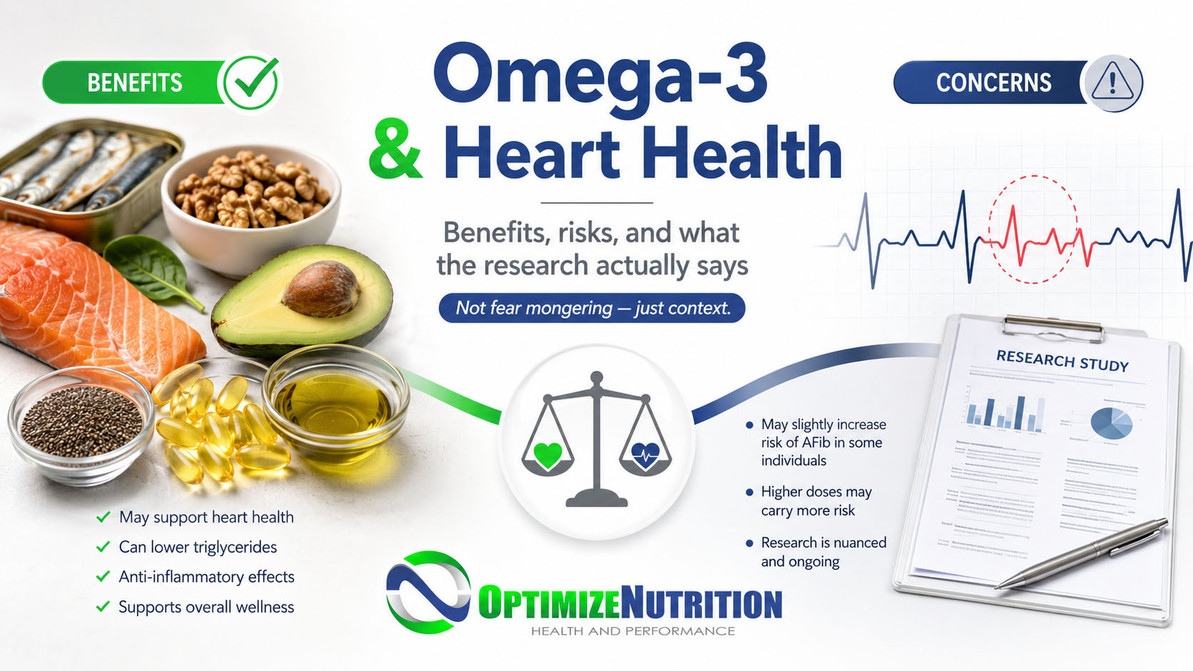
The concern is not that omega-3s suddenly “damage the heart.” The main issue being discussed in recent research is a possible increased risk of atrial fibrillation, often called AFib, which is an irregular heart rhythm. This risk appears to be most relevant with higher-dose omega-3 supplementation, especially in certain higher-risk cardiovascular groups. At the same time, omega-3s still have well-supported benefits, particularly for triglycerides, inflammation balance, brain health, and people with specific cardiovascular risk factors.
So rather than asking, “Are omega-3s good or bad?” a better question is: Who is taking them, how much are they taking, what form are they using, and what is their health situation?
What Did the Research Actually Show?
One of the studies that received a lot of attention was published in BMJ Medicine in 2024. It looked at more than 415,000 participants from the UK Biobank and found that regular fish oil supplement use was associated with a higher risk of first-time atrial fibrillation and stroke in people who did not already have cardiovascular disease. However, the same study also found that fish oil use appeared to be associated with more favourable outcomes in some people who already had cardiovascular disease.
That is important because this was not a simple “fish oil is bad” conclusion. It suggested that omega-3 supplements may affect different people differently depending on their baseline health.
Another key detail is that this was an observational study. That means it can show an association, but it does not prove that fish oil directly caused those outcomes. Observational research can be influenced by many factors, including why people were taking supplements in the first place, their diet, medication use, health history, lifestyle, and supplement dosage.
This is where headlines can be misleading. A relative risk increase can sound dramatic, but the absolute risk may still be small. Dr. Peter Attia, a physician known for his deep dives into cardiovascular and longevity research, highlighted this distinction when reviewing omega-3 and AFib data: “Relative risk increase = 36.6%; Absolute risk increase = 0.71%.”
That does not mean the risk should be ignored. It means the risk should be interpreted properly.
The Standard Medical Viewpoint
From a conventional medical perspective, omega-3s are not treated as a magic heart-health supplement for everyone. They are more specific than that.
The American Heart Association supports eating one to two servings of seafood per week to reduce the risk of some heart problems, especially when seafood replaces less healthy foods. For people with existing coronary heart disease, the AHA recommends around 1 gram per day of EPA plus DHA, preferably from oily fish, with supplements considered under physician guidance. However, the AHA does not recommend omega-3 supplements for people who do not have high cardiovascular risk.
Where omega-3s have stronger medical support is in the management of high triglycerides. The AHA has concluded that 4 grams per day of prescription omega-3s can lower triglycerides when used alone or alongside other lipid-lowering therapies.
That gives us the medical nuance: omega-3s can be beneficial in the right clinical context, but higher-dose use should be individualized, especially for people with a history of AFib, palpitations, stroke risk, bleeding risk, or those taking blood thinners.
The Holistic Viewpoint
From a holistic health perspective, omega-3s are still incredibly important. They are essential fats, meaning the body cannot make enough of them on its own. EPA and DHA are involved in cell membrane health, inflammatory balance, brain function, eye health, and cardiovascular function. DHA is especially important for the brain and retina.
But holistic health also asks a broader question: Why are we taking the supplement in the first place?
If someone eats very little fish, consumes a highly processed diet, has a poor balance of dietary fats, struggles with inflammation, or has low omega-3 intake, then a quality omega-3 supplement may make sense. But if someone is already eating sardines, salmon, mackerel, trout, or other fatty fish several times per week, they may not need a high-dose supplement on top of that.
A food-first approach matters. Whole fish provides not only EPA and DHA, but also protein, selenium, iodine, vitamin D, and other nutrients that work together. This may be one reason seafood intake is often viewed more favourably than relying only on isolated fish oil capsules. The NIH notes that consuming fish and seafood as part of a balanced diet supports heart health, especially when seafood replaces less healthy foods.
Holistically, it is also worth considering supplement quality and dosage. More is not always better. The goal should be to correct a gap or support a specific need, not to mega-dose because omega-3s are generally considered healthy.
Newer Research Adds More Nuance
Another important piece of the conversation is the difference between self-reported supplement use and actual omega-3 status in the body.
A 2025 analysis published in the Journal of the American Heart Association looked at plasma omega-3 levels and found that individuals with the highest omega-3 levels were the least likely to develop atrial fibrillation during follow-up.
Dr. Bill Harris, PhD, a long-time omega-3 researcher and president of the Fatty Acid Research Institute, summarized the point clearly: “higher status is associated with lower risk of atrial fibrillation — not higher.”
This does not erase the concern around high-dose omega-3s. But it does challenge the oversimplified idea that omega-3s automatically increase AFib risk. It suggests that the full picture may depend on dose, form, baseline health, age, cardiovascular risk, and actual omega-3 blood levels.
So, Should People Stop Taking Omega-3s?
Not necessarily.
For many people, a moderate-dose omega-3 supplement can still be a useful part of a health plan, especially if they do not eat much fatty fish. The concern is more about blanket use, high-dose use, and assuming more is always better.
This is especially true for people who are taking omega-3s casually because they heard they are “good for the heart.” If someone has no known cardiovascular disease, already eats fish regularly, and is taking high doses every day, it may be worth reassessing whether that is necessary.
On the other hand, someone with high triglycerides, low fish intake, inflammatory concerns, or a practitioner-directed plan may still benefit from omega-3 supplementation. The key is matching the supplement to the person.
Who Should Be More Cautious?
People should speak with a healthcare provider before taking higher-dose omega-3s if they:
- Have a history of atrial fibrillation or irregular heartbeat
- Experience heart palpitations
- Have had a stroke or are at high stroke risk
- Take blood thinners or have a bleeding disorder
- Are preparing for surgery
- Have very high triglycerides and are considering prescription-strength omega-3s
- Are already taking multiple cardiovascular medications
This does not mean omega-3s are dangerous for these people. It simply means they should be used with more guidance.
The Benefits of Omega-3s Still Matter
The recent research should not erase the benefits of omega-3s. EPA and DHA have been studied for several important areas of health.
Omega-3s can help lower triglycerides, with stronger effects seen at higher doses and in people with elevated baseline triglycerides. AHA guidance notes that prescription omega-3s at 4 grams per day can significantly reduce triglycerides.
Omega-3s may also support cardiovascular health in specific groups, especially those with existing coronary heart disease or low dietary intake. The NIH summarizes that fish oil and long-chain omega-3 supplements may reduce some cardiovascular endpoints, with stronger evidence in people with existing coronary heart disease than in generally healthy individuals.
Beyond heart health, omega-3s support normal inflammatory processes, brain health, eye health, and healthy fetal development during pregnancy. DHA is a major structural fat in the brain and retina, which is why omega-3 intake is often discussed in relation to cognitive and visual development.
The Bottom Line
The recent omega-3 headlines are not completely wrong, but they are often oversimplified.
A more accurate takeaway would be:
High-dose omega-3 supplementation may slightly increase the risk of atrial fibrillation in some people, especially at higher doses or in certain cardiovascular-risk groups. But omega-3s are not simply “bad for the heart,” and they still have meaningful benefits when used appropriately.
The best approach is not fear. It is personalization.
Eat fatty fish if you tolerate it. Choose high-quality supplements when needed. Avoid unnecessarily high doses. Consider your personal health history. And if you have heart rhythm issues, cardiovascular disease, high triglycerides, or take medications, speak with a qualified healthcare provider before using high-dose omega-3s.
Like most things in nutrition, the answer is not “always take it” or “never take it.” The answer is: use the right tool, at the right dose, for the right person.
Recent Posts
-

How to Lower Cholesterol Naturally: What Holistic Health Practitioners Have Known for Years
For decades, cholesterol advice focused heavily on avoiding eggs, limiting dietary cholesterol, and …Oct 15, 2026 -

How to Beat the Winter Blues: Supplements, Lifestyle Tips & the Science Behind Seasonal Mood Changes
As the days grow shorter and temperatures drop, many Canadians notice a familiar shift: lower energy …Oct 09, 2026 -
Astaxanthin Benefits: The Antioxidant for Skin, Eyes, Recovery & Healthy Aging
Astaxanthin has quietly become one of the most talked-about antioxidants in the supplement world. Un …Oct 02, 2026