
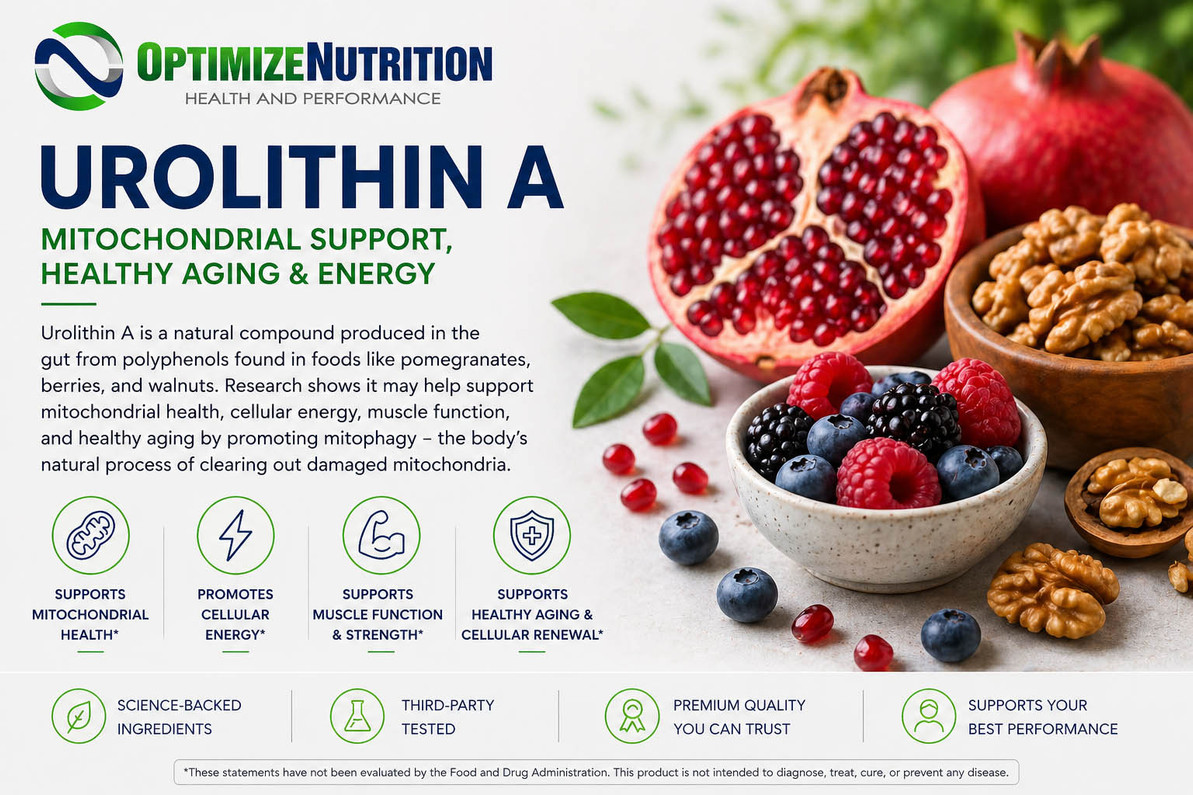
Urolithin A: Mitochondrial Support, Healthy Aging & Energy
Urolithin A is becoming one of the more talked-about compounds in the healthy aging and longevity space. While it may sound complicated, the basic idea is simple: urolithin A is a natural compound connected to mitochondrial health, cellular energy, muscle function, and the body’s ability to clean up worn-out cellular components.
Dr. Mark Hyman, a well-known functional medicine physician, recently discussed urolithin A as a compound that may support one of the key biological processes linked to aging: mitochondrial renewal. His article explains that urolithin A is produced when certain gut bacteria break down compounds found in foods like pomegranates, walnuts, and berries, and that research is exploring its role in supporting mitochondrial function and healthy aging.
What Is Urolithin A?
Urolithin A is a postbiotic compound made in the gut when specific bacteria break down ellagitannins, a type of polyphenol found in certain plant foods.
Food sources connected to urolithin A production include:
- Pomegranates
- Walnuts
- Berries
- Some nuts
- Certain polyphenol-rich fruits
The important point is that you do not directly get high amounts of urolithin A from these foods. Instead, your gut bacteria must convert the plant compounds into urolithin A.
That means two people could eat the same pomegranate-rich diet and produce very different amounts of urolithin A, depending on their gut microbiome.
Why Mitochondria Matter
Mitochondria are often described as the energy producers of the cell. They help convert the food we eat into usable cellular energy.
Healthy mitochondria are important for:
- Energy production
- Muscle function
- Brain function
- Healthy aging
- Exercise capacity
- Cellular repair
- Metabolic health
- Overall vitality
As we age, mitochondria can become less efficient. Damaged or poorly functioning mitochondria may contribute to lower energy, reduced muscle performance, and increased cellular stress.
This is one reason mitochondrial health has become such a major focus in longevity and functional medicine.
What Is Mitophagy?
One of the most interesting things about urolithin A is its connection to mitophagy.
Mitophagy is the body’s natural process of clearing out damaged or worn-out mitochondria. Think of it as cellular housekeeping. Instead of letting poorly functioning mitochondria build up, the body removes and recycles them so healthier mitochondria can function more efficiently.
Dr. Hyman’s summary highlights mitophagy as one of the main reasons urolithin A is being studied for healthy aging, muscle function, energy, and inflammation-related markers.
Why Food Alone May Not Be Enough
Eating polyphenol-rich foods is still a great idea. Pomegranates, berries, walnuts, and other colourful plant foods provide antioxidants, fibre, and beneficial plant compounds.
However, urolithin A production depends heavily on the gut microbiome.
Dr. Hyman’s article notes that only a portion of people appear to have the gut bacteria needed to convert ellagitannins into meaningful amounts of urolithin A. He also references research showing that direct urolithin A supplementation may produce more consistent blood levels than relying on pomegranate juice alone.
This is one reason urolithin A supplements are gaining attention. They may bypass some of the variability that comes from relying only on gut conversion.
What Does the Research Say?
Research on urolithin A is still developing, but early human studies are promising.
Dr. Hyman’s article discusses clinical research where urolithin A supplementation was studied for outcomes related to muscle strength, aerobic fitness, mitochondrial markers, and inflammatory markers. In one trial, middle-aged adults taking urolithin A showed improvements in lower-body strength, and the higher-dose group also showed improvements in aerobic fitness. Another study discussed in the article found changes related to inflammation and mitochondrial function in healthy middle-aged adults.
That said, it is important to keep the research in perspective. Urolithin A is not a magic anti-aging pill, and not every study shows dramatic results across every measure. The strongest theme so far is that urolithin A appears to influence mitochondrial health and cellular cleanup pathways.
Potential Benefits of Urolithin A
Based on the current research, urolithin A may help support:
- Mitochondrial health
- Cellular energy production
- Healthy aging
- Muscle function
- Exercise capacity
- Recovery and resilience
- Inflammation balance
- Cellular repair processes
These benefits are best understood as supportive, not guaranteed. Results can vary depending on age, lifestyle, diet, training status, gut health, and overall health.
Who Might Be Interested in Urolithin A?
Urolithin A may be especially relevant for people who are focused on:
- Healthy aging
- Energy support
- Muscle maintenance
- Longevity-focused supplementation
- Mitochondrial health
- Active lifestyles
- Recovery and performance
- Supporting cellular repair
It may also be of interest to people who already have the basics in place—regular movement, strength training, quality sleep, enough protein, and a whole-food diet—but want additional support for mitochondrial health.
Urolithin A Does Not Replace Exercise
One of the most important points from a practical health perspective is that urolithin A should not be viewed as a replacement for exercise.
Resistance training, walking, aerobic training, and regular movement are still some of the most powerful tools for mitochondrial health, muscle maintenance, insulin sensitivity, and healthy aging.
Urolithin A may be best viewed as an additional layer of support, not a substitute for the basics.
Food Sources That Support Natural Urolithin A Production
To support natural urolithin A production, include more ellagitannin-rich and polyphenol-rich foods such as:
- Pomegranate
- Raspberries
- Strawberries
- Blackberries
- Walnuts
- Pecans
- Oak-aged foods and beverages
- Colourful fruits and vegetables
Even if your body does not convert large amounts into urolithin A, these foods still offer valuable nutrition and can support gut health, antioxidant intake, and overall wellness.
The Bottom Line
Urolithin A is a natural compound connected to polyphenol-rich foods, gut bacteria, mitochondrial health, and healthy aging.
Its most interesting role is its ability to support mitophagy—the process of clearing out damaged mitochondria so cells can function more efficiently. This is why urolithin A is being studied for energy, muscle function, inflammation balance, and longevity-related health.
Food sources like pomegranates, berries, and walnuts are still valuable, but not everyone converts these foods into meaningful amounts of urolithin A. Supplementation may offer a more consistent way to increase urolithin A levels.
For best results, urolithin A should be paired with the foundations: strength training, regular movement, quality sleep, a nutrient-dense diet, adequate protein, and good metabolic health.
At Optimize Nutrition, we view supplements like urolithin A as tools that can support a bigger health strategy—not shortcuts, but targeted support when the basics are already in motion.
Disclaimer
This article is for educational purposes only and is not intended to diagnose, treat, cure, or prevent any disease. Always speak with a qualified healthcare provider before starting a new supplement, especially if you are pregnant, breastfeeding, taking medication, managing a health condition, or preparing for surgery.
Recent Posts
-

Meet Rise Nutrition: Real-Food Nutrition, Kept Simple
Meet Rise Nutrition: Real-Food Nutrition, Kept Simple We’re excited to welcome Rise Nutrition to Opt …Sep 15, 2026 -

Study Smarter This Semester: Back-to-School Tips for Focus, Memory & Mental Energy
University can be demanding on the brain. Long lectures, heavy reading loads, assignments, exams, pa …Sep 04, 2026 -

When Your Gut Isn’t the Root Problem: How Stress and the Nervous System Can Drive Digestive Symptoms
Bloating. Cramping. Constipation. Diarrhea. Nausea. Reflux. Urgency. Feeling like foods you used to …Sep 03, 2026