
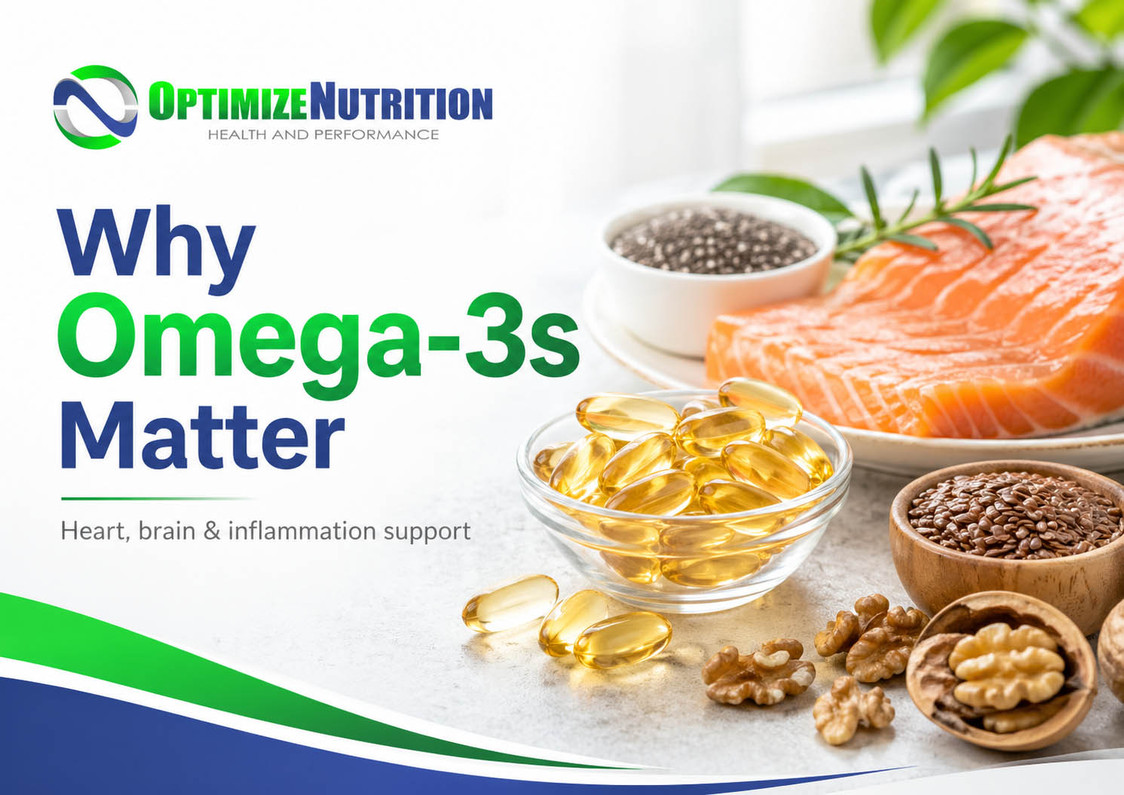
Omega-3s for Heart, Brain & Inflammation Support
Omega-3 fatty acids are some of the most important fats for overall health, yet many people do not consume enough of them through diet alone.
This is especially true for people who rarely eat fatty fish, follow a highly processed diet, avoid seafood, or consume a lot of omega-6-rich vegetable oils without balancing them with enough omega-3s.
Omega-3s are considered essential fats, meaning the body needs them but cannot make enough on its own. They must come from food or supplementation. The three main omega-3 fats are ALA, EPA, and DHA. ALA is found mostly in plant foods such as flax, chia, and walnuts, while EPA and DHA are found mainly in fish, seafood, and fish oil supplements. The NIH Office of Dietary Supplements notes that most omega-3 research has focused on EPA and DHA from seafood or supplements, rather than plant-based ALA alone.
Why Omega-3 Intake Is Often Low
Many people simply do not eat enough omega-3-rich foods.
The best dietary sources of EPA and DHA are fatty fish, such as:
- Salmon
- Sardines
- Mackerel
- Herring
- Anchovies
- Trout
- Tuna
Plant-based omega-3 sources include:
- Flaxseed
- Chia seeds
- Hemp seeds
- Walnuts
- Flaxseed oil
- Canola oil
- Soybean oil
However, there is an important difference between plant omega-3s and marine omega-3s. Plant foods provide ALA, which the body must convert into EPA and DHA. That conversion is generally limited, which means someone can eat chia or flax regularly and still may not be getting much EPA or DHA.
That is one reason omega-3 supplementation can be useful, especially for people who do not eat fatty fish at least a couple of times per week.
What Do Omega-3s Do in the Body?
Omega-3 fats are involved in many important functions, including:
- Heart health
- Brain health
- Eye health
- Cell membrane structure
- Inflammation balance
- Triglyceride metabolism
- Nervous system function
- Healthy development during pregnancy and childhood
Cleveland Clinic describes omega-3s as healthy fats that may support heart health, with one key benefit being their role in helping lower triglycerides. They also identify DHA and EPA as the omega-3s found in seafood, while ALA is found in plant foods.
This is why omega-3s are often discussed in relation to cardiovascular health, brain function, inflammation support, mood, joint comfort, and general wellness.
A Functional Medicine Perspective on Omega-3s
Dr. Mark Hyman, a well-known functional medicine physician and author, has frequently discussed the importance of omega-3 fats in relation to inflammation, metabolic health, brain health, and overall wellness. His approach often emphasizes that modern diets tend to be too high in processed foods and omega-6-rich oils, while many people under-consume omega-3-rich foods such as fatty fish.
From a functional medicine perspective, omega-3 intake is not just about taking a fish oil supplement. It is about correcting a common dietary imbalance. Many people eat plenty of omega-6 fats through vegetable oils, packaged foods, fried foods, and restaurant meals, but do not regularly eat enough EPA- and DHA-rich foods like salmon, sardines, mackerel, anchovies, herring, or trout.
This is one reason omega-3 supplementation can be useful. While plant foods like flax, chia, hemp, and walnuts provide ALA, the body’s conversion of ALA into EPA and DHA is limited. For people who rarely eat fatty fish, a high-quality omega-3 supplement may help fill that gap.
Omega-3s and Inflammation Balance
Omega-3s are commonly discussed for their role in supporting a healthy inflammatory response.
Inflammation itself is not always bad. The body needs inflammation for healing, immune defence, and recovery. The issue is when inflammation becomes excessive, chronic, or poorly regulated.
Modern diets often contain large amounts of omega-6 fats from vegetable oils and processed foods, while omega-3 intake is often low. This imbalance may not be ideal for long-term health.
Omega-3s, especially EPA and DHA, help produce compounds involved in resolving inflammation and supporting normal immune function. This is one reason they are commonly used by people focused on joint health, recovery, cardiovascular wellness, and overall healthy aging.
Omega-3s and Heart Health
Omega-3s are often associated with heart health because of their role in supporting healthy triglyceride levels, blood vessel function, and overall cardiovascular wellness.
This does not mean fish oil should be viewed as a replacement for medical care, medication, exercise, or a healthy diet. It should be seen as one supportive tool.
For people with high triglycerides, cardiovascular concerns, blood pressure issues, or a family history of heart disease, it is always best to speak with a qualified healthcare provider and review bloodwork.
Omega-3s and Brain Health
DHA is especially important for the brain and nervous system. It is a major structural fat in brain tissue and is also important for eye health.
This is one reason omega-3s are commonly discussed for:
- Cognitive health
- Mood support
- Focus
- Healthy aging
- Pregnancy and postpartum nutrition
- Children’s development
A person does not need to “feel” an omega-3 working immediately for it to be useful. Omega-3s are more foundational. They help support the body over time by contributing to cell structure, inflammatory balance, and long-term health.
Dietary Sources of Omega-3s
The best approach is to combine food sources with supplementation when needed.
Best Food Sources of EPA and DHA
Fatty fish are the most direct dietary source of EPA and DHA.
Good options include:
- Salmon
- Sardines
- Mackerel
- Anchovies
- Herring
- Rainbow trout
- Oysters
- Mussels
For many people, sardines, salmon, and mackerel are among the most practical choices because they are rich in omega-3s and widely available.
Best Plant Sources of ALA
Plant-based omega-3 foods are still valuable, especially because they also provide fibre, minerals, antioxidants, and other nutrients.
Good options include:
- Ground flaxseed
- Chia seeds
- Hemp hearts
- Walnuts
- Flaxseed oil
- Algae oil supplements
For vegan or vegetarian customers, algae oil is usually the best supplemental source of DHA and sometimes EPA, because it provides marine-style omega-3s without fish.
Why Supplementation Is Often Helpful
Omega-3 supplementation may be helpful when someone:
- Does not eat fatty fish regularly
- Avoids seafood
- Has higher omega-3 needs
- Eats a diet high in processed foods
- Has low intake of healthy fats
- Wants extra support for heart, brain, joint, or inflammatory health
- Is focusing on recovery and healthy aging
A good omega-3 supplement can help fill the gap between what someone eats and what their body may need.
How to Determine the Quality of an Omega-3 Supplement
Not all fish oils are the same. Quality matters.
Here are the main things to look for.
1. Clear EPA and DHA Amounts
Do not judge a fish oil only by the total amount of fish oil on the front label.
For example, a product may say “1000 mg fish oil,” but only contain 300 mg of combined EPA and DHA.
The EPA and DHA content is what matters most.
Look for labels that clearly list:
- EPA per serving
- DHA per serving
- Total EPA + DHA per serving
2. Third-Party Testing
Choose omega-3 products that are tested for purity, potency, and contaminants.
Important quality checks may include testing for:
- Heavy metals
- Mercury
- PCBs
- Dioxins
- Oxidation/rancidity
- Accurate EPA/DHA content
Third-party testing gives more confidence that the product contains what it says and is clean enough for regular use.
3. Freshness and Oxidation Control
Fish oil can oxidize, which means it can become rancid over time.
Signs of poor-quality or oxidized fish oil may include:
- Strong fishy smell
- Harsh fishy burps
- Bad aftertaste
- Cloudy or poorly stored oil
- Expired product
Some fish oil products include antioxidants such as vitamin E to help protect freshness. Softgels, dark bottles, proper storage, and reputable manufacturing also matter.
4. Proper Form
Omega-3 supplements may come in different forms, including triglyceride form, ethyl ester form, phospholipid form, or algae oil.
There is debate around which form is “best,” but the most important factors are still:
- EPA/DHA amount
- Purity
- Freshness
- Testing
- Consistency of use
- Digestive tolerance
A highly concentrated, clean, well-tested omega-3 is usually a better choice than a cheap product with low EPA/DHA and questionable freshness.
5. Sustainable Sourcing
Many customers also care about sustainability.
Look for products that use responsibly sourced fish, smaller fish species such as anchovy or sardine, or sustainability certifications when available.
6. The Right Dose for the Goal
Some products are designed for general wellness. Others provide higher EPA/DHA levels for people with more specific needs.
For general support, many people look for a product that provides a meaningful combined amount of EPA and DHA per serving. For higher-dose use, especially if someone is taking medications or has a medical condition, they should speak with a healthcare provider.
Why Omega-6 Supplements Are Usually Not Needed
Omega-6 fatty acids are also essential, but most people already get plenty of them.
Omega-6 fats are common in:
- Vegetable oils
- Soybean oil
- Corn oil
- Sunflower oil
- Safflower oil
- Grapeseed oil
- Processed foods
- Fried foods
- Packaged snacks
- Restaurant foods
- Many nuts and seeds
Because omega-6 fats are already so common in the modern diet, most people do not need to supplement with them.
The concern is not that omega-6 is “bad.” The body does need omega-6 fats. The issue is that many people consume a lot of omega-6 while consuming too little omega-3. This can create an imbalance.
For most customers, the goal should not be adding more omega-6. The goal should be improving the balance by increasing omega-3 intake and reducing overreliance on ultra-processed foods and refined seed oils.
Why Omega-9 Supplements Are Usually Not Needed
Omega-9 fats are different because they are not considered essential in the same way as omega-3 and omega-6.
The body can produce omega-9 fats, and they are also easy to get through food.
Common omega-9 food sources include:
- Olive oil
- Avocado oil
- Avocados
- Almonds
- Cashews
- Macadamia nuts
- Pecans
Because omega-9s are easy to obtain from food and can be made by the body, omega-9 supplementation is usually unnecessary for most people.
This is why “omega 3-6-9” products are often not the best choice. Most people need more omega-3, not extra omega-6 and omega-9.
Why Omega-3-Only Is Usually the Better Supplement Choice
Many customers see omega 3-6-9 products and assume they are more complete. But “more complete” does not always mean more useful.
For the average person:
- Omega-3 intake is often too low
- Omega-6 intake is usually already high enough
- Omega-9 is not essential and is easy to get from food
So in most cases, a high-quality omega-3 supplement is the smarter choice than a combined omega 3-6-9 product.
Who May Benefit Most From Omega-3 Supplementation?
Omega-3 supplementation may be especially useful for:
- People who rarely eat fish
- People who avoid seafood
- Athletes and active individuals
- People focused on recovery
- People wanting heart-health support
- People wanting brain-health support
- People with low intake of healthy fats
- People eating a highly processed diet
- Older adults focused on healthy aging
- Pregnant or postpartum women, with practitioner guidance
- Vegetarians or vegans using algae-based DHA/EPA
A Practical Food-First Omega-3 Plan
A simple omega-3 strategy could look like this:
- Eat fatty fish 2 times per week when possible
- Add chia, flax, hemp, or walnuts regularly
- Use olive oil or avocado oil instead of heavily processed oils when appropriate
- Reduce ultra-processed foods and fried foods
- Consider a quality omega-3 supplement if fish intake is low
- Choose an algae-based omega-3 if vegan or vegetarian
- Check EPA and DHA amounts on the label
The Bottom Line
Omega-3 fats are foundational nutrients for long-term health. They support the heart, brain, eyes, inflammatory balance, cell membranes, and overall wellness.
While omega-3s can be found in foods like salmon, sardines, flax, chia, and walnuts, many people do not get enough—especially EPA and DHA. That is where a quality omega-3 supplement can be helpful.
When choosing a supplement, look for clear EPA/DHA amounts, third-party testing, freshness, purity, and reputable sourcing.
And unless there is a very specific reason, most people do not need omega-6 or omega-9 supplements. Omega-6 is already common in the modern diet, and omega-9 is easy to get from foods like olive oil, avocado, and nuts.
For most people, the better choice is simple: focus on a high-quality omega-3.
Disclaimer
This article is for educational purposes only and is not intended to diagnose, treat, cure, or prevent any disease. Always speak with a qualified healthcare provider before starting any new supplement, especially if you are pregnant, breastfeeding, taking blood thinners, preparing for surgery, managing a medical condition, or taking prescription medication.
Recent Posts
-

Meet Rise Nutrition: Real-Food Nutrition, Kept Simple
Meet Rise Nutrition: Real-Food Nutrition, Kept Simple We’re excited to welcome Rise Nutrition to Opt …Sep 15, 2026 -

Study Smarter This Semester: Back-to-School Tips for Focus, Memory & Mental Energy
University can be demanding on the brain. Long lectures, heavy reading loads, assignments, exams, pa …Sep 04, 2026 -

When Your Gut Isn’t the Root Problem: How Stress and the Nervous System Can Drive Digestive Symptoms
Bloating. Cramping. Constipation. Diarrhea. Nausea. Reflux. Urgency. Feeling like foods you used to …Sep 03, 2026