
When Your Gut Isn’t the Root Problem: How Stress and the Nervous System Can Drive Digestive Symptoms
Bloating. Cramping. Constipation. Diarrhea. Nausea. Reflux. Urgency. Feeling like foods you used to tolerate suddenly don't agree with you.
When digestive symptoms start, most people naturally look for a digestive cause.
Maybe it's gluten. Dairy. FODMAPs. Histamine. SIBO. Candida. Low stomach acid. Digestive enzymes. A food sensitivity.
Sometimes those explanations are correct.
But there is another possibility that deserves much more attention:
The gut itself may not always be the primary problem.
For some people, chronic stress, anxiety, poor sleep, emotional strain or an overactive nervous system can significantly change how the digestive tract moves, feels and responds to food.
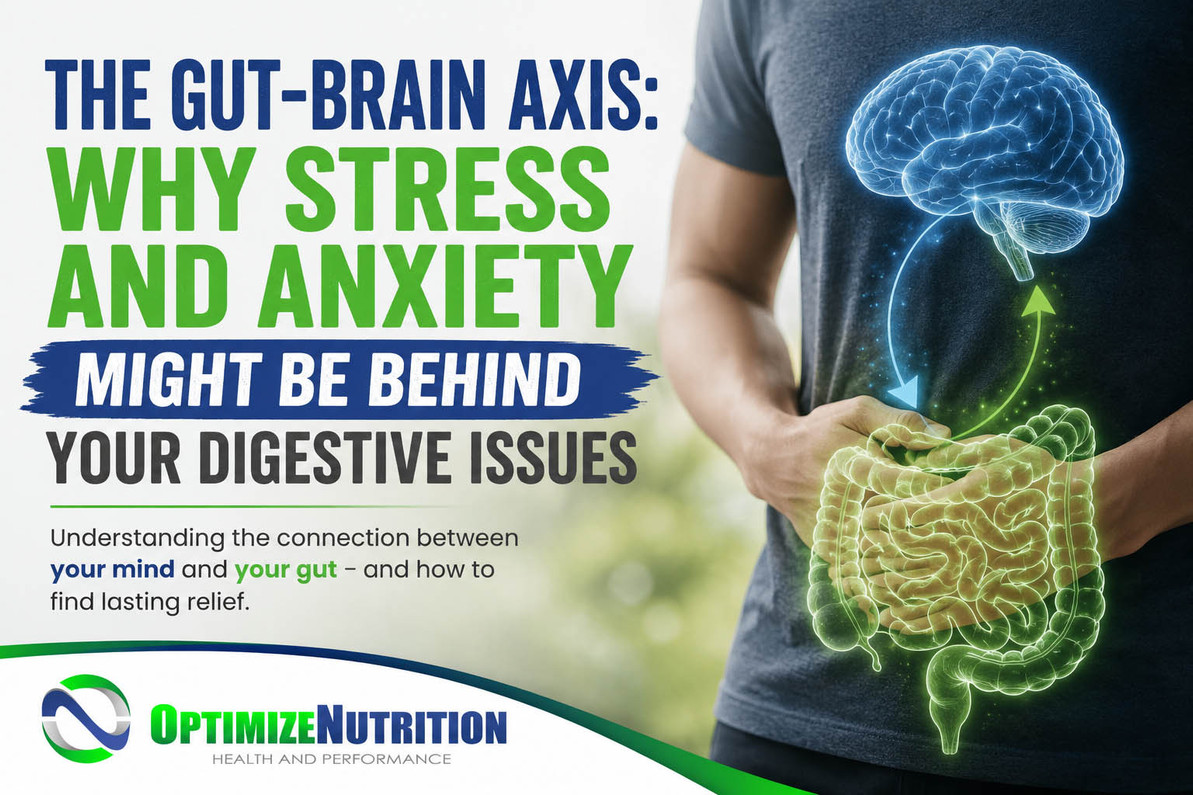
This is the basis of the gut-brain axis—the constant two-way communication between the digestive system and the brain.
Modern gastroenterology now recognizes an entire category known as Disorders of Gut-Brain Interaction (DGBIs). These conditions involve real digestive symptoms related to combinations of altered intestinal motility, visceral hypersensitivity, immune changes, microbiome changes and altered processing of digestive signals by the brain.
That means someone can experience very real digestive problems even when testing doesn't reveal obvious damage or disease inside the gastrointestinal tract.
And in some cases, continually removing foods may be addressing the trigger without addressing the actual reason the digestive system has become so reactive.
Your Gut Is Connected Directly to Your Nervous System
The digestive tract contains an extensive network of nerves known as the enteric nervous system.
It helps regulate:
- movement of food through the digestive tract
- intestinal contractions
- stomach emptying
- digestive secretions
- bowel movements
- sensations of fullness and pressure
- communication with the immune system
- communication with intestinal bacteria
This system is continuously communicating with the brain through several pathways, including the vagus nerve, autonomic nervous system, stress hormones, immune signals and microbial metabolites.
Importantly, this communication travels both ways.
We often hear about how gut health can influence mood and brain health.
But the opposite is equally important:
Your mental and nervous-system state can influence your gut.
Research continues to show that stress can affect the gut microbiome and alter communication throughout the microbiota-gut-brain axis.
What Stress Actually Does to Digestion
Stress is not simply a feeling.
It creates measurable physiological changes.
When your brain detects a threat or prolonged pressure, the autonomic nervous system shifts resources toward dealing with that perceived challenge.
That threat does not have to be physical danger.
It can include:
- work pressure
- financial stress
- relationship difficulties
- poor sleep
- overtraining
- excessive caffeine or stimulants
- chronic worry
- social anxiety
- unresolved emotional stress
- continually worrying about your health
- worrying about what a particular food will do to your stomach
During periods of stress, changes in sympathetic nervous-system activity and stress hormones can influence intestinal motility, secretion, sensitivity and immune activity.
For one person, that may mean food moves through the intestines too rapidly and produces diarrhea or urgency.
For someone else, digestive motility may slow, contributing to constipation, fullness and bloating.
Others may experience nausea, reflux or abdominal discomfort.
The connection is real enough that researchers studying disorders of gut-brain interaction have found that acute stress and negative emotional states can amplify gut sensations and gastrointestinal symptoms.
Visceral Hypersensitivity: When the Gut's "Volume Knob" Gets Turned Up
One of the most useful concepts for understanding unexplained digestive symptoms is visceral hypersensitivity.
Your intestines are constantly doing things.
They stretch.
They contract.
Gas moves through them.
Food enters.
Bacteria ferment carbohydrates.
The colon fills and empties.
Most of the time your brain barely notices these processes.
But the nervous system can become increasingly sensitive to signals coming from the digestive tract.
Think of it like turning the volume from 3 to 9.
The underlying signal may not have dramatically changed.
The nervous system's response to that signal has.
Suddenly:
- a normal amount of gas feels like extreme bloating
- normal intestinal stretching becomes uncomfortable
- a routine bowel contraction feels painful
- normal fullness feels like severe pressure
- the urge to have a bowel movement becomes overwhelming
This is one of the mechanisms involved in disorders such as IBS.
It also helps explain why a person can experience significant digestive distress while endoscopy, colonoscopy, imaging and bloodwork remain relatively normal.
This Is Where "Food Intolerances" Become Complicated
Suppose someone eats a large meal containing bread, cheese and onions and becomes extremely bloated.
They naturally conclude:
"Something in that meal doesn't agree with me."
So they remove dairy.
Symptoms continue.
Then gluten goes.
Then onions.
Then beans.
Then high-histamine foods.
Then FODMAPs.
Eventually someone who once ate almost anything has a list of 20 foods they believe they cannot tolerate.
There certainly are legitimate food allergies, intolerances and digestive disorders.
But there is another possibility.
The food may be triggering symptoms without actually being the underlying cause of the digestive dysfunction.
Certain carbohydrates naturally ferment and produce gas.
Fat changes digestive motility.
Large meals stretch the stomach.
Coffee stimulates intestinal contractions.
Fibre increases intestinal contents.
These are normal physiological effects.
In a hypersensitive gut, however, these normal digestive events may produce disproportionately strong symptoms.
The food becomes the trigger.
But the nervous system may be the factor determining how intensely you react to that trigger.
Why Can You Eat the Same Food One Day and React to It the Next?
This is something we hear frequently.
Someone might say:
"I ate pizza last weekend and felt completely fine. I ate it again yesterday and my stomach was destroyed."
Or:
"I can eat that food at home, but whenever I eat it at a restaurant I feel sick."
This inconsistency can sometimes provide an important clue.
Your digestive response doesn't occur independently of the rest of your body.
The same food may be consumed while:
- relaxed on vacation
- rushing between appointments
- sleep-deprived
- worried about work
- anticipating a social event
- highly caffeinated
- emotionally stressed
- calm and relaxed
Your nervous-system state is different in each situation.
That doesn't prove the problem is stress.
But if digestive symptoms closely track stressful periods while food intake remains similar, the gut-brain connection deserves serious consideration.
Anxiety About Digestive Symptoms Can Create Its Own Feedback Loop
Once digestive symptoms become unpredictable, people naturally start worrying about them.
For example:
You experience severe urgency after eating out.
The next time you go to a restaurant, you think:
"What if that happens again?"
Suddenly you're checking where the bathroom is.
You're monitoring your stomach.
Was that a cramp?
Did your stomach just make a noise?
Are you starting to feel bloated?
That attention increases the brain's awareness of digestive sensations.
The anxiety increases nervous-system activation.
That nervous-system activation can change gastrointestinal motility and sensitivity.
You notice more sensations.
Those sensations create more anxiety.
The cycle becomes:
Digestive symptom → worry → nervous-system activation → increased gut sensitivity → stronger symptom → more worry.
This is not imaginary.
Research shows that stress and negative emotions can change how visceral sensations are processed by the brain.
"So Are You Saying It's All in My Head?"
No.
This is one of the most damaging misunderstandings surrounding the gut-brain axis.
Stress is physical.
Anxiety is physical.
Your brain and nervous system are part of your body.
Stress can alter:
- cortisol and other stress hormones
- gastrointestinal motility
- intestinal contractions
- pain perception
- digestive secretions
- immune signalling
- sleep quality
- appetite
- the gut microbiome
- awareness of internal bodily sensations
The digestive symptoms are real.
The question is simply what is driving them?
For some people, the problem begins primarily inside the digestive tract.
For others, nervous-system dysfunction may be amplifying what would otherwise be normal digestive sensations.
And for many people, there is probably some combination of both.
Why Normal Testing Doesn't Always Mean "Nothing Is Wrong"
People with chronic digestive symptoms sometimes go through extensive investigations:
blood tests, stool tests, ultrasound, CT imaging, endoscopy or colonoscopy.
And everything comes back normal.
That can be extremely frustrating.
But these tests are generally designed to identify things such as:
- inflammation
- ulcers
- celiac disease
- infection
- bleeding
- tumours
- structural abnormalities
They generally aren't measuring how sensitive the nerves inside your intestines have become or how the brain is interpreting those signals.
This is why the terminology changed from "functional gastrointestinal disorders" to Disorders of Gut-Brain Interaction.
The Rome Foundation describes DGBIs as chronic or recurrent GI symptoms without a structural disease that sufficiently explains them, with mechanisms potentially involving motility, visceral sensitivity, immunity, microbiota and brain processing.
Could Continually Eliminating Foods Actually Make Things Harder?
Elimination diets can be useful.
They are sometimes extremely useful.
But ideally, an elimination diet should have a purpose:
remove → assess → reintroduce.
The goal generally should not be to permanently eliminate more and more foods.
When somebody begins believing that nearly everything they eat is dangerous, meals themselves can become stressful.
That can reinforce the cycle:
Food → anticipation of symptoms → stress response → increased digestive sensitivity → symptoms → greater fear of food.
For someone whose symptoms are heavily influenced by gut-brain signalling, continually searching for another food to remove may therefore fail to address the real problem.
Sometimes the better goal is not:
"How can I avoid every digestive trigger?"
but rather:
"How can I make my digestive system less reactive?"
Nervous-System Regulation Can Be Part of Gut Health
If digestive symptoms seem to worsen alongside stress, then improving nervous-system regulation may deserve just as much attention as probiotics, enzymes or elimination diets.
Strategies can include:
Eat in a calmer environment
Whenever possible, sit down rather than eating while driving, working or rushing.
Slow down
Eating quickly can increase swallowed air and result in larger amounts of food entering the stomach rapidly.
Use slow breathing before meals
A few minutes of slow diaphragmatic breathing can help shift the body toward a calmer physiological state before eating.
Walk regularly
Light movement can support both stress regulation and normal gastrointestinal motility.
Prioritize sleep
Sleep deprivation increases physiological stress and can make almost every other lifestyle stressor feel more intense.
Consider caffeine intake
A large amount of caffeine combined with an already activated nervous system can contribute to jitteriness, intestinal stimulation and urgency in some people.
Address the actual source of chronic stress
Supplements can support the nervous system, but they cannot solve an unsustainable workload, chronic sleep deprivation or persistent psychological stress.
Consider brain-gut therapies
There is now meaningful evidence for treatments such as cognitive behavioural therapy and gut-directed hypnotherapy in IBS and other gut-brain disorders. A 2024 systematic review and network meta-analysis found that several brain-gut behavioural therapies improved abdominal pain in people with IBS.
Supplements That May Help Support the Stress Response and Nervous System
This is also where supplementation may be useful.
The goal is not to claim that a stress supplement treats IBS or cures digestive problems.
Instead, certain nutrients and herbs may help support relaxation, nervous-system function, sleep or a healthy response to everyday stress.
For someone whose digestive symptoms consistently worsen during periods of stress, this can be a reasonable part of a broader approach.
Here are several options we currently carry at Optimize Nutrition.
1. CanPrev L-Theanine with Magnesium
L-theanine is an amino acid naturally present in tea and is one of our favourite options when somebody describes feeling physically "wired" or unable to mentally shut down.
CanPrev L-Theanine with Magnesium provides 250 mg of L-theanine per capsule, along with magnesium bisglycinate. The product is specifically intended to help temporarily promote relaxation.
L-theanine is interesting because it is generally used to encourage relaxation without acting like a strong sedative.
A systematic review of randomized human studies found that approximately 200–400 mg per day of L-theanine may help support stress management in people exposed to stressful situations, although researchers noted that larger long-term studies are still needed.
May be worth considering for:
people who feel mentally overstimulated, tense or stressed while still needing to remain functional during the day.
2. ITL Health PrizMAG Magnesium Bisglycinate
Magnesium is one of the most important minerals for normal muscle and nervous-system function.
Many people also choose magnesium bisglycinate in the evening because the glycinate form is generally well tolerated and is commonly used as part of relaxation and sleep routines.
We carry ITL Health PrizMAG Pure Magnesium Bisglycinate, which is one of the magnesium options featured in our stress and mental-health categories.
Research into magnesium supplementation for stress and anxiety-related symptoms is promising but not conclusive. A 2024 systematic review found that many included trials reported improvement in at least one measure of sleep or anxiety, while also emphasizing that larger and better-controlled trials are still needed.
May be worth considering for:
people wanting foundational magnesium support, particularly when stress is also accompanied by muscle tension, poor sleep or inadequate dietary magnesium.
3. Leaf Source Stress Complex
For people who feel more run down from chronic stress rather than simply overstimulated, an adaptogen-based formula may make more sense.
Leaf Source Stress Complex combines:
- Sensoril® Ashwagandha
- Panax ginseng
- organic Cordyceps
It is designed as a daily adaptogenic formula for supporting the body's response to stress.
Ashwagandha has received considerable research attention. A 2024 systematic review and meta-analysis of nine randomized controlled trials found improvements in measures of perceived stress and cortisol compared with placebo, although additional information is still needed regarding long-term safety.
May be worth considering for:
people dealing with ongoing stress combined with fatigue, demanding schedules or feeling physically depleted.
4. Ultimate Anti-Stress
Another option we carry is Ultimate Anti-Stress, a more comprehensive herbal stress formula containing ingredients including:
- Rhodiola
- Ashwagandha
- Lemon Balm
- Valerian Root
The combination makes it somewhat different from a straightforward magnesium or L-theanine supplement because it blends adaptogenic herbs with botanicals traditionally used in relaxation-focused formulas.
May be worth considering for:
people looking for a broader stress-support formula rather than a single nutrient.
Because it contains multiple herbs, anyone taking prescription medications or managing a medical condition should check with their healthcare practitioner or pharmacist before using it.
Which Approach Makes the Most Sense?
There is no single "gut-brain supplement."
Different people may need different support.
A simplified way to think about the options is:
Feeling tense, wired or mentally overstimulated:
L-theanine may be worth considering.
Looking for basic nervous-system and relaxation support:
Magnesium bisglycinate is a logical starting point.
Stress plus fatigue or feeling run down:
An adaptogen formula such as Leaf Source Stress Complex may be a better fit.
Wanting a broader herbal stress formula:
Ultimate Anti-Stress may be appropriate.
More is not necessarily better.
We generally wouldn't recommend simply stacking multiple stress formulas together without considering ingredient overlap.
Supplements should also be viewed as support, not as a replacement for sleep, stress management, nutrition, medical evaluation or appropriate psychological care.
When Digestive Problems Should Still Be Investigated
None of this means every digestive issue should be blamed on stress.
There are genuine physical causes of digestive symptoms, including:
- celiac disease
- inflammatory bowel disease
- food allergies
- lactose intolerance
- infections
- ulcers
- gallbladder disease
- pancreatic disorders
- thyroid abnormalities
- medication side effects
- and many others
Persistent or severe symptoms deserve proper medical assessment.
Seek medical attention particularly when digestive symptoms occur alongside things such as:
- unexplained weight loss
- blood in the stool
- black stools
- persistent vomiting
- anemia
- fever
- difficulty swallowing
- severe or worsening pain
- significant nighttime symptoms
- strong family history of gastrointestinal disease
The gut-brain axis should expand how we think about digestive health—not become another way to dismiss symptoms.
A Question Worth Asking Yourself
If you experience ongoing digestive issues, ask:
Does my digestion change depending on how stressed or relaxed I am?
For example:
- Do symptoms become worse during stressful periods?
- Do they improve while on vacation?
- Do symptoms flare before meetings, travelling or social events?
- Can you tolerate a food sometimes but not others?
- Did your digestive issues begin during a stressful period?
- Are you constantly worried about how your stomach will respond after eating?
- Have you gradually eliminated more and more foods without actually solving the problem?
One of these alone means very little.
But if several sound familiar, the nervous system may be an important part of the picture.
The Bottom Line
The gut-brain connection works both ways.
Gut health can influence the brain.
But the brain and nervous system can also dramatically influence the gut.
For some people with chronic bloating, IBS-like symptoms, urgency, constipation or seemingly endless food sensitivities, the missing piece may not be another elimination diet or another digestive supplement.
It may be addressing stress, nervous-system activation and visceral hypersensitivity.
That doesn't mean the symptoms aren't physical.
It means the nervous system itself may be influencing the physical symptoms.
A comprehensive approach may therefore include nutrition, appropriate medical investigation, movement, sleep, stress-management practices, brain-gut therapies and—in the right person—supplements such as magnesium, L-theanine or adaptogenic herbs to support relaxation and a healthy stress response.
Sometimes supporting your gut means working on your gut.
And sometimes it means helping your nervous system learn that it doesn't need to be on high alert all the time.
Recent Posts
-

Feel a Cold Coming On? 7 Natural Remedies & Supplements to Support a Faster Recovery
It usually starts with a familiar feeling: a scratchy throat, a little congestion, unusual fatigue, …Oct 20, 2026 -

Why You're Always Tired: Common Nutrient Deficiencies and What to Test
Feeling exhausted even after a full night's sleep? Struggling with brain fog, low motivation, or tha …Oct 16, 2026 -

How to Lower Cholesterol Naturally: What Holistic Health Practitioners Have Known for Years
For decades, cholesterol advice focused heavily on avoiding eggs, limiting dietary cholesterol, and …Oct 15, 2026