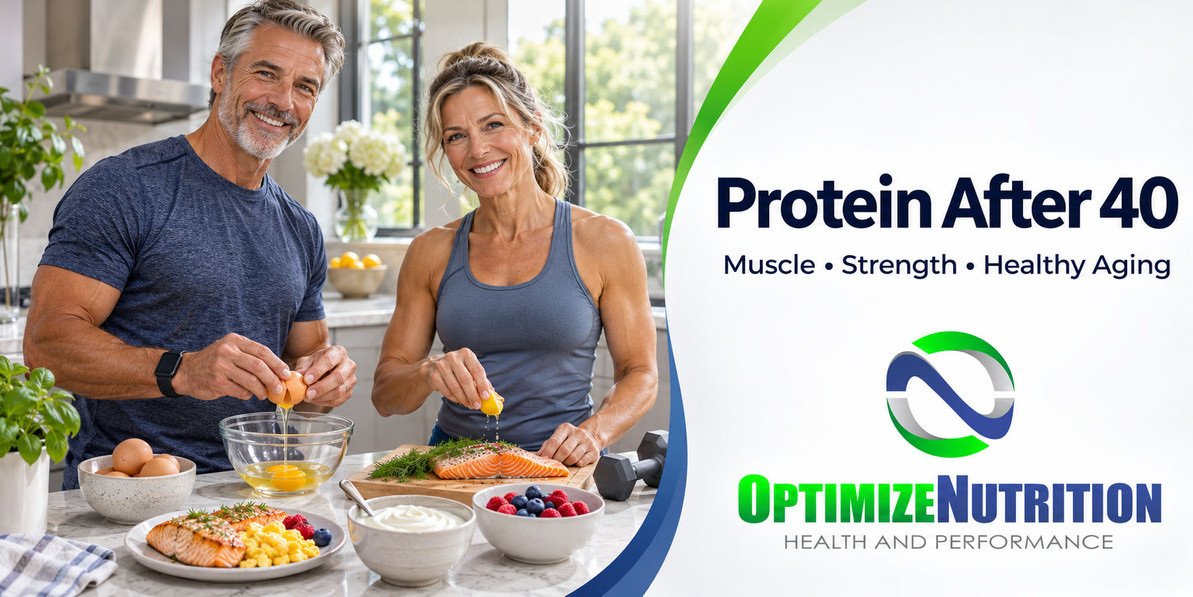
Protein After 40: How Much Do You Really Need to Maintain Muscle, Strength & Healthy Aging?
Protein is often associated with bodybuilding, muscle growth, and post-workout shakes. But as we get older, its importance extends far beyond the gym.
After age 40, maintaining muscle becomes increasingly important for metabolism, strength, mobility, and long-term health. Yet many adults continue eating the same amount of protein they consumed in their twenties, even as their bodies begin to change.
Research suggests that protein requirements may increase with age, particularly for people who want to preserve muscle, remain physically active, or maintain strength as they get older.
So how much protein do you actually need after 40? Is the standard recommended daily intake enough? And does it matter whether your protein comes from food or supplements?
Understanding how aging affects muscle maintenance can help you make more informed decisions about your nutrition.
Why Protein Becomes More Important After 40
Muscle is much more than tissue that allows us to lift weights or perform physical activities.
Skeletal muscle plays important roles in:
- Strength, balance, and mobility
- Glucose uptake and blood sugar regulation
- Physical independence as we age
- Metabolic health and energy expenditure
- Recovery from exercise, illness, and injury
- Maintaining healthy body composition
As adults move through middle age, gradual changes in muscle mass, strength, physical activity, and hormone levels can make maintaining muscle more challenging.
Age-related muscle loss can eventually contribute to sarcopenia, a condition characterized by reduced muscle strength and muscle quantity or quality.
However, muscle loss is not inevitable.
Resistance training, adequate protein intake, sufficient calories, and an active lifestyle can help preserve muscle function well into older adulthood.
For a deeper discussion of why muscle matters beyond appearance, read Why Muscle Mass Matters for Health, Metabolism, and Healthy Body Composition.
What Is Anabolic Resistance?
One reason protein becomes increasingly important with age is a phenomenon known as anabolic resistance.
In younger adults, consuming protein stimulates muscle protein synthesis, the process through which the body builds and repairs muscle proteins.
As people age, this response can become less sensitive to smaller amounts of dietary protein.
In simple terms, older muscles may require a stronger nutritional stimulus to produce a similar muscle-building response.
Several factors may contribute:
- Reduced physical activity
- Changes in muscle metabolism
- Chronic low-grade inflammation
- Changes in insulin sensitivity
- Hormonal changes
- Reduced responsiveness to dietary amino acids
These changes vary considerably between individuals and do not suddenly begin at age 40.
Anabolic resistance generally becomes more relevant with advancing age, particularly among sedentary and older adults.
The good news is that resistance exercise helps stimulate muscle protein synthesis and can improve the muscle's response to dietary protein.
This makes adequate protein intake and strength training particularly valuable when combined.
How Much Protein Do You Actually Need After 40?
The standard Recommended Dietary Allowance (RDA) for protein is approximately 0.8 grams per kilogram of body weight per day for most healthy adults.
For someone weighing 80 kg (176 lb), that equals approximately 64 grams of protein daily.
However, the RDA is designed to meet basic nutritional requirements. It is not necessarily the ideal target for maximizing muscle growth or supporting muscle maintenance during aging.
Research organizations have proposed higher protein intakes for older adults and physically active individuals.
General Protein Intake Guidelines
| Individual or goal | Daily protein intake |
|---|---|
| Standard adult RDA | 0.8 g/kg |
| Healthy older adults, particularly 65+ | 1.0–1.2 g/kg |
| Active adults focused on muscle maintenance | Approximately 1.2–1.6 g/kg |
| Regular resistance training and muscle growth | Approximately 1.4–2.0 g/kg |
These ranges are general guidelines rather than universal requirements.
The evidence supporting 1.0–1.2 g/kg is strongest for adults over 65, while higher ranges are commonly recommended for individuals participating in regular resistance training.
What Does That Look Like in Real Life?
For an active adult aiming for approximately 1.2–1.6 grams of protein per kilogram:
| Body weight | Approximate daily protein |
|---|---|
| 130 lb (59 kg) | 71–94 g |
| 150 lb (68 kg) | 82–109 g |
| 175 lb (79 kg) | 95–126 g |
| 200 lb (91 kg) | 109–146 g |
| 225 lb (102 kg) | 122–163 g |
For example, an active 175-pound adult could aim for approximately 95–125 grams daily, depending on activity level and goals.
Someone focused on increasing muscle mass through consistent resistance training may benefit from the higher end of the range.
Individual requirements may differ based on medical conditions, calorie intake, and body composition.
Does It Matter How Much Protein You Eat at Each Meal?
Total daily protein intake is important, but researchers are also interested in how protein is distributed throughout the day.
A common dietary pattern might look like this:
- Breakfast: 10 grams of protein
- Lunch: 20 grams
- Dinner: 60 grams
Although this provides 90 grams of protein, most of it is concentrated in one meal.
Research suggests that distributing protein more evenly may help stimulate muscle protein synthesis at several points throughout the day.
For many middle-aged and older adults, approximately 25–40 grams of high-quality protein per meal is a practical target.
Larger individuals or those participating in resistance training may benefit from higher amounts.
Can Your Body Absorb More Than 30 Grams of Protein?
A common misconception is that the body cannot absorb more than 20–30 grams of protein at once.
This is incorrect.
The digestive system can absorb substantially more protein than that.
What researchers continue to investigate is how different protein doses influence muscle protein synthesis, whole-body protein balance, and long-term muscle development.
A larger protein-containing meal is not automatically wasted.
For most adults, meeting an appropriate daily protein target should be the first priority. Spreading protein across meals is a useful secondary consideration.
Protein Quality: Are All Protein Sources Equal?
Protein is made up of amino acids, including nine essential amino acids that must come from the diet.
Different protein sources contain different amounts and proportions of these amino acids.
Some are also digested and absorbed differently.
Animal-Based Protein Sources
Common examples include:
- Eggs
- Fish and seafood
- Chicken and turkey
- Beef
- Greek yogurt
- Cottage cheese
- Whey protein
- Egg white protein
Many animal-based proteins provide all nine essential amino acids in proportions that support muscle protein synthesis.
Whey protein is particularly rich in leucine, an essential amino acid involved in stimulating muscle protein synthesis.
For those who have difficulty consuming enough protein through meals, whey protein powders can provide a convenient source of complete protein.
Plant-Based Protein Sources
Plant-based options include:
- Lentils
- Beans
- Tofu and tempeh
- Soy milk
- Pea protein
- Hemp protein
- Nuts and seeds
- Whole grains
Plant proteins can absolutely contribute to muscle maintenance and growth.
However, some individual plant proteins contain lower proportions of certain essential amino acids or have lower digestibility than animal proteins.
For individuals following plant-based diets, consuming adequate total protein and a variety of protein sources becomes particularly important.
Well-formulated plant protein blends can offer a convenient alternative to dairy-based products.
Explore plant-based and vegan protein blends available at Optimize Nutrition.
Why Leucine Matters for Muscle Maintenance
Leucine is one of three branched-chain amino acids (BCAAs).
It acts as an important nutritional signal involved in activating pathways that stimulate muscle protein synthesis.
Research suggests that older adults may benefit from protein-containing meals that provide sufficient leucine alongside the other essential amino acids.
High-quality protein sources such as whey, eggs, dairy, meat, and soy provide leucine naturally.
Whey protein typically contains approximately 10–12% leucine by protein weight, making it a concentrated dietary source.
However, leucine alone cannot build muscle.
The body also needs the other essential amino acids to supply the building blocks required for muscle protein synthesis.
This is why consuming adequate complete protein is generally preferable to relying exclusively on BCAA supplements.
For individuals exploring targeted amino acid supplementation, Optimize Nutrition also carries essential amino acid (EAA) supplements.
EAAs may be useful in specific nutritional or training circumstances, but they should not be considered a replacement for sufficient dietary protein.
Is Protein Powder Necessary After 40?
Protein powder is not essential for everyone.
Someone consistently meeting their protein needs through whole foods may have little reason to add additional protein supplements.
However, protein powders can be particularly useful when:
- Breakfast is consistently low in protein
- Appetite is reduced
- Daily protein targets are difficult to meet
- Someone is increasing resistance training
- Convenient meal preparation is challenging
- Protein intake needs to increase without substantially increasing meal volume
For example, adding a protein shake containing 25–30 grams of protein can help someone move from an inadequate daily intake toward a more appropriate target.
The benefit comes primarily from helping meet overall protein requirements, not from protein powder having unique muscle-building properties that whole foods lack.
Choosing the Right Protein Supplement After 40
Different protein powders offer advantages depending on dietary preferences, digestion, and nutritional goals.
1. Whey Protein Isolate
Whey isolate generally provides a high percentage of protein with relatively little lactose, fat, or carbohydrate.
It is an excellent option for adults seeking a concentrated source of complete protein, particularly when managing overall calorie intake or limiting lactose.
Explore Optimize Nutrition's whey protein isolate selection.
2. Whey Protein Concentrate
Whey concentrate provides complete protein and naturally occurring milk components.
It typically contains somewhat more lactose and fat than isolate but is often more economical.
For people who tolerate dairy well, whey concentrate can be an excellent everyday choice.
Featured Product: ATP Labs Grass-Fed Whey Protein Concentrate 1.8 kg
This grass-fed whey protein concentrate provides a convenient source of complete protein for supporting daily protein intake and post-exercise muscle recovery.
3. Multi-Source Protein Blends
Some protein powders combine several protein sources with different digestion characteristics.
These formulas can provide a convenient way to increase daily protein intake and may appeal to people who prefer blended protein products.
Featured Product: PVL ISOGOLD MPS 5 Protein Powder
A multi-source protein formula designed to support muscle protein synthesis, daily protein requirements, and exercise recovery.
4. Egg White Protein
Egg white protein provides a complete amino acid profile without dairy ingredients.
It may be particularly useful for individuals avoiding whey or lactose.
Featured Product: Rise Nutrition Egg White Protein 1.1 lb
Made from Canadian egg whites, this single-ingredient protein powder is a straightforward option for increasing daily protein intake without dairy.
5. Protein Bars and Convenient Snacks
Protein bars can also help fill nutritional gaps, particularly when travelling, working long hours, or struggling to prepare protein-rich meals.
However, protein content, ingredient quality, fibre, calories, and added sweeteners vary significantly between products.
Browse Optimize Nutrition's protein bars and high-protein snacks for convenient options.
Does Protein Alone Prevent Muscle Loss?
Not entirely.
While adequate protein provides the building blocks needed for muscle repair and maintenance, resistance training is one of the strongest tools for preserving muscle strength with age.
Strength training creates a stimulus that encourages muscles to adapt.
Protein provides the amino acids needed to support that adaptation.
Together, they are more effective than either approach alone.
Activities that can help maintain muscle include:
- Weight training
- Resistance bands
- Bodyweight exercises
- Progressive strength exercises
- Functional movements such as squats and step-ups
For many adults, resistance training at least twice weekly is a practical starting point.
Progressive overload—gradually increasing the challenge as strength improves—is important for continued adaptation.
Walking, cycling, and other aerobic activities provide valuable health benefits, but they do not fully replace resistance training for preserving muscle strength.
What About Creatine After 40?
Creatine is another supplement worth considering in the context of muscle maintenance and healthy aging.
Creatine helps regenerate ATP, the body's immediate energy source during short periods of intense muscular activity.
Research has shown that creatine supplementation can improve strength and training adaptations, particularly when combined with resistance exercise.
For middle-aged and older adults, this may help support the ability to maintain or improve muscle function.
Creatine does not replace adequate dietary protein, and protein does not replace creatine.
They perform different functions:
- Protein supplies amino acids needed for muscle repair and development.
- Creatine supports rapid energy availability during demanding muscular activity.
Optimize Nutrition carries a variety of creatine supplements, including creatine monohydrate powders and capsules.
For those looking for a straightforward option, creatine monohydrate is the most extensively researched supplemental form.
Does Eating More Protein Help With Weight Management?
Protein may also support healthy body composition through several mechanisms.
1. Greater Satiety
Protein-rich meals can help promote fullness and may support appetite management.
2. Higher Thermic Effect of Food
Digesting and processing protein generally requires more energy than processing the same number of calories from fat or carbohydrates.
3. Preserving Muscle During Weight Loss
When calorie intake is reduced, the body may lose both fat and lean tissue.
Adequate protein combined with resistance training can help reduce muscle loss during weight-management programs.
This becomes especially relevant after 40, when maintaining strength and muscle mass may already be more challenging.
However, eating more protein does not automatically cause fat loss. Overall nutrition, energy intake, sleep, physical activity, and individual health factors still matter.
A Simple High-Protein Day for Adults Over 40
Meeting daily protein needs doesn't have to involve drinking multiple shakes or eating enormous portions of meat.
Here is an example of how someone could reach approximately 120 grams of protein through regular meals.
| Meal | Example | Approximate protein |
|---|---|---|
| Breakfast | Greek yogurt, oats, nuts, and berries | 30 g |
| Lunch | Chicken breast with quinoa and vegetables | 35 g |
| Snack | Protein shake | 25 g |
| Dinner | Salmon with roasted vegetables and potatoes | 30 g |
| Daily Total | 120 g |
Actual protein amounts depend on serving sizes and product formulations.
This approach distributes protein throughout the day while incorporating nutrient-dense whole foods.
A protein shake is optional and can be replaced with another protein-rich food.
For those struggling to meet daily requirements, explore Optimize Nutrition's complete protein powder collection.
Common Protein Mistakes After 40
1. Eating Very Little Protein at Breakfast
Toast, cereal, or fruit alone may provide relatively little protein.
Adding Greek yogurt, eggs, cottage cheese, tofu, or a protein shake can help improve the balance.
2. Focusing Only on Protein After Workouts
Post-workout protein can be convenient, but adequate total daily protein is more important than achieving a narrow timing window.
3. Assuming More Protein Always Means More Muscle
Protein requirements vary. Eating far beyond what the body needs does not guarantee additional muscle growth.
Training quality, recovery, overall nutrition, and consistency remain essential.
4. Relying on Supplements Instead of Food
Protein powders are convenient tools, but whole foods also provide vitamins, minerals, fibre, and other important nutrients.
5. Neglecting Resistance Training
Increasing protein intake without an appropriate muscular stimulus may provide fewer benefits for strength and muscle development.
The Bottom Line: Protein Is an Investment in Healthy Aging
Maintaining muscle after 40 is about much more than appearance.
Muscle supports strength, mobility, metabolic health, physical independence, and the ability to remain active throughout life.
Although age-related changes can make muscle maintenance more challenging, they do not mean declining strength is unavoidable.
The evidence supports several practical strategies:
- Consume enough protein to meet individual needs.
- Consider higher protein intake when physically active or resistance training.
- Include meaningful amounts of protein at several meals.
- Choose high-quality protein sources from a variety of foods.
- Incorporate consistent resistance training.
- Use protein supplements when they help meet nutritional needs.
- Prioritize adequate calories, recovery, and long-term consistency.
For many active adults over 40, approximately 1.2–1.6 grams of protein per kilogram of body weight is a reasonable starting range, with higher intakes potentially appropriate for certain training goals.
The objective isn't simply to eat more protein. It's to provide the body with the nutrition and physical stimulus it needs to remain strong, capable, and resilient as the years go by.
Support Your Protein Needs at Optimize Nutrition
Whether the goal is maintaining muscle, improving workout recovery, or supporting healthy aging, Optimize Nutrition offers a range of products to complement a balanced diet and active lifestyle.
Explore:
- Protein Powders
- Whey Protein Isolates
- Whey Protein Concentrates and Blends
- Plant-Based Protein Blends
- Essential Amino Acids
- Creatine Supplements
- Protein Bars and Snacks
Shop online at Optimize Nutrition with Canada-wide shipping, or visit the Nanaimo store for personalized product guidance.
References
- Bauer, J., et al. (2013). Evidence-Based Recommendations for Optimal Dietary Protein Intake in Older People: A Position Paper From the PROT-AGE Study Group. Journal of the American Medical Directors Association.
- Jäger, R., et al. (2017). International Society of Sports Nutrition Position Stand: Protein and Exercise. Journal of the International Society of Sports Nutrition.
- Protein and Aging: Practicalities and Practice. (2025). Review examining protein intake, meal distribution, protein quality, and muscle maintenance during aging.
- Impacts of Protein Quantity and Distribution on Body Composition. (2024). Frontiers in Nutrition.
Disclaimer: This article is intended for educational purposes only and is not medical advice. Protein requirements vary according to age, health, activity level, and individual circumstances. People with kidney disease or other medical conditions requiring dietary restrictions should consult a qualified healthcare practitioner before substantially increasing protein intake.
Recent Posts
-

Protein After 40: How Much Do You Really Need to Maintain Muscle, Strength & Healthy Aging?
Protein is often associated with bodybuilding, muscle growth, and post-workout shakes. But as we get …Nov 10, 2026 -

Should You Take Supplements With Food or on an Empty Stomach? A Guide to Better Absorption
Taking supplements is one thing. Getting the most out of them is another. Many people carefully choo …Nov 09, 2026 -

Perimenopause and Nutrition: Essential Nutrients and Supplements for Women Over 40
Perimenopause is a natural stage of life, but the hormonal changes that come with it can affect ever …Nov 06, 2026