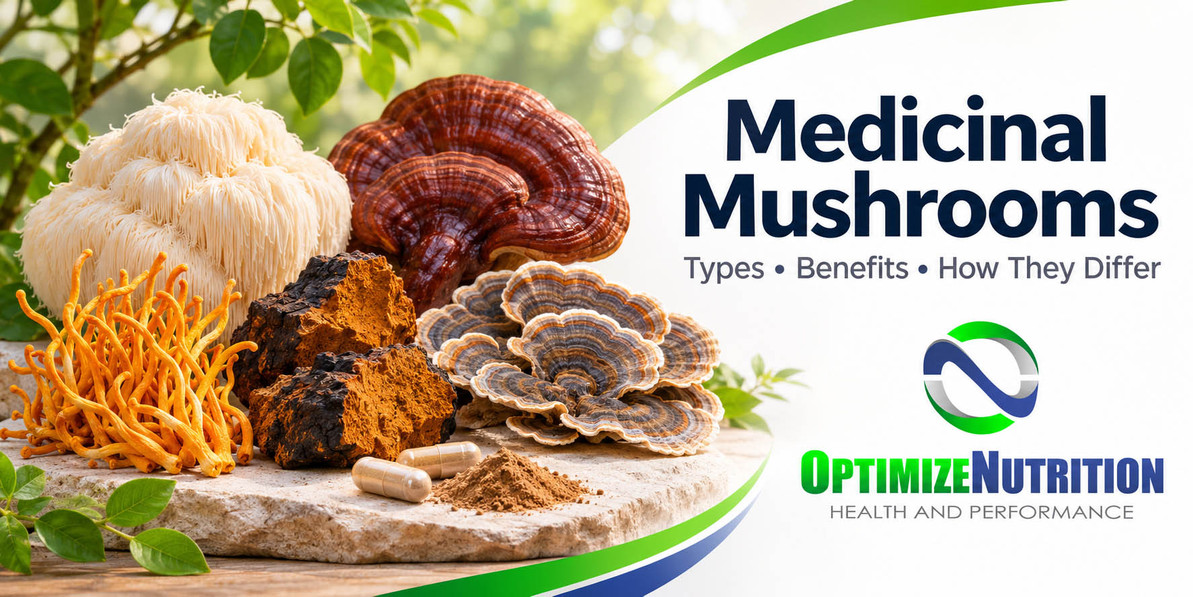
Medicinal Mushrooms Explained: Lion's Mane, Reishi, Cordyceps, Chaga & More — Which One Is Right for You?
Medicinal mushrooms have been used in traditional wellness practices for centuries, particularly throughout Asia. Today, they're gaining attention in modern nutrition research for their unique bioactive compounds and potential roles in supporting brain health, immune function, energy, and overall well-being.
From Lion's Mane for cognitive health to Cordyceps for exercise performance and Reishi for relaxation, different mushrooms have developed reputations for very different purposes.
But are all medicinal mushrooms essentially the same? And how much of their popularity is supported by science?
The answer is that different mushroom species contain distinct combinations of compounds, and their potential benefits are not interchangeable.
Some have undergone human clinical trials, while others are supported primarily by traditional use, laboratory experiments, or animal studies.
Understanding these differences is the first step toward choosing a medicinal mushroom supplement that fits your goals.
What Are Medicinal Mushrooms?
Medicinal mushrooms, sometimes called functional mushrooms, are fungi traditionally consumed or prepared as extracts for their potential health-supporting properties.
Unlike conventional culinary mushrooms, such as white button mushrooms, some medicinal species contain distinctive compounds that have attracted interest from researchers.
These include:
- Beta-glucans: Polysaccharides found in fungal cell walls that can interact with the immune system.
- Triterpenes: Compounds found in certain mushrooms, particularly Reishi, that are being studied for various biological activities.
- Hericenones and erinacines: Compounds associated with Lion's Mane that have attracted interest in neurological research.
- Cordycepin: A compound associated with certain Cordyceps species and investigated for its biological activity.
- Antioxidant compounds: Substances that may help protect cells against oxidative damage in laboratory studies.
These compounds help explain why scientists are interested in medicinal mushrooms, but the presence of a compound does not automatically establish a health benefit in humans.
A 2023 scientific review of medicinal mushrooms discusses their bioactive components, nutritional value, and potential applications.
1. Lion's Mane: The Mushroom for Brain Health and Cognitive Function
Scientific name: Hericium erinaceus
Lion's Mane is one of the most recognizable medicinal mushrooms, with its distinctive white, shaggy appearance resembling a lion's mane.
It has become especially popular for its potential effects on brain health, memory, and cognitive function.
What Makes Lion's Mane Unique?
Lion's Mane contains several compounds of interest, including hericenones and erinacines.
Laboratory and animal research suggests certain compounds from Lion's Mane may influence nerve growth factor-related pathways.
Nerve growth factor, or NGF, is a protein involved in the development, maintenance, and survival of certain nerve cells.
This has made Lion's Mane particularly interesting to researchers investigating neurological health.
Potential Benefits Being Studied
- Memory and cognitive performance
- Age-related cognitive changes
- Mood and emotional well-being
- Neurological health
- Gut microbiome interactions
What Does the Research Say?
Small human clinical trials have reported improvements in certain measures of cognitive function, particularly among older adults experiencing mild cognitive difficulties.
Other preliminary studies have investigated mood, stress, and cognitive performance in healthy adults.
However, the available clinical trials are relatively small and frequently use different formulations and doses.
A 2025 systematic review of Lion's Mane research examined clinical and preclinical evidence relating to neurological function, mood, and safety.
The findings are promising, but larger, longer-term human studies are necessary before concluding that Lion's Mane prevents cognitive decline or treats neurological disease.
Best known for: Cognitive health, memory, focus, and neurological research.
Explore Lion's Mane supplements at Optimize Nutrition.
2. Reishi: The Mushroom Traditionally Associated With Calm and Longevity
Scientific name: Ganoderma lucidum and related Ganoderma species
Reishi has a long history of use in traditional Chinese medicine, where it is sometimes referred to as the mushroom of immortality.
Despite this dramatic nickname, Reishi should not be interpreted as a proven longevity treatment.
Its traditional reputation is associated with vitality, resilience, immune function, and general wellness.
What Makes Reishi Unique?
Reishi contains several groups of bioactive compounds, particularly:
- Beta-glucans and other polysaccharides
- Triterpenes, including ganoderic acids
- Other fungal metabolites
These compounds have been investigated for their effects on immune signalling, inflammation-related pathways, and cellular processes.
Reishi is also sometimes marketed as an adaptogen, a term commonly applied to substances believed to support the body's response to stress.
However, the adaptogen label does not establish that a supplement has clinically proven stress-reducing effects.
Potential Benefits Being Studied
- Immune system activity
- Stress-related outcomes
- Fatigue and quality of life
- Cardiometabolic health
- General wellness and aging
What Does the Research Say?
Human research on Reishi has produced mixed results.
Some smaller studies have reported improvements in fatigue or quality-of-life measures, while other studies have found insufficient evidence for meaningful changes in cholesterol, blood pressure, or blood glucose.
Laboratory studies have demonstrated interesting immune-related activities, but these findings cannot automatically be translated into clinical benefits.
Reishi is also being researched in oncology, but it has not been established as an effective standalone cancer treatment.
The U.S. National Cancer Institute's medicinal mushroom review provides an overview of the clinical and laboratory evidence.
Best known for: Traditional relaxation and longevity support, immune-related research, and general wellness.
3. Cordyceps: The Mushroom Associated With Energy and Endurance
Scientific names: Cordyceps militaris and Ophiocordyceps sinensis
Cordyceps is particularly interesting because of its long-standing association with energy, stamina, and physical performance.
It has historically been used in traditional Chinese medicine to support vitality and respiratory function.
Today, it has attracted attention among athletes and individuals interested in exercise performance.
What Makes Cordyceps Unique?
Cordyceps species contain compounds including:
- Cordycepin, particularly associated with Cordyceps militaris
- Polysaccharides
- Adenosine-related compounds
- Various fungal metabolites
These compounds are being investigated for potential effects on cellular energy pathways, inflammation, and exercise-related physiology.
One important distinction is that Cordyceps products may contain different species.
Wild Ophiocordyceps sinensis and cultivated Cordyceps militaris are not interchangeable, and their chemical profiles can differ.
Potential Benefits Being Studied
- Aerobic exercise performance
- Fatigue during physical activity
- Oxygen utilization
- Exercise recovery
- Cellular energy metabolism
What Does the Research Say?
Some small human studies have reported improvements in certain exercise performance measures, including time to exhaustion or aerobic capacity.
However, results vary considerably.
Differences in mushroom species, extract formulations, doses, training status, and study design make it difficult to establish consistent benefits.
There is not yet strong evidence that Cordyceps reliably improves athletic performance in well-trained individuals.
Nevertheless, it remains an interesting area of sports nutrition research.
Best known for: Energy, endurance, stamina, and exercise performance research.
Explore Cordyceps supplements at Optimize Nutrition.
4. Chaga: The Mushroom Known for Its Antioxidant Compounds
Scientific name: Inonotus obliquus
Chaga is a dark, woody fungus that commonly grows on birch trees in colder northern climates, including parts of Canada.
Its unusual appearance resembles burnt charcoal rather than a traditional mushroom.
Chaga has a history of use in traditional wellness practices, particularly in Northern Europe and parts of Asia.
What Makes Chaga Unique?
Chaga contains several compounds of scientific interest, including:
- Polyphenols
- Melanin-like pigments
- Polysaccharides
- Triterpenoid compounds
- Other antioxidant-associated substances
Laboratory studies have demonstrated antioxidant activity in certain Chaga extracts.
This has contributed to its reputation as an antioxidant-rich functional mushroom.
Potential Benefits Being Studied
- Antioxidant activity
- Oxidative stress pathways
- Immune system interactions
- Inflammation-related processes
- Cellular protection
What Does the Research Say?
Most research on Chaga comes from laboratory and animal studies.
Although these studies suggest interesting biological properties, robust human clinical evidence remains extremely limited.
This distinction matters because high antioxidant activity in a laboratory assay does not necessarily mean a supplement produces measurable health improvements in people.
Chaga also contains oxalates, and excessive or prolonged intake of certain preparations has been associated with kidney injury in case reports.
Best known for: Antioxidant-related research and traditional northern herbal use.
5. Turkey Tail: The Mushroom Studied for Immune Function
Scientific name: Trametes versicolor, also known as Coriolus versicolor
Turkey Tail gets its name from its colourful, fan-shaped appearance, which resembles the tail feathers of a wild turkey.
It grows on dead wood and can be found in forests across North America.
Turkey Tail has attracted significant scientific interest because of its polysaccharide compounds and interactions with the immune system.
What Makes Turkey Tail Unique?
Two of its best-known compounds are:
- Polysaccharide-K (PSK)
- Polysaccharopeptide (PSP)
These are specialized preparations derived from Turkey Tail that have been investigated for immune-related effects.
Importantly, these extracts are not equivalent to every commercially available Turkey Tail powder or capsule.
Potential Benefits Being Studied
- Immune system signalling
- Certain immune responses
- Interactions with gut microorganisms
- Supportive applications in oncology research
What Does the Research Say?
Turkey Tail has been investigated in clinical research, particularly in Japan, where a specific PSK preparation has been used alongside conventional cancer treatment.
However, findings involving pharmaceutical-grade PSK cannot automatically be applied to ordinary Turkey Tail dietary supplements.
There is also insufficient evidence that taking an over-the-counter Turkey Tail product prevents cancer or treats infections.
For a balanced review, see the National Cancer Institute's discussion of Turkey Tail and PSK.
Best known for: Immune-related research and investigation of specialized polysaccharide extracts.
Explore Turkey Tail supplements at Optimize Nutrition.
6. Maitake: The Mushroom Studied for Metabolic and Immune Health
Scientific name: Grifola frondosa
Maitake, sometimes called Hen of the Woods, is both an edible culinary mushroom and a traditional functional mushroom.
It has been investigated for compounds that may interact with immune and metabolic processes.
What Makes Maitake Unique?
Maitake contains beta-glucans and other polysaccharides, including preparations sometimes described as D-fraction.
Researchers have studied these substances for their potential effects on immune cells and glucose-related pathways.
Potential Benefits Being Studied
- Immune function
- Blood sugar regulation
- Metabolic health
- Inflammation-related pathways
What Does the Research Say?
Laboratory and animal studies have generated interest in Maitake's potential metabolic properties.
However, human clinical evidence remains limited, and there is insufficient research to recommend Maitake as a treatment for insulin resistance or diabetes.
Maitake's value as a nutrient-containing food should also be distinguished from the unproven benefits of concentrated extracts.
Best known for: Metabolic and immune-related research.
7. Shiitake: More Than Just a Culinary Mushroom
Scientific name: Lentinula edodes
Shiitake is one of the world's most widely consumed edible mushrooms.
Although primarily recognized as a culinary ingredient, it also contains bioactive compounds that have attracted interest in nutritional and medical research.
What Makes Shiitake Unique?
Shiitake contains:
- Beta-glucans
- Lentinan, a specialized polysaccharide
- Ergosterol, a precursor that can be converted to vitamin D2 through ultraviolet exposure
- Various vitamins and minerals
Potential Benefits Being Studied
- Immune function
- General nutritional health
- Cholesterol-related pathways
- Gut health
What Does the Research Say?
Certain Shiitake-derived extracts have been investigated for immune-related activities.
However, consuming Shiitake mushrooms as food should not be considered equivalent to using concentrated extracts investigated in clinical research.
Shiitake is also an excellent example of how functional mushrooms can contribute to nutrition through ordinary dietary intake.
Best known for: Immune-related compounds and nutritional benefits as a whole food.
8. Tremella: The Mushroom Associated With Skin Hydration
Scientific name: Tremella fuciformis
Tremella, also known as Snow Mushroom, has become increasingly popular in beauty and skincare formulations.
Its soft, translucent appearance makes it very different from the woody medicinal mushrooms commonly found in supplement capsules.
What Makes Tremella Unique?
Tremella contains complex polysaccharides that can hold water and have attracted interest in skin-related research.
It has been investigated for potential effects on moisture retention, skin barrier function, and antioxidant-related pathways.
Potential Benefits Being Studied
- Skin hydration
- Skin barrier support
- Antioxidant-related activity
- General skin health
What Does the Research Say?
Much of Tremella's skincare research involves laboratory studies, topical applications, or experimental formulations.
Evidence that oral Tremella supplements meaningfully improve skin hydration or reduce signs of aging in humans remains preliminary.
It is therefore best viewed as an emerging ingredient rather than a proven oral skincare treatment.
Best known for: Skin hydration research and cosmetic applications.
Which Medicinal Mushroom Is Best for Your Goals?
Different mushrooms are associated with different research interests, but none should be considered a guaranteed solution for a specific health concern.
| Mushroom | Most commonly associated with | State of evidence |
|---|---|---|
| Lion's Mane | Cognitive function, memory, mood | Small human trials; promising but preliminary |
| Reishi | Relaxation, immunity, wellness | Mixed human evidence |
| Cordyceps | Energy, stamina, endurance | Small exercise trials; inconsistent results |
| Chaga | Antioxidant compounds | Mostly laboratory and animal studies |
| Turkey Tail | Immune-related activity | Human research on specialized extracts |
| Maitake | Metabolic and immune health | Mostly preclinical evidence |
| Shiitake | Nutrition and immune compounds | Established as food; extract evidence varies |
| Tremella | Skin hydration | Preliminary research, especially topical |
The key is to understand that a mushroom's traditional use, biological activity, and clinically proven benefits are three different things.
Mushroom Supplements: Fruiting Body vs. Mycelium
One of the biggest differences between medicinal mushroom products is the part of the fungus used.
Fruiting Body
The fruiting body is the visible reproductive structure commonly recognized as a mushroom.
Some supplements use extracts made exclusively from fruiting bodies.
These may contain concentrated amounts of certain fungal compounds, depending on the species and extraction method.
Mycelium
Mycelium is the network of fungal filaments that grows through a substrate.
Some mushroom supplements use cultivated mycelium instead of, or alongside, fruiting bodies.
Mycelium is not inherently inferior. In fact, certain researched mushroom compounds are associated with mycelial preparations.
However, some products contain mycelium grown on grain, and the finished material may include substantial amounts of residual starch.
This can affect the concentration of fungal compounds per gram.
Which Is Better?
Neither fruiting-body-only nor mycelium-only products should automatically be considered superior.
What matters is:
- The mushroom species
- The specific compounds of interest
- How the material was grown
- Whether the product is an extract or whole powder
- Independent testing and quality control
- Whether the formulation resembles preparations used in human research
What Does Dual Extraction Mean?
Medicinal mushrooms contain different classes of compounds that may require different extraction techniques.
Hot water extraction is commonly used to extract water-soluble compounds, including certain polysaccharides and beta-glucans.
Alcohol extraction can recover other compounds, including certain triterpenes.
Dual extraction combines water and alcohol extraction processes.
This may be particularly relevant for mushrooms such as Reishi, which contain different groups of compounds with different solubilities.
However, dual extraction does not automatically make a product more effective.
A high-quality single extraction may be appropriate depending on the mushroom and intended compounds.
Likewise, a label stating 10:1 or 15:1 extract does not automatically mean the product is ten or fifteen times more effective.
Extract ratios describe aspects of processing, not demonstrated clinical potency.
How to Choose a Quality Medicinal Mushroom Supplement
With so many mushroom powders, capsules, tinctures, and drink mixes available, comparing products can become confusing.
Here are some useful considerations.
1. Look for the Scientific Name
A product should identify the mushroom species rather than simply stating mushroom complex.
This is especially important for Cordyceps and Reishi, where multiple species may be sold under similar common names.
2. Check the Beta-Glucan Content
Beta-glucans are among the most frequently studied mushroom compounds.
When comparing products marketed for beta-glucan content, an independently verified beta-glucan measurement can be more useful than a vague total-polysaccharide claim.
Not all polysaccharides are beta-glucans.
3. Understand the Extract
A mushroom extract and a basic mushroom powder are not necessarily equivalent.
Extraction can change the concentration and availability of different compounds.
4. Look for Third-Party Testing
Independent testing can help verify identity, microbial quality, heavy metals, and certain active compounds.
This is especially relevant because mushrooms can accumulate contaminants from their growing environment.
5. Consider Single Mushrooms vs. Blends
A single-mushroom product makes it easier to identify the species and amount being consumed.
A blend may offer several different mushrooms in one convenient serving.
Neither approach is universally better. The decision depends on the formulation, dose, quality, and individual goals.
Medicinal Mushrooms Available at Optimize Nutrition
Optimize Nutrition carries a selection of medicinal mushroom supplements from companies including Eversio Wellness and Harmonic Arts.
Rather than focusing only on brand names, the most useful comparison is between the types of formulations available.
Single-Mushroom Extracts
These provide one mushroom species, making them useful for individuals interested in a particular ingredient.
Examples include:
- Harmonic Arts Lion's Mane products — for those particularly interested in Lion's Mane and cognitive-health research.
- Eversio Wellness Organic Reishi 15:1 Dual Extract — a concentrated fruiting-body extract standardized for selected mushroom compounds.
- Cordyceps supplements — options for those interested in Cordyceps and exercise-performance research.
Multi-Mushroom Blends
These combine several species in a single formula.
Harmonic Arts 5 Mushroom Concentrated Powder combines Reishi, Cordyceps, Turkey Tail, Chaga, and Lion's Mane.
Eversio Wellness BALANCE Blend combines Lion's Mane, Maitake, Reishi, and Shiitake.
The main difference between these products is the combination of mushroom species and their formulation.
When choosing a blend, consider whether it provides meaningful amounts of each ingredient and whether the formula aligns with the properties you're most interested in.
Explore the complete Medicinal Mushroom Collection at Optimize Nutrition.
Are Medicinal Mushrooms Safe?
Many commonly used medicinal mushrooms have a history of culinary or traditional use, but concentrated supplements require additional consideration.
Potential concerns include:
- Allergic reactions
- Digestive discomfort
- Interactions with prescription medications
- Potential effects on blood clotting or blood glucose
- Contamination or inaccurate ingredient identification
- Limited long-term safety data for some extracts
Chaga deserves particular caution because high-oxalate preparations have been associated with kidney injury.
Some Reishi preparations have also been linked to rare reports of liver injury.
Individuals taking anticoagulants, immune-modulating medications, or blood-glucose-lowering medications should have their supplement routine reviewed by a healthcare practitioner.
The same applies to people with kidney or liver disease, those undergoing cancer treatment, and people who are pregnant or breastfeeding.
Mushroom supplements should not replace prescribed treatments.
The Bottom Line: Are Medicinal Mushrooms Worth Exploring?
Medicinal mushrooms represent a fascinating intersection of traditional wellness practices and modern nutritional research.
However, the different species should not be treated as interchangeable.
Lion's Mane has attracted attention for cognitive health, Reishi for its long-standing association with relaxation and immune function, and Cordyceps for its potential effects on exercise performance.
Turkey Tail is particularly interesting because of research involving specialized immune-related polysaccharide preparations.
Meanwhile, Chaga, Maitake, Shiitake, and Tremella contain distinctive compounds that continue to be investigated for different applications.
Although laboratory research is extensive, human clinical evidence remains limited for many popular products.
The most sensible approach is to choose a clearly identified species, understand its formulation, and evaluate claims in the context of the available evidence.
The best medicinal mushroom isn't necessarily the one with the most impressive marketing claims. It's the one whose ingredients, quality, and research best match your individual goals.
Explore Medicinal Mushrooms at Optimize Nutrition
Whether you're interested in Lion's Mane, Reishi, Cordyceps, or a multi-mushroom formula, Optimize Nutrition offers a variety of products to compare.
Browse our Medicinal Mushroom Supplements or visit our Nanaimo location for assistance understanding the differences between mushroom species and formulations.
Scientific References and Further Reading
- Medicinal Mushrooms: Their Bioactive Components, Nutritional Value and Application in Functional Food Production — A Review (2023). Molecules. Comprehensive overview of functional mushroom species and active compounds. Read the full research review.
- Benefits, Side Effects, and Uses of Hericium erinaceus as a Supplement: A Systematic Review (2025). Reviews Lion's Mane research on cognition, mood, neurological pathways, and safety. Read on PubMed.
- A Review of the Effects of Mushrooms on Mood and Neurocognitive Health Across the Lifespan (2024). Neuroscience & Biobehavioral Reviews. Examines evidence for neurological and cognitive outcomes. Read the review.
- National Cancer Institute — Medicinal Mushrooms (PDQ). Evidence-based discussion of Turkey Tail, Reishi, and specialized mushroom extracts investigated in cancer-related research. Read the National Cancer Institute review.
- Medicinal Mushrooms and Their Bioactive Compounds: From Traditional Use to Therapeutic Potential (2026). Reviews traditional use, chemical compounds, and clinical research limitations across several mushroom species. Read the review.
Disclaimer: This article is intended for educational purposes only and does not constitute medical advice. Medicinal mushroom supplements are not intended to replace prescribed treatments or a balanced diet. Consult a qualified healthcare practitioner before beginning supplementation, particularly if taking medications or managing an existing health condition.
Recent Posts
-
Medicinal Mushrooms Explained: Lion's Mane, Reishi, Cordyceps, Chaga & More — Which One Is Right for You?
Medicinal mushrooms have been used in traditional wellness practices for centuries, particularly thr …Nov 23, 2026 -
L-Theanine Benefits: Can This Amino Acid Help With Stress, Focus and Better Sleep?
In a world where stress, mental fatigue, and poor sleep have become increasingly common, many people …Nov 16, 2026 -

Does Caffeine Affect Nutrient Absorption? What Coffee and Tea Really Do to Your Vitamins and Minerals
Coffee is one of the most widely consumed beverages in the world, and for many Canadians, starting t …Nov 12, 2026