
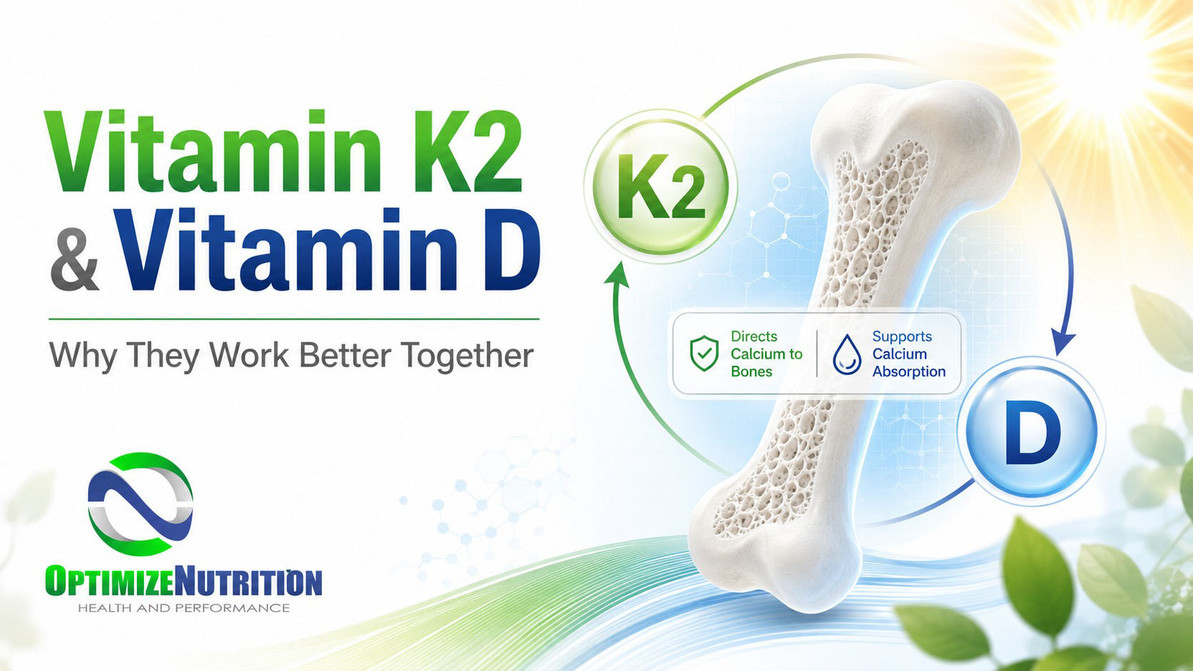
Vitamin K2 and Vitamin D: Why These Nutrients Work Better Together
Vitamin D receives plenty of attention for supporting immunity, mood and bone health. However, vitamin D does not work by itself. Its role in calcium absorption connects it closely with several other nutrients, particularly magnesium and vitamin K.
Vitamin K2 is especially interesting because it helps activate proteins involved in how calcium is used throughout the body. While vitamin D helps the body absorb calcium, vitamin K2 supports the biological processes that incorporate calcium into bone and regulate its accumulation in soft tissues.
This relationship is why vitamin D3 and vitamin K2 are frequently combined in supplements. The partnership makes biological sense, but it is also important to separate established nutrient functions from claims that are still being researched.
What Is Vitamin K2?
Vitamin K is a family of fat-soluble nutrients rather than one individual compound. Its two main forms are vitamin K1 and vitamin K2.
Vitamin K1, also called phylloquinone, is primarily found in green vegetables such as kale, spinach, broccoli and Brussels sprouts. It is best known for supporting normal blood clotting.
Vitamin K2, or menaquinone, is found in certain fermented and animal-based foods. K2 also exists in several forms, identified by names such as MK-4 and MK-7.
MK-4 is present in small amounts in foods including egg yolks, meat and certain dairy products. MK-7 is particularly associated with natto, a traditional Japanese fermented soybean food. Fermented cheeses and other cultured foods may also provide varying amounts of K2.
Both K1 and K2 can contribute to normal vitamin K functions. K2 has received special attention because some menaquinones remain in circulation longer and may be more available to tissues outside the liver. However, researchers are still determining whether these differences consistently translate into better long-term health outcomes.
What Does Vitamin K2 Do?
Vitamin K acts as a cofactor for an enzyme that activates several vitamin K-dependent proteins. This activation process is called carboxylation.
Two of the most discussed vitamin K-dependent proteins are osteocalcin and matrix Gla protein.
Osteocalcin and bone health
Osteocalcin is produced by bone-forming cells called osteoblasts. Once activated with the help of vitamin K, osteocalcin can bind calcium within bone tissue.
This is one reason adequate vitamin K status is considered part of a complete bone-health strategy. Vitamin K does not build bone on its own, but it supports proteins involved in bone mineralization and bone quality.
Matrix Gla protein and calcium regulation
Matrix Gla protein, commonly abbreviated as MGP, is found in blood vessels, cartilage and other soft tissues. Activated MGP helps regulate inappropriate mineral deposition in these areas.
This function has led to significant interest in vitamin K2 and cardiovascular health. However, saying that K2 simply “directs calcium into the bones and away from the arteries” is an oversimplification. K2 activates proteins involved in calcium management, but calcium metabolism also depends on kidney function, hormones, magnesium status, overall diet and many other factors.
Some studies suggest vitamin K supplementation may influence markers of vascular calcification, but clinical evidence is mixed. It has not been proven that routine K2 supplementation prevents heart attacks, cardiovascular disease or arterial calcification in otherwise healthy people.
What Does Vitamin D Do?
Vitamin D is also a fat-soluble vitamin, although it functions more like a hormone within the body.
One of its most established roles is supporting calcium and phosphorus balance. Vitamin D increases the absorption of calcium from the digestive tract and helps maintain calcium concentrations needed for normal bone mineralization, muscle function and other biological processes.
Without sufficient vitamin D, the body may not absorb calcium efficiently, even when calcium intake appears adequate. Long-term vitamin D deficiency can therefore contribute to impaired bone mineralization.
Vitamin D also participates in immune and neuromuscular function. However, supplementation should not be presented as a treatment for every condition associated with low vitamin D. Benefits are generally clearest when supplementation corrects an inadequate intake or deficiency.
How Vitamin D and K2 Work Together
The relationship between these vitamins can be summarized as follows:
Vitamin D helps increase calcium availability. Vitamin K helps activate proteins that use and regulate calcium.
Vitamin D can also stimulate the production of osteocalcin and matrix Gla protein. These newly produced proteins then require vitamin K-dependent activation before they can perform their normal functions effectively.
In this sense, vitamin D and vitamin K operate at different stages of the same broad calcium-management system:
- Vitamin D supports calcium absorption from food.
- Vitamin D supports the production of certain calcium-regulating proteins.
- Vitamin K activates those proteins.
- Activated osteocalcin participates in calcium binding within bone.
- Activated MGP helps regulate mineral deposition in soft tissues.
This biological connection is the foundation of the commonly discussed vitamin D3 and K2 combination.
Does Everyone Taking Vitamin D Need K2?
It is often claimed online that taking vitamin D without K2 is dangerous. Current evidence does not support such a broad statement.
Many people obtain adequate vitamin K through a varied diet, and clinically significant vitamin K deficiency is uncommon among healthy adults. Vitamin D supplements have also been used safely for decades without K2 being universally required.
At the same time, it is reasonable to consider overall vitamin K intake when discussing calcium and vitamin D, especially for people with limited diets or certain digestive conditions.
Research examining combined vitamin D and vitamin K supplementation has produced encouraging but inconsistent results. A meta-analysis of eight randomized trials found that combining vitamins D and K produced a modest improvement in total bone mineral density. Other trials have found benefits only at certain skeletal sites, while some found no meaningful improvement.
Studies examining cardiovascular calcification are similarly mixed. A 2023 trial found no significant overall reduction in coronary artery calcification from combined K2 and D supplementation. A separate two-year randomized trial in older men found that MK-7 plus vitamin D did not slow the progression of aortic valve calcification.
The most accurate conclusion is that vitamin D and K2 have complementary biological functions, but researchers have not yet proven that everyone taking vitamin D needs a separate K2 supplement.
Potential Bone-Health Benefits
The strongest case for paying attention to both vitamin D and vitamin K relates to bone health.
Vitamin D supports calcium absorption, while vitamin K activates osteocalcin. Calcium, magnesium, phosphorus, protein and regular resistance or weight-bearing exercise also contribute to maintaining bone structure.
Some K2 studies in postmenopausal women have reported improvements in bone mineral density, bone strength or markers of vitamin K status. However, results vary according to the form and amount of K2 used, the length of the study and the health of the participants.
This means K2 may be one useful part of a bone-support plan, but it should not replace the fundamentals:
- Adequate dietary protein
- Calcium-rich foods
- Sufficient vitamin D
- Magnesium and other essential nutrients
- Resistance and weight-bearing exercise
- Healthy hormone function
- Avoiding smoking and excessive alcohol consumption
Supplements cannot compensate for every dietary or lifestyle factor affecting bone strength.
Food Sources of Vitamin K2
Vitamin K2 intake can vary substantially based on diet. Potential food sources include:
- Natto
- Certain aged and fermented cheeses
- Egg yolks
- Chicken and other meats
- Liver and organ meats
- Butter and full-fat dairy from some animals
- Fermented foods containing K2-producing bacteria
The amount of K2 in these foods can vary according to animal feed, production methods, bacterial cultures and fermentation time.
Vitamin K1 from green vegetables should not be overlooked. The body can use K1 directly for important vitamin K functions, and some K1 may be converted into certain forms of K2. A diet rich in leafy vegetables therefore remains a reliable way to support overall vitamin K intake.
Food Sources of Vitamin D
Vitamin D is naturally present in relatively few foods. Sources include:
- Fatty fish such as salmon, sardines and mackerel
- Egg yolks
- Cod liver oil
- Fortified milk and plant-based beverages
- Fortified foods and beverages
- UV-exposed mushrooms, which generally provide vitamin D2
The skin can also produce vitamin D in response to sunlight. However, location, season, skin pigmentation, age, clothing and sunscreen use can all affect this process.
For Canadians, maintaining vitamin D status through sunlight alone can be difficult during portions of the year. Health Canada currently advises adults aged 51 and older to take a daily supplement containing 400 IU of vitamin D in addition to consuming vitamin D-containing foods. Individual needs can still vary.
Understanding D3, MK-4 and MK-7
Vitamin D supplements commonly contain either vitamin D2 or vitamin D3.
Vitamin D3, or cholecalciferol, is widely used in supplements and can effectively support vitamin D status. Vitamin D2 can also meet vitamin D needs when taken appropriately.
Vitamin K2 supplements most commonly provide MK-4 or MK-7.
MK-4 has a shorter time in circulation and has been studied at a wide range of amounts.
MK-7 generally remains in circulation longer, allowing it to be used in smaller microgram quantities. It is frequently paired with vitamin D3 in once-daily supplements.
A longer half-life does not automatically make one form universally superior. The most appropriate option depends on the product, intended use, amount and individual health considerations.
Who Should Be Careful With Vitamin K2?
Vitamin K supplements require special caution for anyone taking warfarin or another vitamin K-antagonist medication.
These medications work by interfering with vitamin K activity. A sudden increase or decrease in vitamin K intake can affect how the medication works. People using warfarin should not begin a K2 supplement or make major dietary changes without speaking with their prescribing healthcare professional.
The goal for people taking warfarin is usually consistency—not eliminating every food containing vitamin K.
Professional guidance is also appropriate for people who:
- Have kidney disease or abnormal calcium levels
- Have a condition that affects fat absorption
- Are undergoing treatment for osteoporosis
- Take several medications or supplements
- Are pregnant or breastfeeding
- Plan to use high-dose vitamin D
Excessive vitamin D intake can cause abnormally high calcium levels. More is not automatically better, and supplementation should remain within label directions unless medically supervised.
The Bottom Line
Vitamin D and vitamin K2 play different but interconnected roles in calcium metabolism.
Vitamin D supports calcium absorption and helps maintain the calcium and phosphorus levels needed for normal bone mineralization. Vitamin K2 supports the activation of osteocalcin, matrix Gla protein and other proteins involved in bone and soft-tissue mineral regulation.
Their relationship is biologically important, and combined supplementation may offer benefits in certain populations. However, it is not accurate to claim that vitamin D is unsafe without K2 or that K2 supplementation has been proven to prevent calcium from accumulating in the arteries.
The best approach is to consider the complete picture: vitamin D status, vitamin K intake, calcium and magnesium intake, diet quality, exercise, medications and individual health needs.
For many people, a varied diet containing leafy vegetables, protein-rich foods, fermented foods and appropriate vitamin D sources provides a strong nutritional foundation. Supplements can help fill identified gaps, but they work best as part of a complete health plan rather than as a replacement for one.
This article is intended for general educational purposes and is not medical advice. Consult a qualified healthcare professional before changing supplements, particularly when taking anticoagulant medication or managing a medical condition.
Recent Posts
-

Meet Rise Nutrition: Real-Food Nutrition, Kept Simple
Meet Rise Nutrition: Real-Food Nutrition, Kept Simple We’re excited to welcome Rise Nutrition to Opt …Sep 15, 2026 -

Study Smarter This Semester: Back-to-School Tips for Focus, Memory & Mental Energy
University can be demanding on the brain. Long lectures, heavy reading loads, assignments, exams, pa …Sep 04, 2026 -

When Your Gut Isn’t the Root Problem: How Stress and the Nervous System Can Drive Digestive Symptoms
Bloating. Cramping. Constipation. Diarrhea. Nausea. Reflux. Urgency. Feeling like foods you used to …Sep 03, 2026